

The CNG pressure regulating unit is a special device that can automatically reduce the pressure of the gas transmitted from the industrial pipeline to the required pressure.
It can reduce the higher gas pressure at the equipment inlet to the pressure value required by the equipment outlet, and can integrate metering and odorizing functions as required.
It integrates pressure regulation, metering, filtering, emergency shut-off, and safety release.
Suitable for natural gas, artificial gas, coke oven gas, liquefied petroleum gas, methane gas and other gases.
The CNG compressed natural gas (below 25 MPa) go through the filter, high pressure ball valve and high-pressure emergency cut-off valve into the primary heat exchanger.
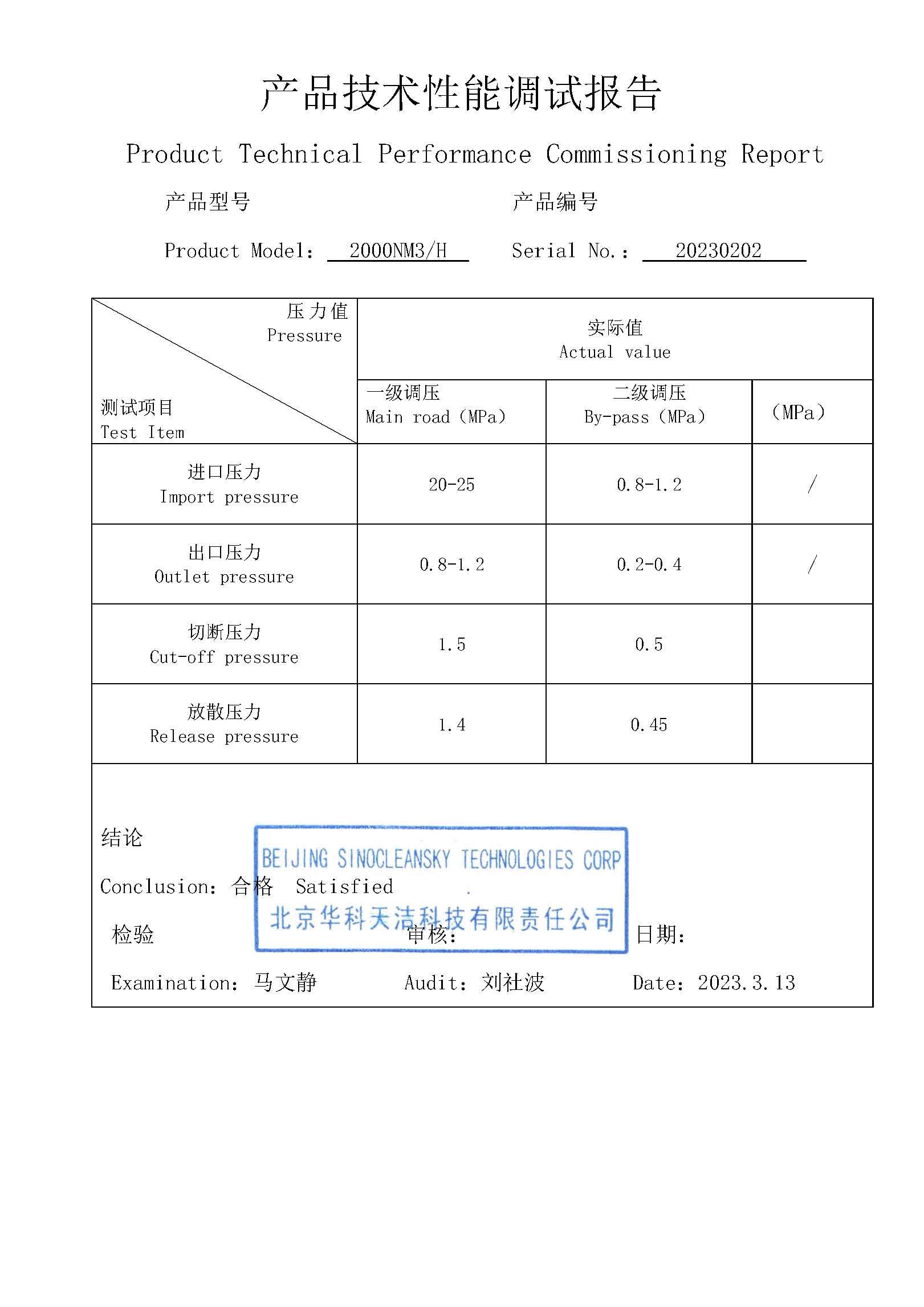
Within the gas heat exchanger for heating, gas after primary voltage regulator to 0.7 ~ 1.2 MPa, after the secondary heat exchanger and the secondary voltage regulator to 0.2 ~ 0.4 MPa (if the outlet pressure is lower, the third stage decompression), enter the flow calculation of the flow meter, decompression at all levels of pressure, temperature and emergency cut-off valve and interlock control system.

Pressure Regulation Accuracy: Outlet pressure fluctuates by ≤±0.05bar, ensuring stable supply to end-use equipment.
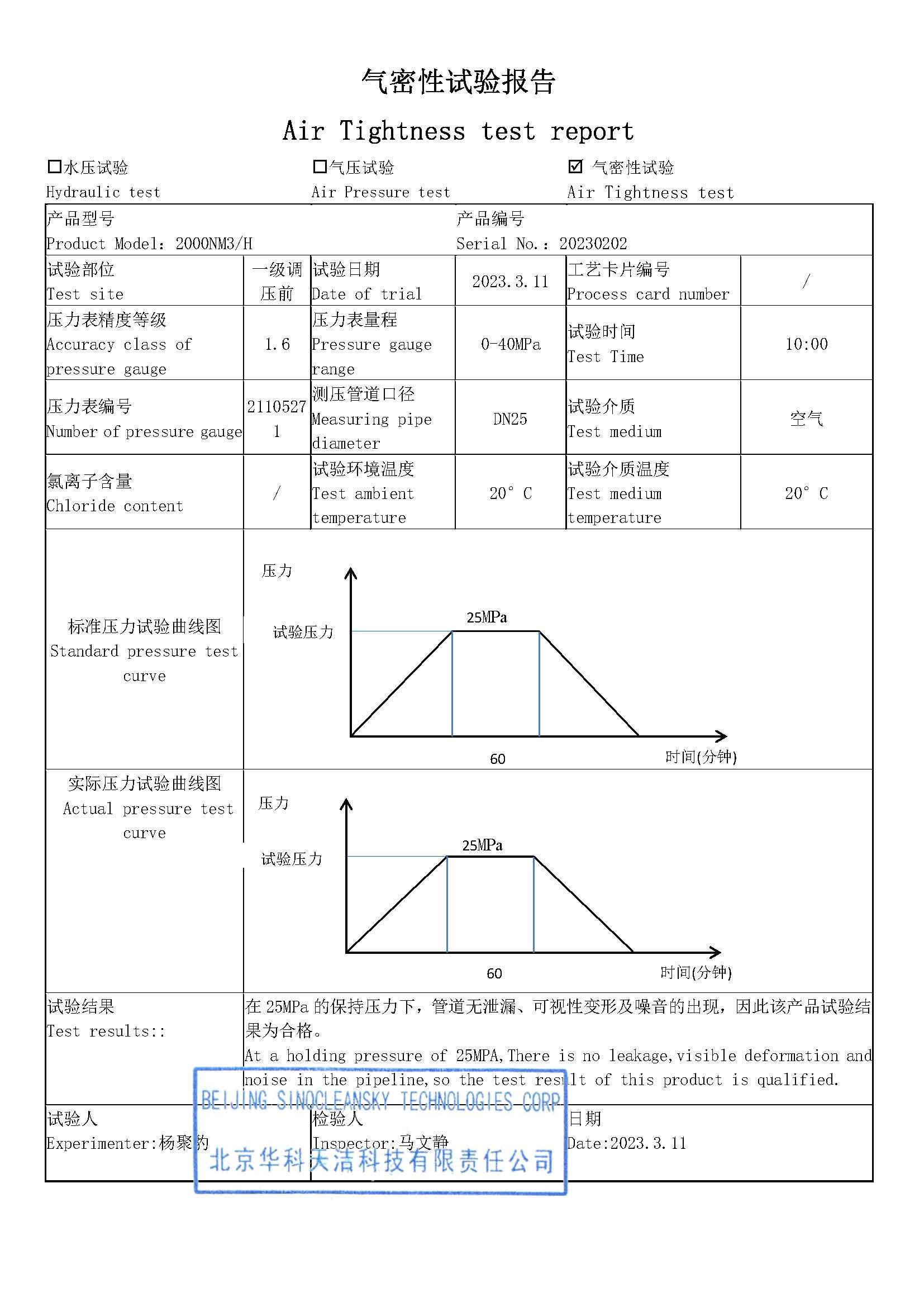
Air Tightness Test: Passes a 25MPa pressure test with no leakage, deformation, or noise—complying with strict safety standards.
Temperature Adaptability: Operates normally in ambient temperatures of -20~50℃, making it suitable for most climates.
Typical Models | Inlet Pressure | Outlet Pressure | Optional Function |
200Nm3 per hour | 250bar | 2~4bar | Heat exchanger; Mass flow meter; PLC automatic control; HMI; High pressure hose; International brand valves |
300Nm3 per hour | 250bar | 2~4bar | |
500Nm3 per hour | 250bar | 2~4bar | |
1000Nm3 per hour | 250bar | 2~4bar | |
2000Nm3 per hour | 250bar | 2~4bar | |
3000Nm3 per hour | 250bar | 2~4bar | |
6000Nm3 per hour | 250bar | 2~4bar |
Remark: The above specifications are only for typical types. The more accurate & detailed parameters and technical drawings are available upon request
Our CNG PRU is manufactured under rigorous quality control processes, ensuring compliance with industry standards and providing users with reliable, high-performance equipment.
Certifications & Reports:
Quality Management Compliance: Manufactured in accordance with ISO 9001 quality management system standards, ensuring consistent product quality.
Comprehensive Inspection Reports: Every CNG PRU comes with a full set of reports, including:
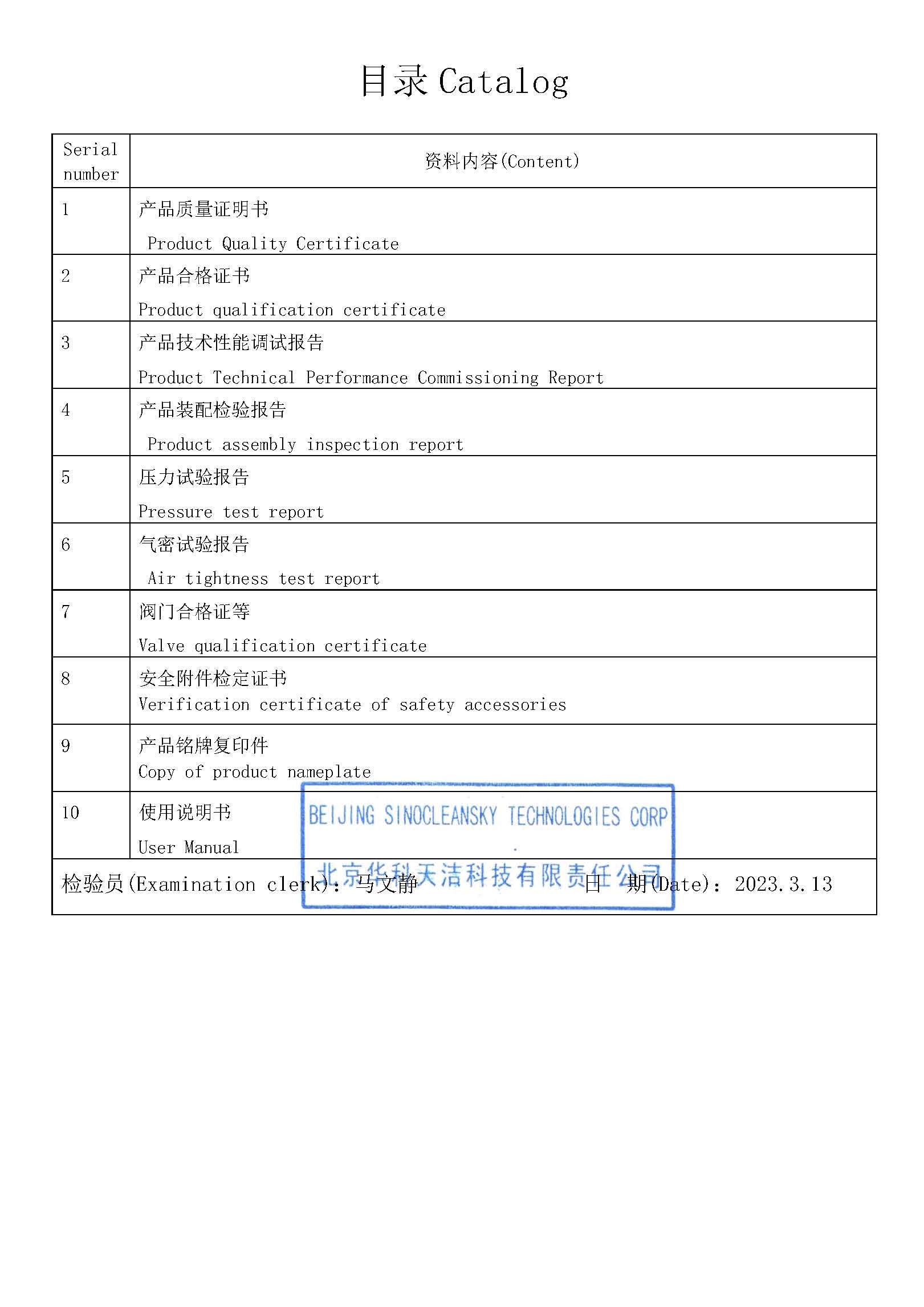
Product quality certificate
Product qualification certificate
Product technical performance commissioning report (verifying pressure regulation accuracy, flow rate, and safety functions)
Product assembly inspection report
Pressure test report (hydraulic and pneumatic tests)
Air tightness test report (25MPa test pressure, no leakage)
Valve qualification certificates (from international brands)
Safety accessory verification certificate (for pressure gauges, relief valves)
Copy of product nameplate
Regional Certifications: On request, we provide regional certifications such as CE (for European markets), CSA (for North America), or GB (for Chinese markets) to meet local regulatory requirements.
Warranty & Support:
Warranty coverage: 12-month warranty for the entire system, 24-month warranty for key components (pressure regulators, heat exchangers, flowmeters).
After-sales service: Our team provides on-site installation guidance, operational training, and maintenance support. We also offer a fast spare parts supply service to minimize downtime in case of component failure.
Traceability: Every CNG PRU is assigned a unique serial number, allowing for full lifecycle tracking of components and maintenance records.


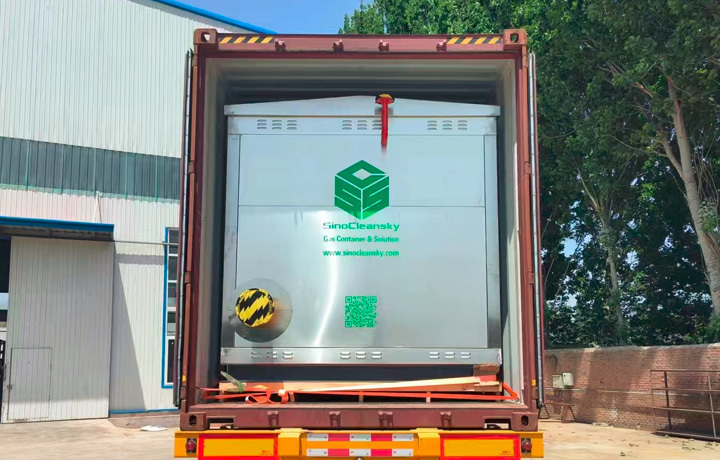
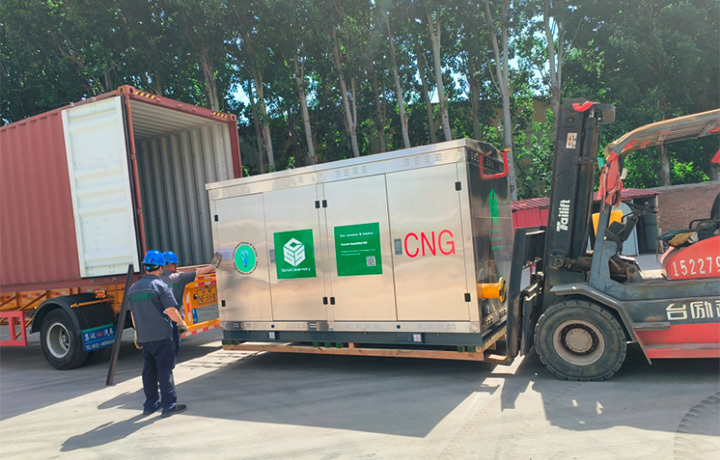
The CNG PRU (PRMS) can be shipped by standard containers, 20GP, 40GP, 40HQ, with good fixed protection in container.
Packaging:
Main System: The skid-mounted CNG PRU is fixed on a steel pallet with anti-vibration pads to absorb shocks during transportation. It is wrapped with moisture-proof film and a heavy-duty tarpaulin to protect against rain, dust, and mechanical damage.
Precision Components: Pressure regulators, flowmeters, and HMIs are packed in foam-lined, waterproof boxes with clear labeling. This prevents damage to delicate parts and simplifies identification during installation.
Accessories: High-pressure hoses, filters, and spare parts are packed in separate labeled boxes, ensuring all components are accounted for upon delivery.
Shipping Methods:
Standard Container Shipping: Uses 20GP (20ft General Purpose), 40GP (40ft General Purpose), or 40HQ (40ft High Cube) containers. This method is cost-effective, secure, and suitable for both sea and land transportation.
Custom Shipping Solutions: For oversized models (e.g., 6000Nm³/H), we coordinate with logistics partners to use flatbed trucks or bulk vessels, with additional reinforcement to secure the system during transit.
Logistics Coordination: Our team provides detailed shipping documents (packing list, certificate of origin, customs clearance papers) and works with the user to confirm delivery schedules. We also offer on-site unloading guidance to ensure safe handling of the system.
What are LNG exports and why are they reshaping global energy markets? Simply put, LNG exports involve turning natural gas into a liquid form so it can travel long distances safely and efficiently. Learn how U.S. LNG exports work, their economic benefits, emerging markets, and innovative technologies driving growth in the global energy sector.
What is LNG used for? Liquefied Natural Gas (LNG) is more than just a fuel—it powers homes, businesses, industries, and even transportation. Its high energy density, cleaner combustion, and flexible transport make LNG ideal for residential heating, industrial processes, and off-grid applications. Learn what LNG is used for across sectors from heating and cooking to transport and manufacturing. Discover its role in cleaner energy, cost savings, and reliable global supply.
What is LNG? Simply put, LNG, or liquefied natural gas, is natural gas cooled into a liquid for easier storage and transport. It’s a versatile, low-carbon energy source powering homes, industries, and transportation worldwide. Learn all about LNG—liquefied natural gas—its storage, transport benefits, and role in cleaner energy. Explore innovations, environmental advantages, and global market trends.
How LNG is produced is a fascinating journey from natural gas extraction to advanced liquefaction technologies. Learn how LNG is produced efficiently and safely. Explore liquefaction techniques, modular systems, cold energy recovery, and environmental responsibility in today’s LNG industry.
What is LNG and how is it transported is becoming a key question for industries seeking cleaner, efficient energy. LNG, or liquefied natural gas, allows natural gas to travel long distances in liquid form, using ships, trucks, rail, and containers. Learn everything about LNG, its liquefaction, transportation across oceans and roads, storage solutions, and regasification for homes and industries.
A CNG skid serves as a critical solution for the safe storage and transport of compressed natural gas. This equipment supports industries that need efficient energy sources for vehicles, heating, and manufacturing. The market for these systems continues to expand rapidly:The global CNG Tube Skids ma
When dealing with large volumes of liquids and gases, choosing the right storage and transport solution is crucial. One of the most common options is the ISO tank, which is designed for safe and efficient transport. However, there’s another essential option: the storage tank. In this article, we will explore the key differences between ISO tanks and storage tanks. You’ll gain insights into their designs, functionalities, and how to choose the right one for your specific needs.
In this article, we will explore the importance of ISO standards in LNG production. You will learn how ISO certification helps enhance efficiency, safety, and sustainability across the LNG supply chain.
In this article, we will explore what LNG storage tanks are, why they are essential, and how they keep LNG in its liquid form. You’ll also learn about the different types of storage tanks and the safety features that make them reliable for large-scale operations.
IntroductionCNG cylinders are transforming the way we fuel vehicles and industries. As the world seeks cleaner energy alternatives, these cylinders play a key role in storing and transporting compressed natural gas (CNG).In this article, we will explore what CNG cylinders are, their various types, how they work, and their many benefits. You’ll also learn how these cylinders are crucial in the shift toward sustainable energy solutions.
IntroductionHave you ever wondered how compressed natural gas (CNG) powers vehicles and industries while reducing emissions? As the world shifts toward greener energy, CNG has emerged as a cleaner and more sustainable alternative to gasoline and diesel.In this article, we will explore how CNG cylinders work, their design, and safety features. You’ll also learn about the environmental and economic benefits of CNG and how it’s transforming industries.
Lorry Tanker - Application in MexicoLorry Tanker - Application of Low Temperature Tankers in JordanLorry tanker - Application of low-temperature tanker transportation in Vietnam
ISO Tank - Application of Aluminum Alloy Tank Container Transportation in AlbaniaISO Tank - Peruvian LNG Substation for Storage and Transportation Applications
Lorry Tanker Transforming Cryogenic Gas Logistics in Jordan and Vietnam What distinguishes our solution is its integrated design: a high-performance cryogenic storage tank paired with a purpose-built operation compartment. This combination eliminates the need for separate transport and filling equip
Microbulk Tank is designed with skid-mounted and vaporizer built-in, high quality, efficient, reliable, lower charge loss and longer liquid gas hold time…… Microbulk Tank layout will help you to be the “Hero” in wide applications including industrial , medical, welding, laser cutting, lab, etc. It’s
Industrial gas and LNG companies across nations have unlocked new efficiency with our ISO Tank. Its standard container design integrates into diverse transport systems—road, rail, sea—adapting to global logistics needs. For cryogenic gas transport, it’s the best transport container. Inside the opera
Email:
Telephone:
Mobile & WhatsApp:
Address: