Views: 0 Author: Site Editor Publish Time: 2026-08-11 Origin: Site
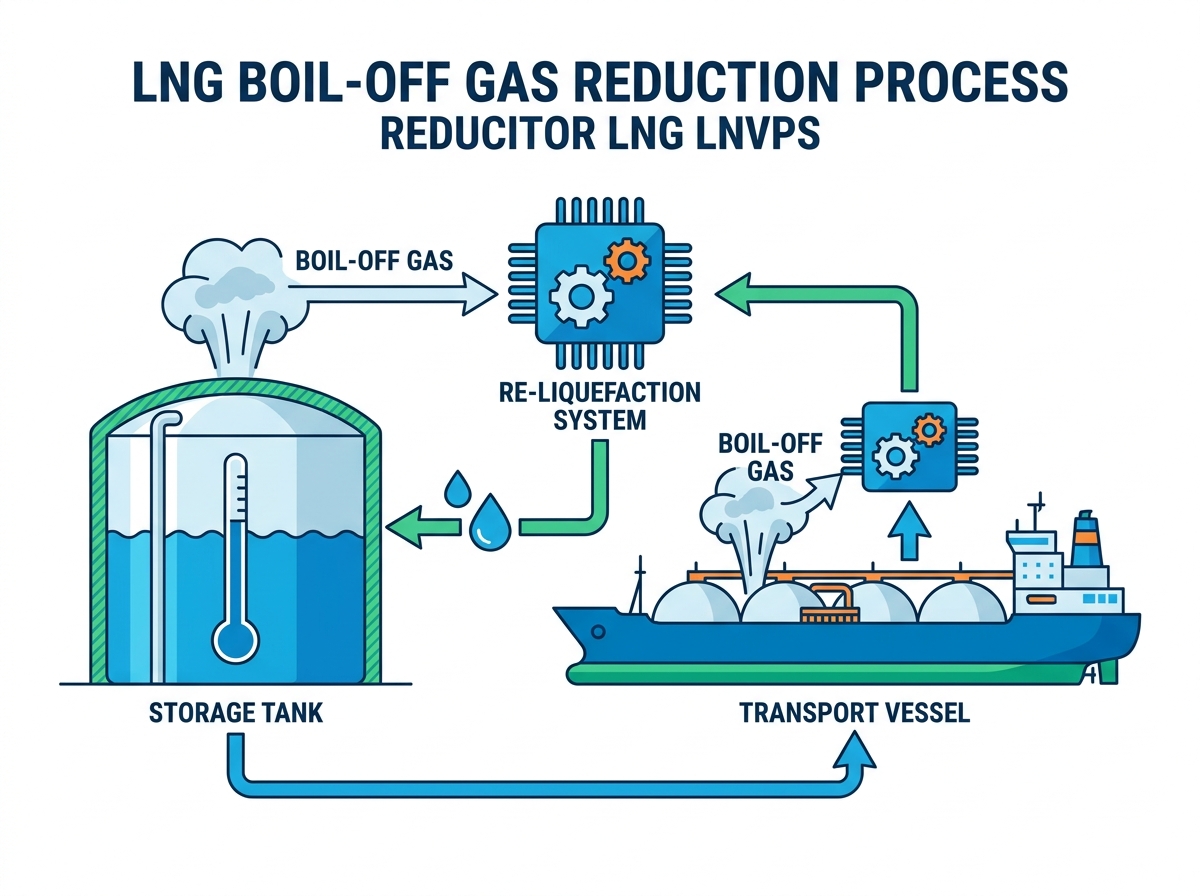
Unmanaged natural evaporation within the global liquefied natural gas supply chain carries severe financial and environmental penalties. Operators face the unavoidable thermodynamic reality of LNG boil-off gas generation daily. You must balance the strict requirement for cargo tank pressure maintenance with preserving high-value cryogenic liquid during extended baseload storage and maritime voyages. Passive venting and flaring practices fail modern operational standards and violate emission regulations. Facilities must shift toward active, ROI-driven frameworks. These frameworks encompass upstream minimization, predictive thermodynamic modeling, and advanced recovery systems. Mastering these techniques ensures maximum cargo retention and strict environmental compliance. We will examine how shifting from reactive handling to proactive thermodynamic management transforms terminal and fleet operations. Implementing these strategies directly improves cargo yields while keeping vessel and terminal infrastructure within safe operating limits.
Proactive Minimization Outperforms Reactive Recovery: Implementing pre-storage temperature reduction (subcooling) keeps the liquid in a saturated state, which can effectively eliminate baseline tank boil-off gas (TBOG) before it requires mechanical handling.
Voyage Optimization Yields Immediate ROI: Utilizing boil-off gas balanced methods to reduce the LNG heel required for tank cool-down significantly lowers total cargo spent during transit.
Predictive Management is Essential: Deploying advanced thermodynamic modeling software (e.g., BoilFAST) allows operators to forecast BOG generation rates accurately, enabling dynamic adjustments to storage and transport parameters.
Recovery Systems Require Contextual Evaluation: The choice between multi-stage regasification, onboard reliquefaction, and utilizing BOG as propulsion fuel depends heavily on facility scale, vessel engine architecture, and specific energy requirements.
Table of Contents
Liquefied natural gas exists at extremely low temperatures, typically around -162°C. Any heat introduced into this cryogenic environment triggers phase changes. Ambient heat ingress through containment insulation remains the primary driver of continuous evaporation. Even the most advanced vacuum-insulated panels allow fractional heat transfer over time. During maritime transit, vessel motion introduces kinetic energy. Sloshing inside the cargo tanks creates friction. This friction converts directly into thermal energy and accelerates evaporation. Furthermore, pressure differentials during loading and unloading operations cause sudden flashing. When operators pump liquid into a tank with a slightly lower pressure, a portion of the liquid instantly vaporizes to balance the system. The Joule-Thomson effect also plays a role when gas expands across control valves, altering the temperature and pressure profile of the vapor header. Understanding these distinct thermodynamic drivers helps engineers design effective mitigation strategies. Field operators see this daily during ship-to-ship transfers. The loading arms and manifold connections introduce heat. The resulting vapor must be managed immediately to prevent pressure spikes.
You cannot improve what you do not measure. Establishing strict baseline metrics separates adequate operations from highly efficient ones. The primary metric is the daily boil-off rate (BOR). Modern containment systems aim for a BOR between 0.08% and 0.15% per day. Minimizing this percentage directly increases cargo retention rates. Operators utilize high-precision Coriolis flow meters to measure the exact mass flow rate of the recovered vapor. Another success criterion involves emission compliance. Uncombusted methane released into the atmosphere carries a massive global warming potential. Reducing methane slip during venting or incomplete combustion is a strict regulatory requirement. Finally, operators must evaluate overall system energy efficiency. Running massive compressors to reliquefy gas consumes heavy power. A successful management strategy balances the energy spent recovering the gas against the actual volume saved. We track the specific power consumption per kilogram of recovered gas. This metric dictates whether a recovery system operates efficiently or wastes facility power.
Failing to manage evaporation actively leads to compounding losses. Every cubic meter of gas lost to the atmosphere represents degraded cargo volume and lost energy content measured in MMBtu. Over a standard three-week voyage, an unmanaged BOR consumes a significant percentage of the deliverable payload. Beyond the direct loss of product, operators face severe regulatory risks. International maritime and environmental agencies strictly monitor venting practices. Unauthorized venting triggers heavy fines and potential port bans. Relying on passive flaring wastes the energy potential of the gas and generates localized emissions. Capital investment in active LNG boil-off gas mitigation serves as a necessary protective measure. It protects your operational license and your final cargo yield. Ship owners facing strict Carbon Intensity Indicator (CII) ratings cannot afford to vent or flare unnecessarily. Active management directly improves the vessel's environmental profile and operational viability.
The most efficient way to handle evaporation is to prevent it entirely. Pre-storage temperature reduction, or subcooling, achieves this goal. Before routing the liquid into baseload storage tanks, operators pass it through a dedicated subcooling unit. This process lowers the temperature slightly below the boiling point for the given tank pressure. By maintaining a saturated liquid state, you effectively eliminate baseline tank boil-off gas (TBOG). The liquid absorbs ambient heat ingress without immediately changing phase due to its specific heat capacity. Subcooling also suppresses initial flash gas generation during the loading sequence. When the colder liquid enters the tank, it stabilizes the internal pressure profile. This proactive approach drastically reduces the workload on downstream compressors and recovery systems. Terminal operators utilize nitrogen expansion cycles or mixed refrigerant cycles to achieve this subcooling. The refrigeration skid sits upstream of the main storage headers, intercepting the liquid before it hits the low-pressure environment of the storage tank.
Containment design dictates the baseline evaporation rate. The industry primarily relies on two architectures: Membrane systems and Moss spherical tanks. Membrane tanks utilize thin layers of Invar or stainless steel supported by rigid polyurethane foam insulation. They maximize hull space efficiency but present a larger surface area for potential heat ingress. Moss spherical tanks use thick aluminum spheres supported by a single equatorial ring. The spherical shape offers the lowest possible surface-to-volume ratio, inherently reducing heat transfer. However, they consume more vertical space on a vessel. Selecting the right containment technology requires analyzing the intended voyage duration, thermal conductivity coefficients (k-values) of the insulation, and ambient climate conditions. Upgrading insulation materials in legacy systems yields measurable reductions in passive evaporation rates.
Membrane Mark III: Uses a corrugated stainless steel primary barrier with reinforced polyurethane foam, offering excellent thermal resistance for long voyages.
Membrane NO96: Utilizes Invar primary and secondary barriers with perlite-filled plywood boxes, providing structural stability and low thermal conductivity.
Moss Spherical: Employs aluminum alloy spheres with external polystyrene insulation, minimizing the surface area exposed to ambient heat.
Modern terminal operations require algorithmic foresight. Specialized algorithmic software tools, such as BoilFAST, simulate and predict evaporation rates dynamically. These platforms process variable ambient temperatures, anticipated storage durations, and real-time tank pressures. By forecasting generation spikes, operators adjust cooling parameters before pressure builds. Predictive modeling eliminates the guesswork from storage management. It allows facility managers to schedule compressor maintenance during periods of low anticipated evaporation. Furthermore, these predictive models scale beyond natural gas. They pave the way for managing cryogenic challenges in future alternative fuels. Engineers use similar algorithms to model the behavior of liquid ammonia and liquid hydrogen. This ensures infrastructure readiness for the next generation of energy transport. Integrating these tools via API with the terminal's Distributed Control System (DCS) provides operators with a live dashboard of thermodynamic trends.
Cargo tanks must be cooled down prior to loading to prevent massive thermal shock and explosive flashing. Traditionally, vessels retain a large volume of liquid, known as the heel, from the previous voyage to facilitate this cooling. Implementing boil-off gas balanced methods optimizes this procedure. Instead of spraying large quantities of liquid directly into warm tanks, operators carefully manage the vapor pressure and utilize controlled spraying sequences. This method minimizes the exact volume of the LNG heel required for tank cool-down prior to arrival at a loading port. Reducing the heel maximizes the available space for new cargo. It leads to an overall reduction in total liquid spent during a voyage. The spray rail system at the top of the cargo tanks atomizes the liquid. This maximizes the surface area for heat exchange, cooling the tank walls evenly and controlling the temperature gradient (dT/dt) to prevent thermal cracking of the containment barriers.
Kinetic energy transfer remains a stubborn challenge during maritime transport. Heavy seas cause the liquid to slosh against the containment walls. This friction generates heat and accelerates evaporation. Operational protocols for voyage routing play a vital role in mitigation. Captains utilize advanced weather routing software to avoid severe sea states. They prioritize smoother transits over absolute shortest distances. Adjusting vessel speed and heading reduces the rhythmic motion that amplifies sloshing. Additionally, strict adherence to tank filling limits prevents the liquid from hitting the critical resonance frequencies of the containment structure. Proper filling limits ensure the liquid mass remains stable. Operators typically avoid filling tanks between 10% and 70% capacity during open ocean transits. This specific range presents the highest risk for severe sloshing impacts, rapid thermal energy generation, and potential structural damage to the pump tower.
Rather than treating evaporation purely as a loss, modern carriers utilize it as a primary energy source. Dual-fuel diesel electric (DFDE) engines and mechanically driven dual-fuel engines consume this gas for propulsion. DFDE systems burn the gas in generator sets, creating electricity to drive propulsion motors. Mechanically driven engines, like the ME-GI (Main Engine Gas Injection), inject the gas directly into the cylinders for combustion using a small amount of pilot fuel oil for ignition. Using the gas for propulsion solves the tank pressure problem while eliminating the need for heavy fuel oil. However, operators must analyze the trade-offs. Consuming LNG boil-off gas ensures environmental compliance and powers the ship, but it represents an absolute loss of deliverable cargo volume. Fleet managers calculate whether reliquefaction or consumption yields the better financial outcome for each specific voyage. This calculation depends heavily on the current market value of the cargo versus the cost of alternative bunker fuels.
When consumption for propulsion is insufficient or economically unfavorable, onboard reliquefaction plants provide a robust alternative. These systems extract vapor from the cargo tanks, compress it, and cool it until it returns to a liquid state. Operators choose between partial and full reliquefaction systems. Partial systems handle a fraction of the generated vapor, typically working in tandem with dual-fuel engines. Full systems possess the capacity to reliquefy the entire daily evaporation volume. The process involves a complex reverse Brayton cycle or a Claude cycle. High-pressure compressors push the gas through cryogenic heat exchangers. The technical viability of these systems depends on the vessel's available power generation capacity. The compression and cooling cycles demand significant electrical loads. A typical full reliquefaction plant requires several megawatts of continuous power, necessitating larger auxiliary generator sets on the vessel and robust power management systems.
Onshore baseload export and import terminals handle massive volumes of vapor daily. Efficient recovery frameworks rely on multi-stage regasification and compression. Engineering studies indicate that four-stage regasification is highly effective for maximizing recovery. This process compresses the gas in four distinct thermodynamic steps. It cools the gas between each stage using intercoolers and knock-out drums to maintain compressor efficiency and prevent overheating. Integrating optimal operation algorithms ensures the compressors run only at necessary loads. They respond dynamically to the terminal's vapor header pressure. This multi-stage approach prevents the compressors from surging. It minimizes the electrical power required to push the recovered gas into the main pipeline or back into the storage grid. Reciprocating compressors handle low-volume, high-pressure applications, while centrifugal compressors manage high-volume, low-pressure vapor headers.
Terminals consume vast amounts of electricity to run pumps, compressors, and facility lighting. Integrating recovered vapor into the terminal's power generation grid offsets these massive energy expenditures. The thermodynamic conversion principles are straightforward. Recovered vapor routes through a low-pressure fuel gas compressor and feeds directly into gas turbines or reciprocating engines. These generators produce the electricity needed to run the facility. The gas must meet specific lower heating value (LHV) requirements to ensure stable turbine operation. By transforming the unavoidable evaporation into usable facility power, operators create a closed-loop energy system. This integration reduces reliance on external utility grids. It lowers operational overhead and ensures no thermal energy wastes through passive flaring. When the terminal generates excess vapor beyond its power needs, a Gas Combustion Unit (GCU) safely oxidizes the remaining gas to prevent overpressurization.
Upgrading a facility or a vessel requires a rigorous financial framework. Active reliquefaction compressors and subcooling units demand high initial capital expenditure. Procurement, installation, and commissioning of cryogenic rotating equipment represent significant upfront investments. However, operators weigh this against long-term operational savings. Increased cargo yields generated by active recovery directly boost revenue per voyage. Over a ten-year lifecycle, the operational savings from retained cargo often outpace the initial capital outlay. Decision-makers model the payback period based on projected fuel prices, average voyage distances, and historical evaporation rates. You must also factor in the reduced maintenance costs associated with running dual-fuel engines on clean gas instead of abrasive heavy fuel oil. Lifecycle asset management principles dictate that the initial investment in high-quality cryogenic equipment pays dividends through extended mean time between failures (MTBF).
Physical space limitations dictate technology choices. Retrofitting legacy carriers with new recovery technology presents severe spatial and structural challenges. Older engine rooms lack the footprint required for massive nitrogen expansion skids. In these cases, partial reliquefaction or optimized routing software proves more viable. Conversely, integrating these systems into newbuild specifications allows for optimal spatial planning. Naval architects design the hull and power grid specifically to accommodate full reliquefaction plants using modular skid designs. Expansive onshore facilities face fewer footprint constraints but must manage the scalability of piping networks. Routing high-pressure cryogenic lines across a sprawling terminal requires extensive structural supports. Engineers must account for thermal contraction and expansion using specialized pipe loops, bellows, and advanced vacuum-jacketed piping.
Every management solution maps directly against international safety mandates. The International Code for the Construction and Equipment of Ships Carrying Liquefied Gases in Bulk (IGC Code) strictly governs cargo tank pressure management. Systems must guarantee that internal pressures never exceed the structural design limits of the containment architecture. Furthermore, the International Maritime Organization (IMO) enforces aggressive greenhouse gas reduction strategies. Venting methane violates these targets. Reliquefaction and efficient propulsion consumption align perfectly with IMO mandates and the IGF Code for gas-fueled ships. Selecting a compliant technology ensures uninterrupted operations and shields the enterprise from regulatory penalties. Classification societies like DNV or ABS require rigorous testing of all recovery systems before issuing operational certificates.
Management Strategy | Primary Application | Key Benefit | Primary Constraint |
|---|---|---|---|
Pre-Storage Subcooling | Onshore Terminals | Eliminates baseline TBOG and flash gas | Requires dedicated upstream cooling infrastructure |
Onboard Reliquefaction | Modern LNG Carriers | Returns 100% of vapor to liquid cargo | High electrical load and large physical footprint |
Propulsion Consumption (DFDE) | Maritime Transit | Offsets heavy fuel oil usage and emissions | Results in absolute loss of deliverable cargo volume |
Four-Stage Regasification | Import/Export Facilities | Maximizes recovery efficiency via optimal algorithms | High initial capital expenditure for multi-stage compressors |
Interfacing modern recovery technology with legacy infrastructure introduces complex engineering hurdles. High-pressure recovery compressors generate significant vibration and thermal stress. Connecting these modern units to legacy cryogenic containment and piping systems requires precision engineering. Older piping lacks the structural integrity to handle sudden pressure spikes from multi-stage compressors. Engineers conduct thorough stress analysis and install advanced vibration dampeners. Integrating predictive algorithmic software with analog terminal control systems also poses a challenge. Facilities upgrade their sensor networks to provide the high-fidelity, real-time data required by modern thermodynamic modeling platforms. Upgrading older pneumatic control valves to digital smart valves ensures the software can execute rapid flow adjustments. Programmable Logic Controller (PLC) handshakes between the new recovery skids and the existing plant DCS must be flawlessly programmed to prevent emergency shutdown (ESD) triggers.
Continuous-duty cryogenic rotating equipment carries a heavy maintenance burden. Compressors operating at -162°C experience extreme thermal contraction and mechanical wear. Seals degrade, and bearings require constant monitoring. Forced venting often occurs when a primary compressor fails. This leads to immediate cargo loss and emission violations. Redundancy planning is mandatory. Facilities install backup compressors in parallel configurations. While this increases initial capital expenditure, it prevents catastrophic operational downtime. Implementing condition-based maintenance programs allows crews to replace wearing components before a critical failure occurs. We utilize vibration analysis and thermal imaging to monitor the health of the compressor dry gas seals, gearbox bearings, and dedicated lube oil systems.
Advanced thermodynamic systems are only as effective as the personnel operating them. The transition from passive venting to active management requires a fundamental shift in crew competency. Operators must understand complex phase changes, multi-stage compression cycles, and algorithmic control logic. Specialized training programs are a necessity. Crews train on high-fidelity simulators to practice handling high-pressure LNG boil-off gas under emergency conditions. They need the confidence to manually override automated systems during sensor failures. Investing in continuous crew education ensures that the expensive recovery hardware operates safely and efficiently throughout its lifecycle. We mandate quarterly simulator drills focusing specifically on compressor trip recovery and sudden tank pressure spikes to maintain compliance with STCW (Standards of Training, Certification, and Watchkeeping) requirements.
Effective LNG boil-off gas management requires more than simply recovering vapor after it has formed. By combining prevention, predictive monitoring, optimized transportation, recovery, and reliquefaction, LNG operators can reduce cargo losses while improving energy efficiency, safety, and environmental performance.
Beijing SinoCleansky Technologies Corp is an experienced natural gas equipment manufacturer and integrated solution provider specializing in CNG, LNG, and NGV equipment, technologies, and services. With capabilities covering cryogenic and high-pressure equipment, quality control, and customized solutions, the company supports customers across different natural gas applications and operational requirements. About Beijing SinoCleansky Technologies Corp
Initiate a comprehensive thermodynamic audit of all current storage assets and fleet routes to establish a precise baseline of existing generation rates.
Evaluate legacy containment insulation for potential upgrades to reduce passive ambient heat ingress.
Deploy predictive thermodynamic modeling software on a trial basis to analyze potential efficiency gains in your specific operational environment.
Draft detailed technical specifications for redundancy systems to eliminate forced venting during routine compressor maintenance.
A: It is the natural evaporation of liquefied natural gas. Because the liquid is stored at cryogenic temperatures (-162°C), any ambient heat ingress through tank insulation causes the liquid to continuously vaporize and expand. This makes it an unavoidable physical process that requires constant pressure management.
A: Modern carriers utilizing advanced Membrane or Moss containment systems typically experience a daily boil-off rate between 0.08% and 0.15% of their total cargo volume per day. Upgraded insulation and active recovery systems help maintain these low percentages during extended voyages.
A: By carefully managing vapor pressure during cool-down, operators require less residual liquid (heel) to cool the tanks. This maximizes the available space for new cargo and reduces the total volume wasted during transit, directly increasing the deliverable payload and voyage revenue.
A: Minimization prevents the gas from forming in the first place by lowering the liquid temperature before storage. Recovery handles the gas after it has already evaporated, using mechanical compressors to either reliquefy the vapor or consume it for facility power and propulsion.
A: These algorithms dynamically adjust compressor loads based on real-time vapor pressure. This prevents compressor surging, maximizes recovery efficiency, and significantly reduces the electrical power required to process the gas, ensuring the system operates at peak thermodynamic efficiency.
A: Yes. Advanced algorithmic tools process ambient temperatures, pressure data, and storage durations to accurately simulate phase changes and evaporation rates. This capability extends across various cryogenic alternative fuels, preparing infrastructure for future energy transport demands.
A: Unmanaged evaporation causes rapid pressure buildup inside the containment system. If pressure exceeds structural design limits, it can lead to catastrophic tank rupture, explosive flashing, and severe structural damage to the vessel or terminal. Active management prevents these critical safety failures.