Views: 0 Author: Site Editor Publish Time: 2026-07-15 Origin: Site
The global shift toward decentralized energy distribution exposes the rigid limitations of traditional pipeline networks and large-scale bulk carriers. Supplying liquefied natural gas to off-grid locations, remote industrial sites, or regions with underdeveloped import infrastructure presents significant bottlenecks for energy procurement and logistics directors. Traditional bulk transport requires massive upfront capital expenditure and long-term volume commitments that do not align with small-to-medium scale demand. To bridge this gap, supply chain architects evaluate Small-Scale LNG and containerized solutions. This guide provides a technical, head-to-head comparison between the LNG ISO Tank Container and traditional bulk LNG transport. We focus on scalability, infrastructure requirements, and operational flexibility to inform your procurement strategy.
Volume Thresholds Dictate the Model: LNG ISO tank containers (typically 20,000 to 45,000 liters) are optimized for small-to-medium scale, agile distribution, whereas traditional bulk transport is strictly viable for continuous, high-volume baseload supply.
Intermodal Flexibility vs. Fixed Infrastructure: ISO tanks eliminate the need for specialized break-bulk terminals by utilizing standard container ships, rail networks, and trucks, drastically reducing localized infrastructure CAPEX.
Dual-Use Capabilities: Unlike traditional transport assets, an LNG ISO tank container acts as both an active transport vessel and a safe, temporary on-site cryogenic storage unit, bypassing the need for immediate, permanent storage tank installations.
Boil-Off Gas (BOG) Realities: While ISO tanks offer geographic flexibility, their holding times (typically 60 to 100 days) require precise logistical orchestration compared to continuous pipeline flow or active-refrigeration bulk carriers.
Regulatory Standardization: ISO containers adhere to global intermodal standards (IMDG, ADR, RID, ASME), streamlining cross-border compliance without requiring bespoke transport approvals.
Table of Contents
Traditional bulk LNG distribution relies heavily on deep-water ports, specialized regasification terminals, and extensive pipeline networks. These massive infrastructure projects require years of planning, environmental approvals, and enormous capital investment. Without these facilities, large-scale LNG carriers cannot offload their cargo. This leaves regions without established infrastructure entirely cut off from the supply chain. The engineering demands for a standard import terminal include dredging channels for draft clearance, constructing reinforced concrete jetties, and installing massive cryogenic storage tanks. These requirements create an insurmountable barrier to entry for smaller markets or temporary projects.
Furthermore, the maintenance of these fixed assets demands continuous operational expenditure. Specialized personnel must monitor boil-off gas compressors, maintain cryogenic pumps, and ensure the integrity of miles of insulated piping. When a facility only requires a fraction of the volume these terminals process, the economics simply fail. The traditional model forces consumers to adapt to the infrastructure, rather than the infrastructure adapting to the consumer's needs.
Traditional marine-and-pipeline infrastructure faces severe technical limitations when attempting to reach deep inland industrial hubs, mountain regions, or territories distant from coastlines. Extending pipelines through challenging terrain is often economically unfeasible or physically impossible. Hard rock excavation, river crossings, and navigating protected environmental zones add years to project timelines. This geographic isolation prevents many industrial facilities from accessing clean-burning natural gas, forcing them to rely on costlier or more polluting alternative fuels like diesel or heavy fuel oil.
Even when pipelines are technically feasible, the required throughput to justify the construction costs often exceeds the demand of a single inland facility. This creates a stranded demand scenario. Mining operations in remote areas, for example, consume significant energy for heavy machinery and processing plants but are rarely located near existing gas grids. The inability of traditional transport to bridge this geographic gap highlights a fundamental flaw in relying solely on fixed infrastructure for energy distribution.
Pipeline contracts and bulk carrier schedules are inherently rigid. They are designed for continuous, predictable baseload supply and struggle to adapt to seasonal demand shifts or emerging off-grid markets. If a facility experiences a sudden spike in energy needs or a temporary shutdown, the traditional supply chain cannot easily adjust volumes or reroute shipments without incurring significant penalties or logistical delays. Take-or-pay contracts lock consumers into purchasing specific volumes regardless of their actual operational requirements.
Bulk carriers operate on fixed routes between major export and import terminals. Diverting a carrier to a different port requires complex renegotiations, assuming the alternative port even has the necessary receiving infrastructure. This lack of agility makes traditional transport highly vulnerable to market volatility and operational disruptions. When a downstream facility goes offline for maintenance, the continuous flow of a pipeline cannot simply be paused without affecting the entire network's pressure dynamics.
Delivering LNG from centralized import terminals to inland industrial facilities or remote municipalities presents significant technical and financial hurdles. Constructing spur pipelines for the "last mile" is often cost-prohibitive for small-to-medium scale consumers. This bottleneck effectively strands the energy at the terminal, highlighting the need for more agile distribution methods. The transition from bulk storage to localized distribution requires a shift in logistics strategy.
In many regions, the existing road and rail networks are robust, yet they remain underutilized for energy transport due to the reliance on pipelines. Overcoming the last mile bottleneck requires leveraging these existing intermodal networks. By moving away from the assumption that gas must flow through a pipe, logistics directors can unlock new markets and provide reliable energy access to previously underserved locations.
Containerization fits seamlessly within the broader Small-Scale LNG landscape, serving as the primary link for decentralized, flexible energy distribution. This ecosystem bridges the gap between massive import terminals and end-users whose demand does not justify pipeline construction. The LNG ISO Tank Container acts as the cornerstone of this agile supply chain, enabling a modular approach to energy logistics.
Small-scale operations typically involve loading LNG directly onto trucks or railcars at the terminal, bypassing the need for extensive pipeline networks. This method allows for targeted deliveries to specific facilities, such as remote power plants, industrial manufacturing sites, or marine bunkering stations. The flexibility of this ecosystem allows energy providers to scale their operations incrementally, matching supply directly with localized demand.
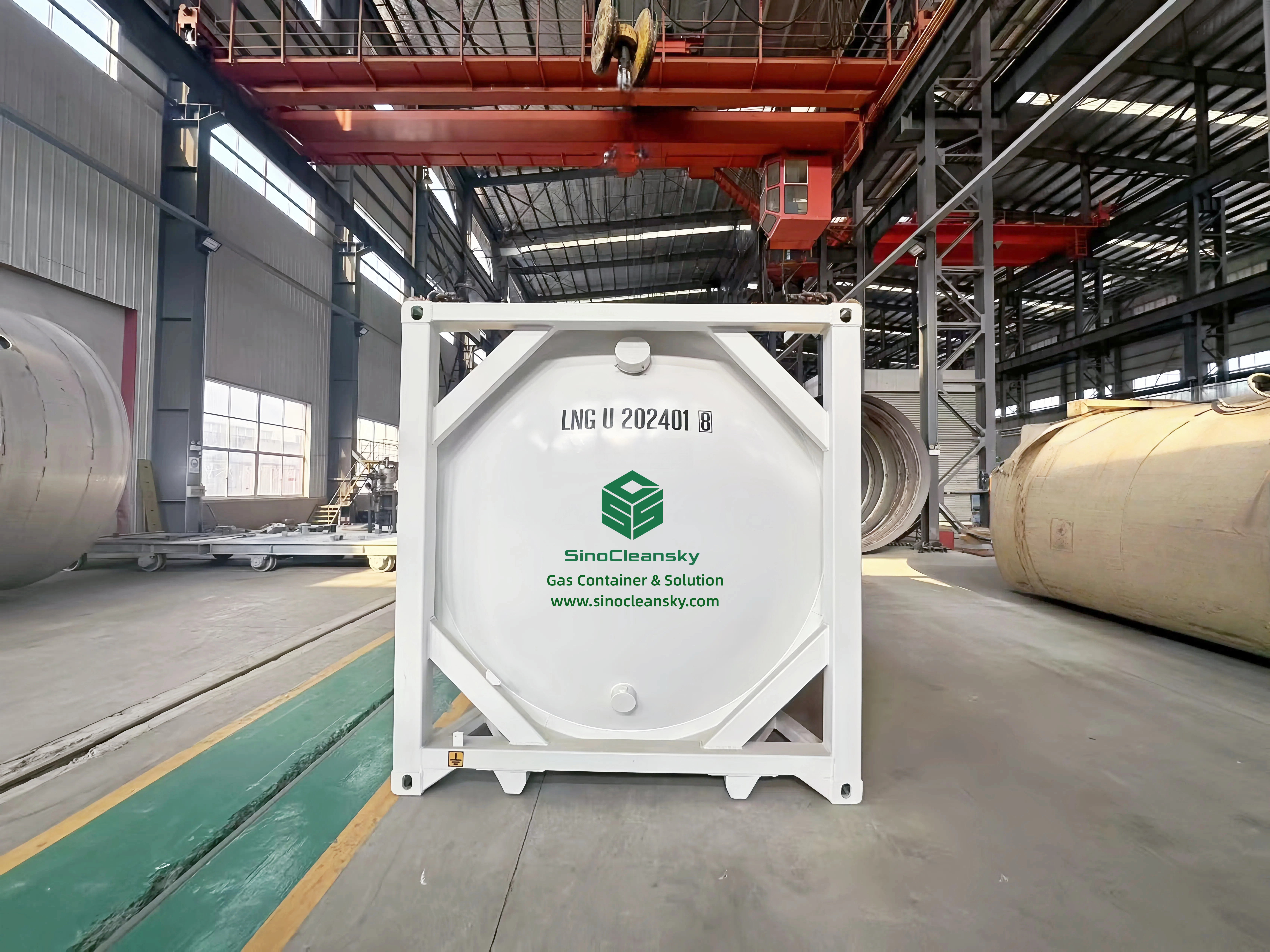
An LNG ISO tank container is built to strict T75 cryogenic classifications. The design features a stainless steel inner vessel surrounded by double-walled vacuum insulation, often utilizing multi-layer super insulation, all protected by a robust outer carbon steel shell. Standard dimensions typically include 40-foot ISO frames optimized for 40,000 to 45,000 liters, and 20-foot configurations for smaller footprints, ensuring compatibility with standard logistics equipment.
The inner vessel is engineered to withstand the thermal contraction associated with storing liquids at -162°C. Baffles are often installed within the tank to mitigate the sloshing of the liquid during transit, which can affect the stability of the transport vehicle and increase boil-off rates. The vacuum space between the inner and outer vessels is critical for minimizing heat transfer. This space is continuously monitored to ensure the integrity of the insulation, as any loss of vacuum rapidly accelerates the warming of the cryogenic liquid.
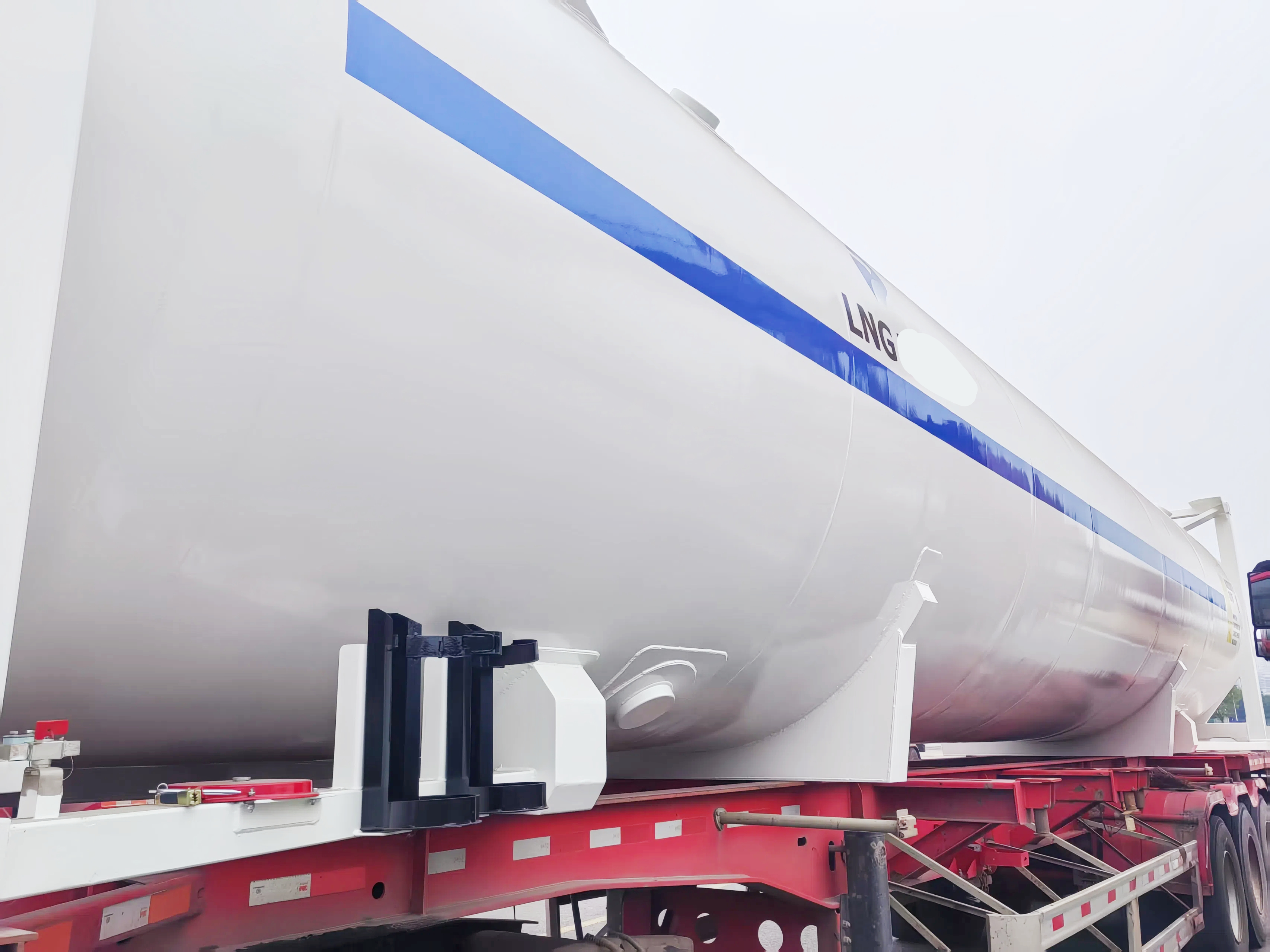
The standardized frame allows seamless transfer between maritime container vessels, railcars, and heavy-duty trucks. This intermodal flexibility means the container can move from a loading facility to the end-user without decanting or handling the cryogenic liquid directly. This reduces product loss, minimizes safety risks, and accelerates delivery times across varied transportation networks.
The container is loaded with LNG at a liquefaction plant or import terminal.
A reach stacker lifts the container onto a standard flatbed truck chassis.
The truck transports the container to a rail yard, where it is transferred to a flatcar.
Upon reaching the destination terminal, the container is moved back to a truck for final delivery.
The container arrives at the site and is connected directly to the regasification skid.
The container serves a dual role, allowing operators to transition the unit from a transport vessel directly to a modular, on-site storage container. This eliminates the immediate need for permanent stationary tanks. Facilities can simply connect the container to a regasification skid, use the fuel, and swap the empty container for a full one when necessary. This plug-and-play functionality drastically reduces site preparation time and civil engineering requirements.
When acting as storage, the container's pressure build-up is managed through the facility's consumption. As LNG is drawn from the tank and vaporized, the internal pressure decreases, naturally managing the boil-off gas. This dynamic makes the LNG ISO Tank Container highly efficient for operations with consistent daily consumption rates, as the natural draw prevents the need for venting.
Containerized LNG acts as a "virtual pipeline," enabling direct-to-site delivery and modular on-site storage. This approach provides immediate regasification capabilities in municipal or industrial settings. It effectively mimics the continuous supply of a physical pipeline but with the flexibility to scale up, scale down, or relocate the supply based on evolving energy demands.
A virtual pipeline operates on a continuous rotation of containers. While one container is connected to the regasification skid supplying the facility, another is in transit from the terminal, and a third is being refilled. This logistical choreography ensures an uninterrupted flow of gas to the end-user. Advanced telemetry and logistics software are employed to track container locations, monitor pressure levels, and optimize delivery schedules, ensuring the virtual pipeline operates with the same reliability as a physical one.
Traditional bulk transport is best suited for gigawatt-scale power plants and national grid injections where continuous, massive volume is guaranteed. The economics of scale heavily favor large carriers and pipelines for these applications. A standard LNG carrier can transport upwards of 170,000 cubic meters of liquid, requiring massive receiving infrastructure to handle the offload. For these mega-projects, the high upfront costs are amortized over decades of continuous, high-volume operation.
Conversely, the modularity of 20,000 to 45,000-liter capacities makes ISO tanks ideal for phased project scaling, peak-shaving facilities, and remote mining or manufacturing operations. You can scale the supply simply by adding or reducing the number of containers. If a facility expands its operations, logistics directors simply increase the frequency of container deliveries or add more storage bays on-site. This modularity prevents overcapitalization and allows energy supply to grow in tandem with actual demand.
Traditional bulk distribution requires multi-million or billion-dollar investments for permanent receiving terminals, cryogenic storage tanks, and pipeline construction. These projects involve extensive environmental impact studies, complex permitting processes, and years of construction. The financial risk associated with these mega-projects is substantial, often requiring government backing or long-term consortium agreements.
The LNG ISO Tank Container offers a low-CAPEX entry point. It requires only standard container-handling equipment, such as reach stackers or cranes, and modular, skid-mounted regasification units at the destination. The site preparation is minimal, often requiring only a reinforced concrete pad and basic safety fencing. This drastically lowers the financial barrier to entry for new LNG consumers, allowing smaller industrial players to transition to cleaner fuels without crippling upfront costs.
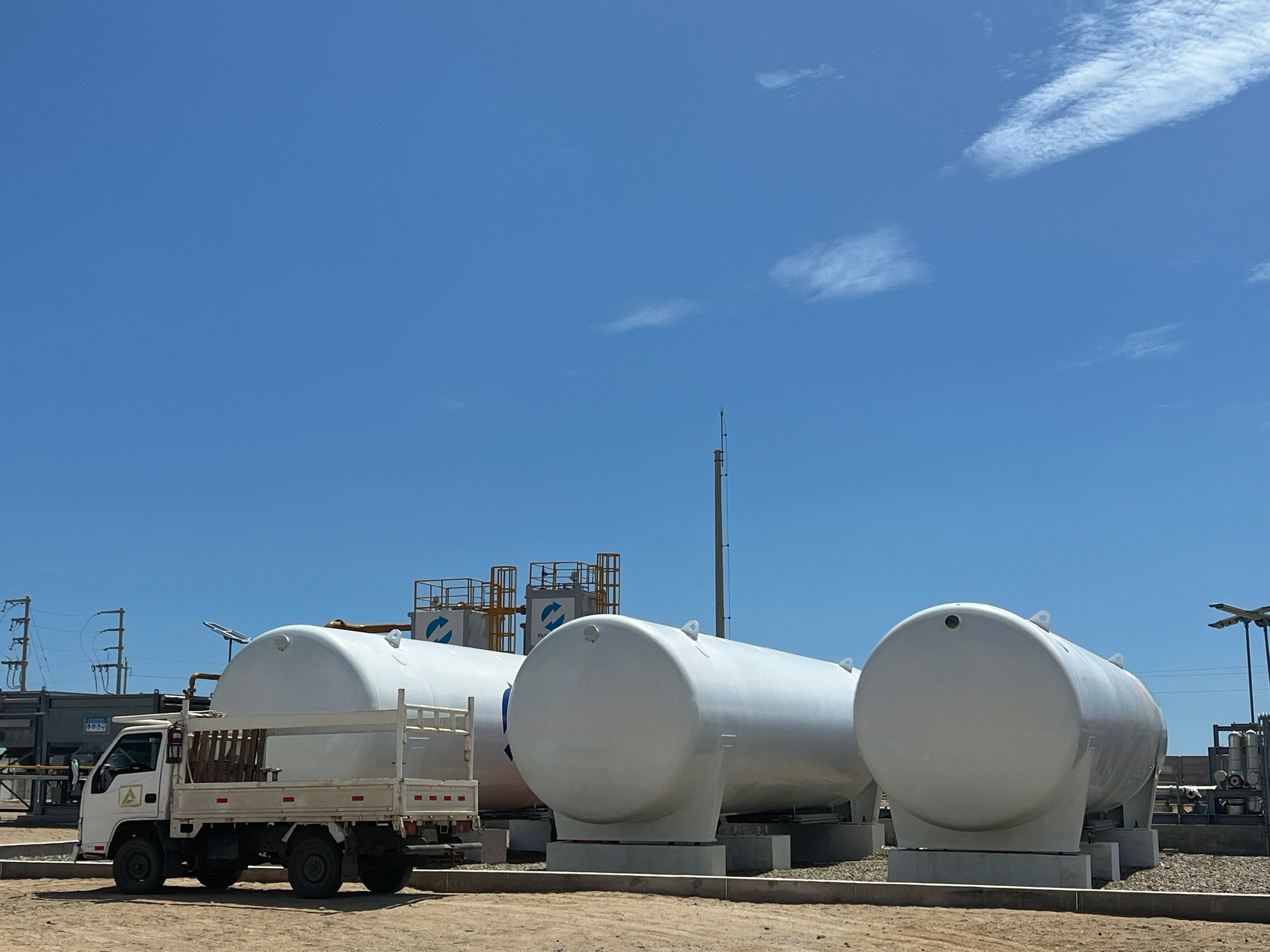
Fixed LNG storage tanks involve high CAPEX, extensive civil engineering requirements, and permanent permitting hurdles. They are immovable assets tied to a specific location. Constructing a stationary tank requires specialized welding, extensive non-destructive testing, and complex foundation work to support the massive weight and manage thermal isolation from the ground.
Mobile ISO tanks provide rapid deployment, temporary permitting, and physical mobility. Using a container as a plug-and-play storage solution on-site allows for immediate operational readiness without the long lead times associated with permanent construction. If a project concludes or a facility relocates, the ISO tanks are simply disconnected and moved to the next site, ensuring the asset retains its value and utility.
Fixed pipelines and centralized ports are vulnerable to geopolitical disruptions, localized damage, or single-point-of-failure delays. If a pipeline is damaged, the entire downstream supply is halted. Repairing a pipeline can take weeks or months, during which time the dependent facilities are forced to shut down or rely on expensive backup fuels. Centralized ports are similarly vulnerable to severe weather events or labor strikes.
Decentralized routing offers superior resilience. If a specific port, rail line, or highway is blocked, ISO tanks can be easily rerouted via alternative intermodal networks, ensuring continuous supply to critical facilities. Logistics managers can dynamically adjust routes based on real-time traffic, weather, or infrastructure conditions. This agility provides a level of supply chain security that fixed infrastructure simply cannot match.
Feature | Traditional Bulk LNG | LNG ISO Tank Container |
|---|---|---|
Volume Scale | Massive, continuous baseload | Small-to-medium, modular |
Infrastructure CAPEX | Extremely high (terminals, pipelines) | Low (standard handling equipment) |
Deployment Speed | Years (permitting, construction) | Weeks to months |
Routing Flexibility | Rigid, fixed locations | Highly flexible, intermodal |
Storage Capability | Requires permanent stationary tanks | Dual-use (transport and temporary storage) |
Passive cryogenic storage involves specific thermodynamic realities. The holding times of LNG ISO tank containers, based on pressure build-up limits, are typically 60 to 100 days. This contrasts with active BOG reliquefaction systems found on large-scale LNG carriers. Heat ingress through the container's insulation causes the liquid to slowly vaporize, increasing the internal pressure. The holding time is the duration it takes for this pressure to reach the relief valve's set point.
Because ISO tanks rely on insulation rather than active cooling, "just-in-time" delivery and precise transit monitoring are logistical imperatives to prevent pressure build-up and subsequent venting. Operators must carefully calculate transit times, factoring in potential delays, to ensure the container arrives and is connected to the regasification system well before the holding time expires. Once connected, the natural draw of gas for consumption manages the pressure, eliminating the risk of venting.
Strict regulatory frameworks govern the manufacturing and operation of an LNG ISO Tank Container. These include ASME Section VIII for pressure vessels, IMDG for maritime transport, ADR for road, RID for rail, and ISO 1496-3. These standards dictate everything from the thickness of the steel to the specific types of valves and relief systems required.
Safety mechanisms built into the tanks include dual pressure relief valves, burst discs, vacuum sensors, and robust crash-resistant outer framing to protect the inner vessel during transit. The outer frame is designed to absorb impact energy in the event of a collision or derailment, preventing damage to the pressure vessel. Regular inspections and recertifications are mandated to ensure these safety systems remain fully operational throughout the container's lifespan.
The primary financial trade-off involves upfront capital versus ongoing operational costs. ISO tanks drastically reduce initial infrastructure spend but may incur higher per-MMBtu transportation costs over long distances compared to amortized pipeline flow. Facilities must weigh the immediate savings of avoiding pipeline construction against the recurring logistics costs of container transport. For projects with shorter lifespans or uncertain long-term demand, avoiding massive CAPEX is often the most prudent financial decision.
Logistics optimization plays a crucial role in managing these operational expenses. By maximizing payload capacities, negotiating favorable rail freight rates, and minimizing empty return trips, operators can significantly reduce the per-unit transport cost. The flexibility to source LNG from multiple terminals also allows buyers to capitalize on regional price variations, further offsetting transport expenses.
Leasing an LNG ISO Tank Container fleet offers financial flexibility for short-term projects or fluctuating seasonal demand. This approach avoids the sunk costs of permanent infrastructure. Companies can scale their leased fleet up or down based on current operational requirements, optimizing asset utilization and preserving capital for core business activities. Leasing also shifts the burden of maintenance and recertification to the lessor, simplifying operations for the end-user.
For long-term, stable operations, purchasing a dedicated fleet may offer better financial returns. Ownership provides complete control over the assets and eliminates recurring lease payments. The decision between leasing and purchasing depends heavily on the project's duration, capital availability, and the company's internal maintenance capabilities.
Speed of deployment is a critical factor. An ISO tank supply chain can be operational in weeks or months. You simply need the containers, a transport route, and a regasification skid. This rapid deployment allows companies to quickly capitalize on market opportunities or transition away from expensive alternative fuels without delay.
Traditional terminals require years of permitting, environmental reviews, and heavy construction before the first drop of LNG is delivered. This extended timeline exposes projects to regulatory changes, cost overruns, and shifts in market dynamics. The agility of containerized solutions provides a distinct competitive advantage in rapidly evolving energy markets.
Not all regional ports have the hazardous materials clearance or specific lifting equipment required for loaded cryogenic tanks. A fully loaded 40-foot ISO tank can weigh upwards of 34,000 kg, requiring heavy-duty reach stackers or gantry cranes. To mitigate this risk, operators must pre-qualify logistics partners and conduct rigorous route surveys. Ensure all transfer points along the intermodal journey are equipped and certified to handle T75 containers safely.
Engaging with port authorities early in the planning phase is essential to secure the necessary permits and establish safe handling protocols. In some cases, operators may need to invest in upgrading local port infrastructure or providing specialized training to stevedores to ensure compliance with international safety standards.
Losing visibility of pressure levels, temperature, vacuum integrity, and location during transit poses a significant risk. Integrating IoT telematics allows for real-time monitoring of tank pressure, temperature, and GPS location. This data enables proactive BOG management and ensures the container arrives within its safe holding time. Telematics systems can trigger automated alerts if pressure approaches critical levels or if the container deviates from its planned route.
This real-time data also facilitates predictive maintenance. By monitoring the vacuum integrity over time, operators can identify potential insulation degradation before it leads to excessive boil-off rates. This proactive approach minimizes downtime and extends the operational lifespan of the container fleet.
Operator error during the loading or unloading process can lead to safety incidents or product loss. Cryogenic liquids require specialized handling procedures to prevent cold burns, equipment damage, or uncontrolled releases. Implementing strict standard operating procedures and requiring mandatory cryogenic handling certification for local staff mitigates this risk. Proper training ensures all connections, pressure checks, and transfer protocols are executed flawlessly.
Site-specific emergency response plans must be developed and regularly drilled. Personnel must be trained on the operation of emergency shutdown systems, the use of personal protective equipment, and the proper procedures for managing minor leaks or pressure anomalies. A strong safety culture is paramount when integrating containerized LNG into industrial operations.
Choosing the right LNG ISO Tank Container depends on balancing transportation flexibility, infrastructure investment, operational efficiency, and long-term supply reliability. By evaluating project scale, boil-off gas management, regulatory compliance, and intermodal logistics requirements, companies can develop a more efficient and resilient LNG supply chain while reducing overall project costs.
Working with an experienced LNG equipment manufacturer is equally important for ensuring product quality and long-term operational reliability. SinoCleansky specializes in advanced cryogenic storage and transportation equipment, providing high-quality LNG ISO tank containers, customized engineering solutions, and comprehensive technical support for small-scale LNG projects, virtual pipeline applications, and global clean energy transportation.
Conduct a localized route feasibility study to verify road restrictions, port capabilities, and intermodal transfer requirements.
Evaluate leasing and purchasing options based on project duration and expected LNG demand.
Select properly sized regasification systems and storage configurations for on-site operations.
Implement IoT monitoring and standardized operating procedures to maximize transportation safety, equipment performance, and supply reliability.
A: The typical capacity ranges from 20,000 to 45,000 liters. This volume is dictated by standard 20-foot and 40-foot ISO frames, which are built to T75 cryogenic specifications to safely contain the liquefied gas during intermodal transport.
A: The holding time typically ranges from 60 to 100 days. This duration depends on the initial loading temperature, pressure, the quality of the vacuum insulation, and ambient conditions before Boil-Off Gas causes pressure to reach venting thresholds.
A: Stationary storage tanks are designed for permanent, high-volume installation requiring heavy foundations. ISO tanks are designed specifically for intermodal transport, featuring standardized structural frames, impact resistance, and dual-use capabilities for both transport and temporary on-site storage.
A: Yes, they can be transported on standard container vessels. The carrier must comply with the International Maritime Dangerous Goods code, and the tanks must be placed in proper hazardous cargo stowage locations on the ship.
A: The minimal requirements include a reinforced concrete pad, standard container lifting equipment such as a reach stacker or crane, and a modular ambient air vaporizer or regasification skid to convert the liquid back to gas.
A: BOG is managed passively through high-quality vacuum insulation that extends the holding time. Logistically, operators use just-in-time delivery schedules and IoT telematics to monitor pressure, ensuring the container reaches its destination before venting is required.