Views: 0 Author: Site Editor Publish Time: 2026-08-11 Origin: Site
Transitioning commercial fleets to natural gas offers significant emissions reductions and fuel cost arbitrage, driving rapid market growth in alternative fuel infrastructure. Operators often face a critical bottleneck: the lack of high-pressure, high-capacity natural gas pipelines required for standard compressed natural gas (CNG) stations. Fleet operators must evaluate whether the capital expenditure of an off-grid solution justifies the long-term operational savings. Without pipeline access, operators must decide between standard liquefied natural gas (LNG) dispensing or converting liquid to compressed gas on-site.
L-CNG (Liquefied to Compressed Natural Gas) stations bridge this gap by utilizing delivered LNG, vaporizing it, and dispensing it as CNG. This guide breaks down the L-CNG refueling station cost, core equipment requirements, and implementation realities to help fleet managers finalize infrastructure investments.
Pipeline Independence: L-CNG stations eliminate the need for costly utility pipeline extensions by utilizing delivered LNG as the feedstock for high-pressure CNG dispensing.
CapEx vs. OpEx Dynamics: While initial L-CNG refueling station costs are typically higher than standard pipeline CNG stations due to cryogenic equipment, they offer lower compression energy costs and high-volume dispensing capabilities.
Deployment Flexibility: Fleets can choose between permanent, custom-built facilities—including combination stations that dispense both LNG and CNG—or modular, skid-mounted units for faster, lower-cost pilot deployments.
Risk Mitigation: Managing LNG Boil-Off Gas (BOG) and securing reliable LNG delivery logistics are the most critical factors in maintaining station profitability and operational uptime.
Table of Contents
Traditional CNG stations rely entirely on local utility gas line pressure and capacity limits. Most municipal gas lines operate at low pressures, typically between 50 and 300 PSI. Pushing this low-pressure utility gas to the 3,600 PSI required for heavy-duty vehicle dispensing demands massive mechanical compressors. These compressors consume immense amounts of electricity and experience significant mechanical wear and tear. If a fleet depot sits miles away from a high-capacity gas main, trenching new pipelines becomes necessary. The civil engineering, right-of-way permitting, and material expenses required for pipeline extension often render the project unfeasible before ground is even broken.
L-CNG stations bypass the utility grid entirely. Instead of compressing low-pressure pipeline gas, L-CNG stations receive liquid natural gas via bulk delivery trucks. The system pumps the LNG to high pressure while it remains in its liquid state. It then vaporizes the high-pressure liquid into a gas and routes it to CNG storage cascades. Pumping a liquid requires a fraction of the electrical energy compared to compressing a gas. This thermodynamic advantage translates to lower energy consumption per diesel gallon equivalent (DGE) produced, significantly reducing monthly utility bills.
Fleet managers can deploy these systems in different configurations based on immediate needs and available capital. Temporary, mobile, or skid-mounted L-CNG units allow fleets to pilot natural gas programs quickly. These modular setups require minimal site preparation, often just a level concrete pad and basic electrical service. Once the fleet scales and fuel demand stabilizes, operators can transition to permanent, custom-built facilities. Permanent stations require heavy civil engineering but offer faster fill times for heavy-duty fleets, higher daily dispensing capacities, and the ability to integrate advanced automation systems.
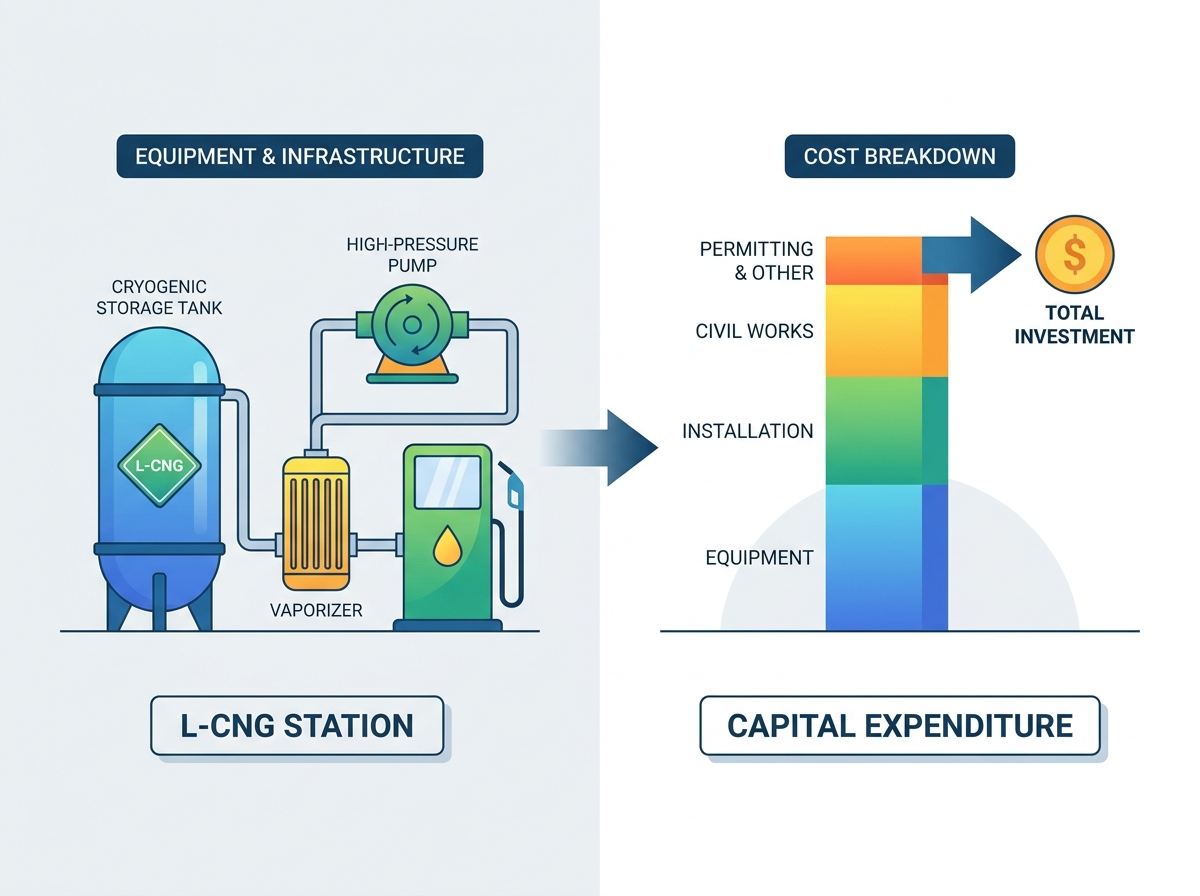
Evaluating an infrastructure project requires a deep understanding of the variables that push expenditures up or down. A project on the low end might utilize modular skids, existing reinforced concrete pads, and favorable local zoning that requires minimal permitting. A high-end project involves custom combination stations, extensive civil engineering, high-capacity cryogenic storage, and complex gas routing systems. These engineering choices directly dictate the final L-CNG refueling station cost.
Site preparation forms the foundation of the initial investment and often presents the most unpredictable variables. Heavy cryogenic tanks require thick, reinforced concrete pads engineered to prevent settling under massive weight loads. Sites frequently need electrical infrastructure upgrades, including new transformers and switchgear, to support high-voltage pump motors and safety systems. Grading, trenching for conduit, and establishing proper drainage add to the civil engineering baseline.
Core equipment procurement represents the largest portion of the capital budget. You must source cryogenic storage vessels, high-pressure L-CNG pumps, vaporizers, odorization systems, and priority routing panels. Installation and commissioning involve highly specialized labor. Engineering, Procurement, and Construction (EPC) fees cover system integration testing and specialized cryogenic pipefitting. Improper pipefitting leads to thermal leaks and system inefficiencies, making experienced contractors non-negotiable.
The construction phase generally follows a strict sequence to ensure safety and compliance:
Conducting geotechnical evaluations and site grading to establish a stable foundation.
Pouring high-strength reinforced concrete pads with thermal breaks for cryogenic equipment.
Upgrading electrical service panels and routing underground conduit for power and telemetry.
Setting the cryogenic storage vessels and securing them to the foundation.
Installing and aligning high-pressure reciprocating pumps to ensure proper suction head.
Routing and welding cryogenic stainless steel piping according to ASME B31.3 standards.
Integrating priority panels, ground storage cascades, and vehicle dispensers.
Executing nitrogen pressure testing and system cool-down procedures prior to commissioning.
Energy consumption heavily influences ongoing operations. Running cryogenic liquid pumps draws significantly less electrical load compared to traditional mechanical gas compressors. This efficiency lowers monthly utility bills and reduces the strain on local electrical grids, which is particularly beneficial in areas with high peak demand charges.
Preventative maintenance requires a strict, proactive schedule. Facility managers must budget for cryogenic pump seal replacements, vaporizer defrosting cycles, and safety sensor calibration. Neglecting pump seals leads to liquid leaks, loss of containment, and immediate station shutdowns. Valves exposed to cryogenic temperatures require regular inspection to ensure they do not freeze open or closed during operation.
Feedstock logistics introduce variable costs that require careful management. Securing LNG bulk delivery contracts involves negotiating transportation fees, fuel price indexing, and delivery schedules. The distance from the primary LNG liquefaction plant to your depot directly impacts delivery surcharges. Operators must monitor these logistics closely to prevent fuel run-outs.
Peak dispensing demand dictates system sizing. Fueling fifty Class 8 trucks in a four-hour overnight window requires massive throughput. This peak demand forces operators to scale up the LNG tank capacity, pump flow rates, and vaporizer array size. Larger tanks and high-flow vaporizers increase the physical footprint and the upfront equipment investment. Conversely, a fleet that fuels steadily throughout a 24-hour period can utilize smaller equipment, reducing the initial capital outlay while maintaining the same total daily volume.
An L-CNG facility relies on a sequence of specialized components to move fuel from delivery to the vehicle tank safely and efficiently. Each component must handle extreme temperature variations and high pressures.
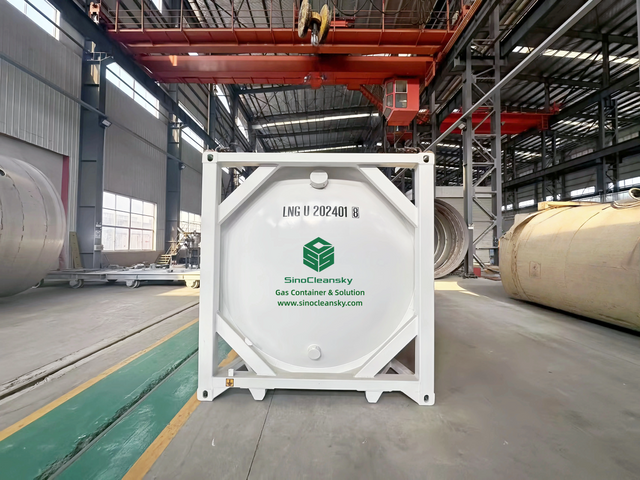
Bulk LNG sits in vacuum-insulated, double-walled tanks. These vessels feature an inner stainless steel tank to hold the liquid and an outer carbon steel jacket. The space between the two walls is filled with perlite insulation and pulled to a hard vacuum. This design acts like a giant thermos, holding liquid natural gas at -260°F (-162°C). Proper sizing prevents fuel starvation during peak fleet dispatch times. The vacuum layer prevents ambient heat from rapidly boiling the liquid inside, which is critical for maintaining stable tank pressure.
Cryogenic reciprocating pumps draw liquid from the storage vessel and elevate its pressure to 4,500 PSI or higher. The fluid remains liquid during this stage. Maintaining adequate Net Positive Suction Head (NPSH) prevents the liquid from vaporizing inside the pump head, a condition known as cavitation, which destroys pump seals. After pressurization, the liquid enters the vaporizer, where heat exchange converts the high-pressure liquid into high-pressure gas.
Operators must select the right vaporizer technology based on their climate, throughput needs, and available footprint.
Vaporizer Type | Mechanism | Pros | Cons |
|---|---|---|---|
Ambient Air | Uses surrounding air temperature to heat the liquid through aluminum fins. | Zero energy cost, simple design, low maintenance, no moving parts. | Large physical footprint, susceptible to heavy ice buildup and freezing in cold climates. |
Water-Bath | Submerges stainless steel coils in a heated water bath to vaporize the liquid. | Consistent performance regardless of weather, compact footprint, handles high flow rates. | Requires an external energy source (electricity or natural gas) to heat the water continuously. |
Gas-Fired | Burns a small amount of natural gas to generate direct heat for vaporization. | Extremely high capacity, completely immune to cold weather limitations. | Generates on-site emissions, higher operational complexity, requires exhaust venting. |
Once vaporized, the gas moves into ASME-rated ground storage cascades. These systems consist of high, medium, and low-pressure storage vessels. They buffer the vaporized gas to ensure immediate availability when a truck connects to the dispenser. Priority panels act as the brain of the dispensing system. They utilize a series of pneumatic valves to route gas efficiently from the cascades to the dispenser, ensuring fast-fill capabilities without pressure drops. The panel fills the vehicle from the low-pressure bank first, stepping up to the medium and high-pressure banks as the vehicle tank fills.
Drivers interact directly with transit-style or heavy-duty dispensers. These units feature mass flow meters for accurate billing, fuel tracking, and temperature compensation. Standard pipeline CNG requires extensive gas dryers to remove utility line moisture and compressor oil carryover. Because LNG undergoes rigorous purification prior to liquefaction, L-CNG systems often require less complex gas dryer and filtration systems, reducing maintenance overhead.
Many operators manage mixed fleets consisting of different vehicle classes. A custom-fit infrastructure can dispense both liquid LNG for heavy-duty long-haul trucks and vaporized CNG for medium-duty regional vehicles. This combination station runs from a single cryogenic storage system, maximizing the utility of the site footprint. A low-pressure centrifugal pump handles the LNG dispensing side, while the high-pressure reciprocating pump feeds the L-CNG vaporization circuit.
Building an off-grid fueling facility requires strict adherence to spatial and safety regulations. You cannot simply drop a cryogenic tank onto an empty lot. Extensive planning ensures the site operates safely and legally.
Space allocation dictates station layout. You must analyze the physical footprint required for horizontal or vertical LNG tanks, vaporizer arrays, and ground storage cascades. Bulk LNG delivery tankers require massive turning radii. The site must accommodate a WB-67 design vehicle (a standard 53-foot trailer) entering, unloading, and exiting without reversing into public traffic or maneuvering dangerously close to the cryogenic equipment.
Safety distances govern where equipment can sit. You must navigate mandatory setback distances from property lines, public roads, overhead power lines, and adjacent structures. Fire codes dictate exactly how far a cryogenic vessel must be from an ignition source, property lines, and other hazardous materials. These setbacks often force operators to rethink their initial site layouts.
Authoritative frameworks guide every installation. Engineers must adhere to NFPA 52 (Vehicular Natural Gas Fuel Systems Code) and NFPA 59A (Standard for the Production, Storage, and Handling of LNG). Local fire marshals have the final say on site approval and will scrutinize the engineering drawings before issuing construction permits.
Hazard mitigation systems protect the facility and personnel. Integration of methane gas detectors alerts operators to invisible leaks before they reach combustible concentrations. UV/IR flame detectors spot fires instantly. Emergency Shutdown (ESD) systems automatically close pneumatic fail-closed valves and cut power to all pumps the moment a sensor trips, isolating the fuel supply and preventing disaster.
Operating cryogenic equipment introduces specific risks that standard CNG stations do not face. Proactive management ensures uptime, safety, and financial viability.
Heat ingress into the LNG tank remains a constant physical reality. Even the best vacuum insulation allows some heat transfer from the ambient environment. This heat causes the liquid to vaporize into Boil-Off Gas (BOG). If not managed, pressure builds inside the tank. Eventually, mechanical relief valves open, venting methane into the atmosphere. This results in lost fuel, financial waste, and environmental emissions.
Mitigation requires matching station capacity to fleet behavior. Size the station correctly so daily fleet consumption outpaces BOG generation. Drawing liquid out of the tank naturally reduces internal pressure. For fleets with irregular fueling schedules or extended weekend downtime, installing BOG recovery systems or small-scale re-liquefaction units captures the gas and returns it to the liquid state, eliminating venting.
L-CNG stations depend entirely on trucked-in fuel. Running out of fuel paralyzes fleet operations and destroys delivery schedules. Supply chain disruptions at the primary LNG liquefaction plant, driver shortages, or adverse weather delaying tanker trucks pose severe risks to station uptime.
Mitigation relies on redundancy and technology. Establish backup supply contracts with secondary liquefaction facilities in different geographic regions. Implement remote tank telemetry for automated reordering. Telemetry systems use cellular or satellite connections to monitor tank levels in real-time and dispatch delivery trucks automatically when inventory drops below a predetermined threshold. Maintain a minimum three-day strategic fuel reserve on-site to weather logistical hiccups.
Inexperienced contractors cause massive cost overruns and dangerous operating conditions. Mishandling cryogenic piping leads to thermal contraction leaks. Failing local safety inspections delays facility opening by months, stranding fleet assets.
Mitigate this by partnering exclusively with EPC firms that have a proven portfolio of commissioned L-CNG or LNG facilities. Verify their past projects and speak with previous clients. Cryogenic engineering requires specific welding certifications (such as ASME B31.3) and material knowledge that standard commercial plumbers do not possess. Ensure the contractor understands the thermal expansion and contraction rates of stainless steel piping.
Building the business case for an off-grid station requires analyzing long-term fuel savings against upfront capital requirements. A well-structured financial model ensures the project delivers value over its operational lifespan.
Financial modeling hinges on diesel displacement. Calculate the payback period by comparing the locked-in bulk LNG price, plus operational costs, against projected wholesale diesel prices. Natural gas historically offers price stability compared to the volatile diesel market. High-mileage fleets achieve faster payback periods because they consume more fuel, multiplying the arbitrage savings. Track the exact number of diesel gallons displaced annually to measure the true financial impact of the station.
Public funding heavily influences project viability and accelerates the payback period. Factor in federal, state, and local infrastructure grants. Programs like the Congestion Mitigation and Air Quality (CMAQ) program or VW Settlement funds often target heavy-duty emissions reductions and provide substantial capital for infrastructure development. Alternative fuel infrastructure tax credits can offset a massive percentage of the initial capital expenditure. Securing these funds requires applying early in the project design phase, often before any equipment is ordered or ground is broken.
Initiate a formal fleet route analysis to determine daily fuel consumption and peak dispensing windows.
Conduct a site feasibility study to verify turning radii, setback compliance, and electrical capacity.
Engage with a specialized alternative fuel infrastructure consultant to draft a preliminary front-end engineering design (FEED).
Secure bulk LNG supply quotes from multiple regional liquefaction plants to guarantee feedstock availability.
Beijing SinoCleansky Technologies Corp manufactures key equipment for the natural gas industry and provides integrated CNG, LNG, and NGV solutions combining products, technology, and service. Its capabilities cover high-pressure and cryogenic equipment, modular system design, and full-cycle project support from engineering to operation and maintenance.
A: Costs depend heavily on peak dispensing demand, which dictates the size of cryogenic storage tanks and vaporizer arrays. Site preparation, including reinforced concrete pads and electrical upgrades, also drives expenses. Modular skid-mounted units generally require less upfront capital than permanent, custom-built combination stations.
A: Traditional CNG relies on utility pipelines, using mechanical compressors to push low-pressure gas to high pressures. L-CNG operates off-grid by receiving delivered liquid natural gas. It pumps the liquid to high pressure and then vaporizes it into a gas, which consumes significantly less electrical energy.
A: Yes. Combination stations use a single cryogenic storage system to dispense liquid LNG directly to heavy-duty trucks while simultaneously routing liquid through vaporizers to dispense high-pressure CNG to medium-duty vehicles.
A: Cryogenic pumps require strict preventative maintenance. Operators must regularly inspect and replace pump seals to prevent liquid leaks. Routine sensor calibration and monitoring of thermal insulation integrity are also mandatory to maintain safe operations.
A: Ambient air vaporizers rely on surrounding temperatures to heat the liquid. In freezing climates, ice builds up on the vaporizer fins, drastically reducing efficiency. Facilities in cold regions often require water-bath or gas-fired vaporizers to ensure consistent gas production.
A: BOG occurs when ambient heat penetrates the insulated storage tank, causing liquid natural gas to vaporize and build pressure. Operators manage it by sizing the station so daily fleet fuel consumption naturally relieves tank pressure, or by installing BOG recovery systems.