Views: 0 Author: Site Editor Publish Time: 2026-07-15 Origin: Site
Transporting and storing large volumes of compressed natural gas presents a significant logistical bottleneck when fixed pipeline infrastructure is unavailable or economically unviable. Remote industrial operations, off-grid power generation facilities, and rapidly scaling petrochemical plants often face physical limitations that make traditional gas distribution impossible. Operators must balance the need to maximize payload capacity per trip while minimizing residual gas losses during decanting. They also face strict footprint constraints on-site and must adhere to rigorous weight and safety regulations. You need a solution that bridges the gap between high-volume demand and geographical isolation without requiring years of infrastructure development.
The CNG Jumbo Tube Skid serves as a dual-use solution for both mobile transport and compact stationary storage. It effectively creates a virtual natural gas pipeline for continuous energy supply. This technical evaluation guide helps engineering and procurement teams assess skid configurations, material trade-offs, and space optimization strategies. You will learn how to configure these systems to ensure maximum gas utilization and operational efficiency in the field.
Virtual Pipeline Enablement: CNG jumbo tube skids allow for the transport of massive gas volumes (often exceeding 290,000 SCF per trailer) to off-grid industrial sites, petrochemical facilities, and refueling stations.
Gas Utilization Matters: Efficient manifold design, minimized gas loss engineering, and pressure management can increase usable gas yields by up to 15%.
Space Optimization: The compact design of jumbo tube skids allows high-density energy storage within a minimal physical footprint, crucial for tight industrial and urban environments.
Material and Weight Trade-offs: Selecting between Type I (all-steel) and advanced composite cylinders dictates the balance between upfront capital expenditure, payload capacity, and regulatory weight limits.
Compliance is Non-Negotiable: Viable systems must demonstrate strict adherence to regional and international standards (e.g., DOT, ASME, ISO) alongside integrated safety mechanisms like pressure relief devices (PRDs).
Table of Contents
Physical pipelines become economically unviable when traversing difficult terrain, crossing protected environmental zones, or serving temporary operational sites. Mobile storage becomes necessary to maintain continuous gas supply without infrastructure delays. Success in these scenarios relies on deploying equipment that guarantees uninterrupted flow rates matching site demands. Operators must evaluate transport mechanisms based on their ability to sustain high-capacity delivery cycles under demanding field conditions.
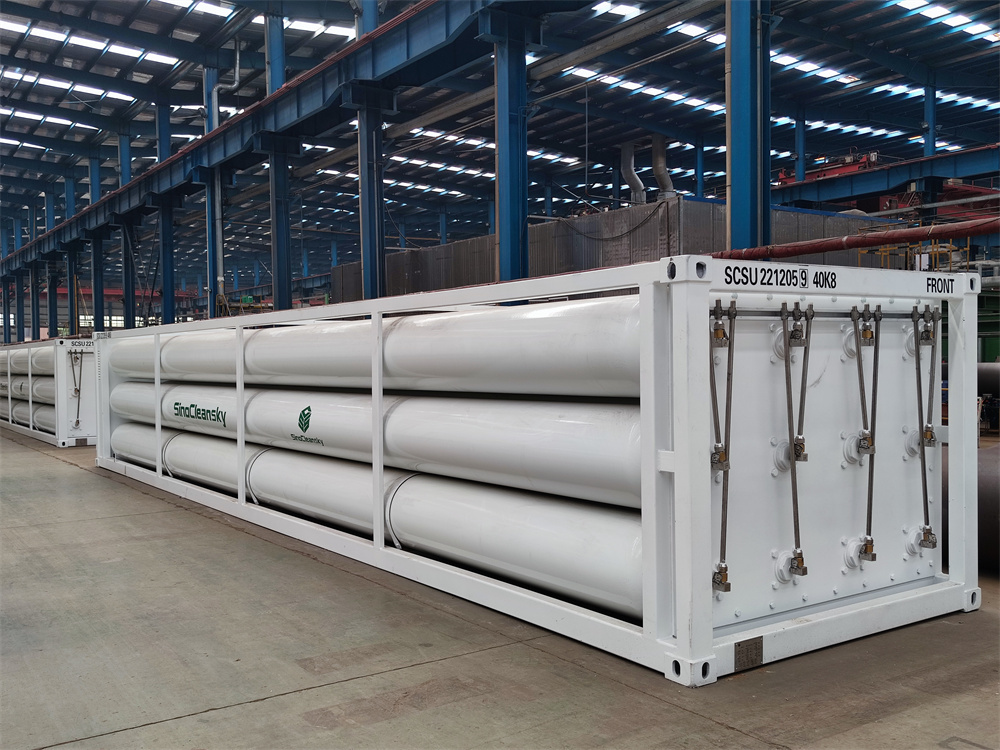
Jumbo and superjumbo skids offer significantly higher capacities compared to standard tube trailers. They utilize larger diameter tubes—often ranging from 18 to 24 inches—and higher pressure ratings, typically operating between 2,748 PSI and 3,600 PSI. This increased density consolidates the physical footprint and drastically reduces the number of required transport trips. Fewer trips mean lower logistical friction, reduced driver hours, and a more reliable virtual pipeline network. When you scale up the tube diameter, you decrease the number of valves, fittings, and potential leak points compared to older designs that used dozens of smaller cylinders.
Space optimization is a critical factor for industrial yards and urban staging areas. A CNG Jumbo Tube Skid packs massive storage capacity into a highly consolidated structure. Operators can deploy high-volume gas storage in constrained environments where traditional storage tank cascades are physically impractical. The vertical and horizontal stacking of large-diameter cylinders maximizes the volume-to-footprint ratio. You can place a 40-foot ISO skid in a standard loading bay, connect it directly to the pressure reduction station, and begin decanting immediately.
Intermodal transport compatibility further enhances operational flexibility. Manufacturers build jumbo skids into standard ISO container frames. This structural design allows for seamless transfer between marine, rail, and over-the-road transport. Logistics teams can route gas through diverse supply chains without needing to decant and transfer the product between different vessels. The corner castings on the ISO frame allow standard cranes and reach stackers to lift the fully loaded skid, moving it from a railcar to a flatbed truck in minutes.
Feature | Standard Tube Trailer | Jumbo Tube Skid (ISO Frame) |
|---|---|---|
Tube Diameter | 9 to 12 inches | 18 to 24+ inches |
Operating Pressure | 2,400 to 2,800 PSI | 2,748 to 3,600+ PSI |
Transport Method | Dedicated chassis only | Intermodal (Rail, Marine, Road) |
Footprint Efficiency | Low to Moderate | Extremely High |
Valve Complexity | High (many small tubes) | Low (fewer large tubes) |
Industrial processing and power generation facilities heavily rely on continuous energy inputs. Jumbo skids serve as primary or backup fuel sources for off-grid manufacturing plants, mining operations, and remote power generation facilities. They provide the necessary volume to keep turbines and furnaces running when grid connections fail or remain unbuilt. In mining operations, for example, operators use these skids to fuel massive haul trucks converted to run on dual-fuel systems, significantly cutting down on diesel consumption.
Petrochemical, chemical, and refining plants require high-purity natural gas feedstocks. These facilities use tube skids to maintain emergency fuel supplies during planned pipeline maintenance or sudden grid curtailments. The mobile nature of the skids ensures that critical chemical reactions and refining processes do not suffer from unexpected pressure drops or supply interruptions. When a cracker plant needs a specific blend of gas to maintain a reaction, a dedicated skid can deliver that exact specification directly to the intake manifold.
Natural Gas Vehicle (NGV) refueling stations frequently employ mother-daughter models. In a daughter station setup, jumbo skids function as both the transport vessel and the on-site ground storage. A truck delivers the full skid, connects it directly to the station's dispensers through a compressor or pressure reduction system, and leaves an empty skid for the return trip. This eliminates the need for permanent, bulky ground storage cascades at the retail site. It also allows station operators to scale their capacity simply by adding more parking bays for incoming skids.
Oil and gas operators use tube skids for flare gas recovery at remote wellpads. Capturing associated petroleum gas (APG) reduces emissions and generates secondary revenue. The skids collect the compressed gas directly from the wellhead processing equipment, allowing operators to transport and monetize gas that would otherwise be burned off into the atmosphere. Field crews connect the skid to a mobile compressor unit, fill the cylinders to maximum pressure, and dispatch the gas to regional processing plants or local power generators.
Understanding the thermodynamics of decanting is essential for maximizing yield. Typical configurations range from fourteen-tube arrangements to alternative large-diameter setups. Specific operating pressures balance payload volume against vehicle gross weight ratings. Higher pressures allow more gas per tube, but require robust, heavier cylinder walls. When gas expands during the decanting process, it absorbs heat, causing a significant temperature drop known as the Joule-Thomson effect. If not managed properly, this temperature drop can freeze valves and damage downstream equipment.
Residual gas, often called the "heel," remains in the tubes after decanting. Advanced manifold routing, multi-stage pressure reduction systems, and compression integration minimize these gas losses. Proper engineering can improve utilization rates significantly. Operators must synchronize the skid's output capabilities with the receiving station's intake parameters to ensure maximum evacuation. Using a scavenger compressor at the receiving site can pull the remaining gas out of the skid, dropping the internal pressure down to 50 PSI or lower, ensuring you are not paying to transport empty space back to the mother station.
The physical layout of the tubes inside the frame also dictates performance. Engineers design the bulkheads and trunnion mounts to allow for the natural expansion and contraction of the cylinders under pressure. Rigid mounting can lead to metal fatigue and eventual failure. The skid must allow the tubes to "breathe" while keeping them securely anchored against the extreme forces of emergency braking or rail yard shunting.
Material selection directly impacts payload and logistics. Type I cylinders consist of all-steel construction. They are heavy and highly durable, making them best suited for stationary storage or short-haul applications where road weight limits are less restrictive. Steel cylinders handle rough handling well and have a long track record of reliability in harsh industrial environments.
Type II, III, and IV cylinders incorporate advanced composites. These materials lower the overall weight of the skid, allowing for maximum gas payload under strict road weight limits. Composite cylinders are ideal for long-haul virtual pipelines where maximizing the gas-to-weight ratio is critical for operational efficiency. Type IV cylinders, which use a polymer liner wrapped entirely in carbon fiber, offer the greatest weight savings but require careful handling to prevent impact damage to the composite shell.
Cylinder Type | Material Composition | Weight Profile | Best Application |
|---|---|---|---|
Type I | All Steel | Heaviest | Stationary storage, short-haul transit |
Type II | Steel hoop-wrapped with composite | Medium | Regional transport, moderate payloads |
Type III | Aluminum liner fully wrapped with composite | Light | Long-haul transit, high payloads |
Type IV | Polymer liner fully wrapped with composite | Lightest | Maximum payload under strict weight limits |
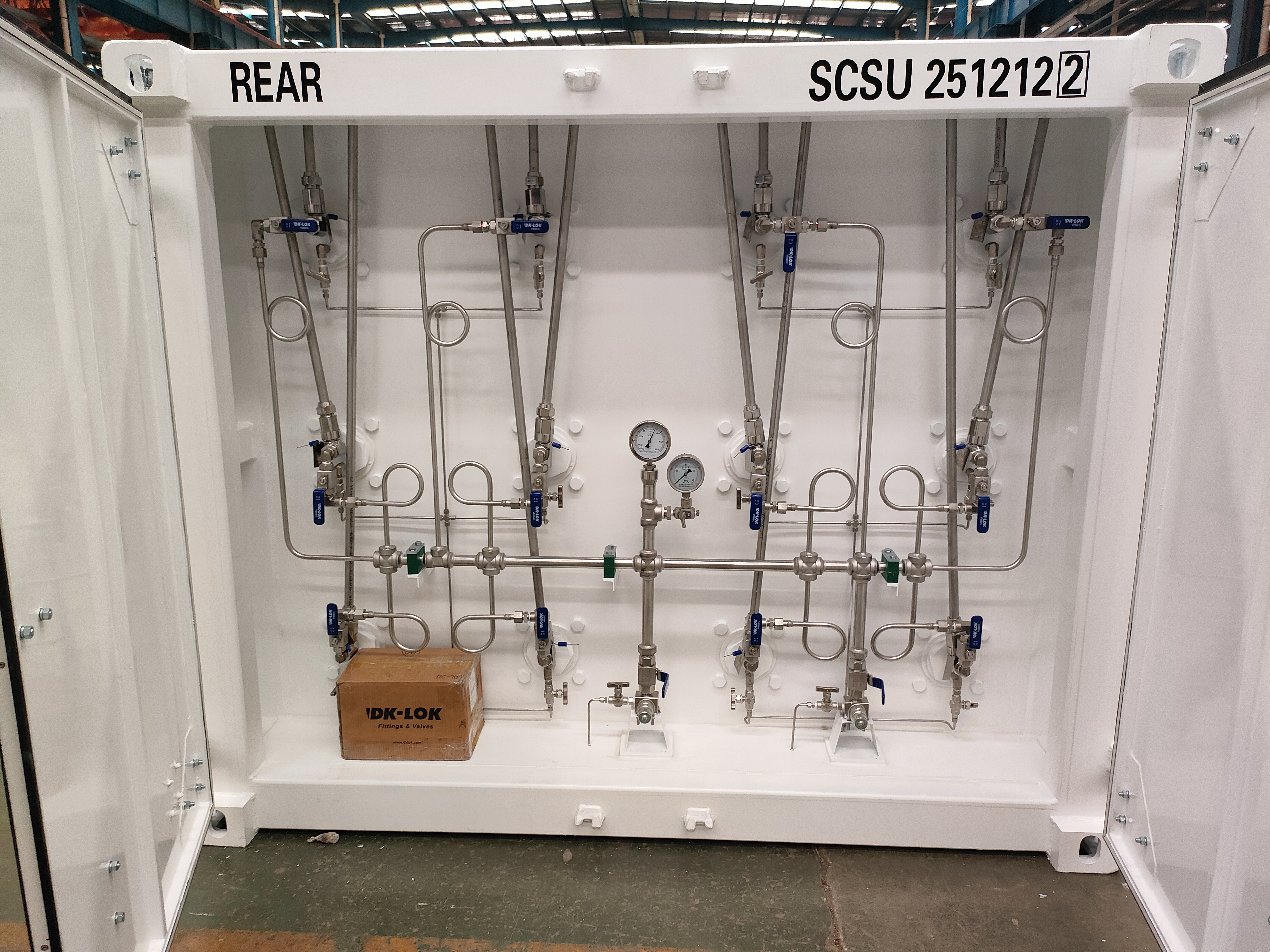
The manifold system dictates the speed and safety of gas transfer. Vibration-resistant fittings are mandatory to withstand the rigors of over-the-road transport. Dual-valve isolation provides redundancy during maintenance and emergency shut-offs. High-flow capacity designs prevent bottlenecks during rapid filling and decanting, ensuring quick turnaround times at both the mother and daughter stations.
Engineers often design manifolds with cascade filling capabilities. This allows the operator to draw gas from specific banks of tubes sequentially, maintaining higher delivery pressures for longer periods. The manifold must also include accessible blowdown valves to safely depressurize the system before maintenance. Using stainless steel tubing and high-grade Swagelok or Parker fittings ensures leak-free operation over thousands of thermal and pressure cycles.
Authoritative certifications are mandatory for any gas transport equipment. Buyers must verify adherence to regional and international regulatory frameworks. In the United States, Department of Transportation (DOT) compliance is required for transit. ASME boiler and pressure vessel codes govern the structural integrity of the cylinders. ISO standard container certifications ensure safe handling during intermodal transfers. Operating uncertified equipment invites catastrophic failure and severe legal consequences.
Integrated safety mechanisms protect personnel and infrastructure. Thermally activated Pressure Relief Devices (PRDs) and burst discs are critical components. In the event of a fire or extreme over-pressurization, these devices safely vent the gas to prevent catastrophic cylinder failure. PRDs are strategically located along the length of the tubes, ensuring that localized heat sources trigger a safe release before the cylinder material weakens.
Structural safety extends beyond the cylinders. The ISO frame must feature impact-resistant framing and roll-over protection. Anti-corrosion coatings are necessary to protect the steel components from harsh environmental conditions, especially in marine or heavy industrial applications. Regular inspections of the frame's corner castings and structural welds are just as important as testing the pressure vessels themselves.
Testing and recertification cycles dictate the long-term viability of the equipment. Depending on the jurisdiction and cylinder type, operators must perform Acoustic Emission Testing (AET) or hydrostatic testing every five to ten years. AET allows technicians to test the cylinders without removing them from the frame or introducing water into the system, significantly reducing downtime. Hydrostatic testing requires filling the tubes with water and pressurizing them to measure volumetric expansion, which necessitates a thorough drying process to prevent internal corrosion.
Site preparation requires careful attention to decanting infrastructure. A significant risk involves mismatched flow rates between the skid and the site's Pressure Reduction Station (PRS). If the PRS cannot handle the skid's output pressure, freezing or flow restrictions will occur. Mitigate this by ensuring synchronized engineering between the transport equipment and the receiving infrastructure. Install line heaters upstream of the regulators to counteract the Joule-Thomson cooling effect and keep the gas flowing smoothly.
Logistics and route planning present physical challenges. Maneuvering superjumbo trailers requires adequate turning radii and clearance. Bridge weight limits can restrict access to remote sites. Mitigate these constraints through rigorous route surveys prior to procurement. Ensure the selected skid configuration complies with all local transport regulations along the intended route. You must account for seasonal road weight restrictions, which can severely limit the payload you are legally allowed to transport during spring thaws.
Operator training is another critical mitigation strategy. The personnel connecting and disconnecting the high-pressure hoses must understand the specific valving sequence of the manifold. Opening a high-pressure valve too quickly can cause a pressure spike that damages downstream regulators or causes a hose whip. Implement strict standard operating procedures (SOPs) and require hands-on training for all field technicians handling the equipment.
Selecting the right CNG Jumbo Tube Skid requires balancing storage capacity, gas utilization efficiency, transport flexibility, safety compliance, and long-term operating costs. By carefully evaluating cylinder materials, pressure ratings, manifold configurations, and site-specific operating conditions, companies can build a reliable virtual pipeline system that delivers safe, efficient, and continuous natural gas supply.
Working with an experienced CNG equipment manufacturer is equally important for ensuring long-term system reliability and operational efficiency. SinoCleansky specializes in advanced CNG storage and transportation equipment, providing customized jumbo tube skid solutions, professional engineering support, and reliable gas transportation systems for industrial, petrochemical, and energy projects worldwide.
Conduct a detailed site assessment to verify gas demand, flow rate, and available installation space.
Compare cylinder types, pressure ratings, and manifold designs based on transportation distance and payload requirements.
Verify compliance with DOT, ASME, ISO, and other applicable international standards before procurement.
Establish standardized operating procedures and regular inspection plans to maximize equipment safety, gas utilization, and long-term operational performance.
A: Standard volume ranges typically fall between 200,000 and over 300,000 Standard Cubic Feet (SCF). The exact capacity depends heavily on the operating pressure, the type of cylinder material used, and the specific tube configuration within the ISO frame.
A: Jumbo skids feature larger tube diameters and higher total payload capacities. They utilize a space-optimized compact layout integrated into standard ISO frames, which allows for seamless intermodal transport across marine, rail, and road networks.
A: Common operating pressures range from 2,748 PSI to 3,600 PSI. Higher pressure ratings increase the storage density of the gas, allowing more volume to be transported, but require stronger, often heavier cylinder walls that impact gross vehicle weight.
A: The operational lifespan generally ranges from 15 to 30 years. This duration depends on the cylinder material, the number of pressurization fatigue cycles, environmental exposure, and strict adherence to mandatory recertification testing.
A: Gas utilization efficiency measures the ratio of delivered gas versus the residual gas (heel) left in the tubes. Multi-stage decanting and specialized manifold systems can minimize this gas loss, improving evacuation rates by up to 15 percent.
A: While structurally similar, they are not suitable. Hydrogen requires different metallurgy to prevent hydrogen embrittlement and operates at much higher pressures. You must utilize specific, certified hydrogen tube skids for H2 transport.