Views: 0 Author: Site Editor Publish Time: 2026-07-15 Origin: Site
Mid-volume gas consumers face a distinct operational bottleneck when scaling energy infrastructure. Relying on high-pressure cylinder swap-outs introduces heavy labor demands and physical safety risks on the facility floor. Conversely, jumping straight to permanent bulk installations requires massive capital and extensive site space that many plants simply do not have. Improper storage scaling leads to continuous downtime, excessive residual gas waste through venting, inconsistent supply pressure at the burner tip, and inflated delivery logistics. Finding the correct intermediate solution keeps production running and overhead in check. Evaluating whether an LNG Microbulk Tank fits your facility requires analyzing consumption thresholds, site constraints, and specific technical requirements. This guide breaks down the exact specifications, infrastructure demands, and performance metrics needed to select the optimal microbulk storage solution for industrial applications.
Consumption Thresholds: Transitioning to microbulk is typically justified when operations consume the equivalent of 10–20+ high-pressure cylinders per week, or when liquid natural gas conversion demands a steady on-site footprint.
Performance Metrics: Tank selection must prioritize low Normal Evaporation Rates (NER) to keep daily vent loss below 1% and maintain product integrity over extended idle periods.
Infrastructure Requirements: Successful implementation requires assessing site footprint, concrete pad specifications, and strict adherence to local fire codes and cryogenic storage regulations (e.g., NFPA 59A).
Operational ROI: ROI is driven by eliminating residual gas returns, reducing delivery frequency, utilizing telemetry for automated refills, and minimizing transport emissions.
Table of Contents
Managing high-pressure cylinders involves hidden operational burdens that compound over time. Labor hours are continuously diverted to disconnect, move, and reconnect heavy cylinders, interrupting core production processes. Physical safety hazards increase with every manual handling event, raising the risk of workplace injuries such as pinch-point trauma or strain. Furthermore, operations rarely utilize the entire volume of a cylinder. Approximately 10 to 15 percent of the gas remains inside as residual pressure and is returned to the supplier, representing direct financial waste. Vaporizing liquid from cylinders during peak demand periods also causes volatile supply pressure, which disrupts sensitive industrial burners and processing equipment.
To understand the full impact of cylinder reliance, facility managers must audit their weekly handling metrics. The labor required to manage a manifold system often requires dedicated personnel simply to monitor gauges and swap empty tanks. When a facility runs multiple shifts, the risk of a run-out during off-hours increases, leading to unplanned production stops. The physical footprint of storing full and empty cylinders also consumes valuable warehouse or yard space that could be allocated to revenue-generating activities.
The microbulk sweet spot exists for operations that require continuous flow and consistent pressure, where gas volumes exceed the efficiency of cylinder packs but do not justify the installation of a massive 3,000+ gallon bulk tank. An on-site refillable LNG Microbulk Tank eliminates the need for manual cylinder handling entirely. This transition ensures uninterrupted supply during peak production and significantly reduces safety incidents associated with moving heavy high-pressure vessels.
To accurately assess your needs, convert Standard Cubic Feet (SCF) of gaseous natural gas to liquid liters of LNG. This volumetric conversion allows buyers to calculate the exact tank size required to replace their current cylinder consumption. A standard conversion metric dictates that one liquid liter of LNG expands to approximately 21 standard cubic feet of natural gas. By tracking weekly SCF usage, plant engineers can size a microbulk vessel that holds a two-to-three-week supply, optimizing delivery schedules.
Storage Method | Ideal Volume Range | Labor Requirement | Pressure Stability | Footprint Efficiency |
|---|---|---|---|---|
High-Pressure Cylinders | Low (1-9 cylinders/week) | High (Constant manual swaps) | Variable (Drops during peak draw) | Poor (Requires space for empties) |
LNG Microbulk Tank | Medium (10-50 cylinder equivalent) | Zero (Automated telemetry refills) | Highly Stable (Internal pressure builder) | Excellent (High density vertical storage) |
Traditional Bulk Storage | High (Massive continuous flow) | Zero (Automated bulk deliveries) | Highly Stable (Large external vaporizers) | Extensive (Requires massive concrete pads) |
While microbulk systems offer excellent flexibility, they have upper limits regarding flow rates and storage duration. Scenarios demanding permanent, large-scale bulk systems typically involve massive continuous flow rates that exceed the vaporization capacity of microbulk setups. Heavy utility-scale power generation facilities, major industrial manufacturing plants, and continuous high-draw chemical processing sites require the sheer volume and sustained pressure capabilities that only traditional bulk storage tanks can provide.
Bulk tanks, often exceeding 3,000 gallons, require extensive civil engineering for installation. They demand deep-foundation concrete pads, complex external vaporization arrays, and significant setback distances from property lines. If your facility operates large-scale furnaces or continuous-process kilns that draw thousands of cubic feet per hour, a microbulk system will likely freeze up due to the rapid liquid-to-gas conversion demand. In these heavy industrial applications, traditional bulk storage remains the only viable engineering solution.
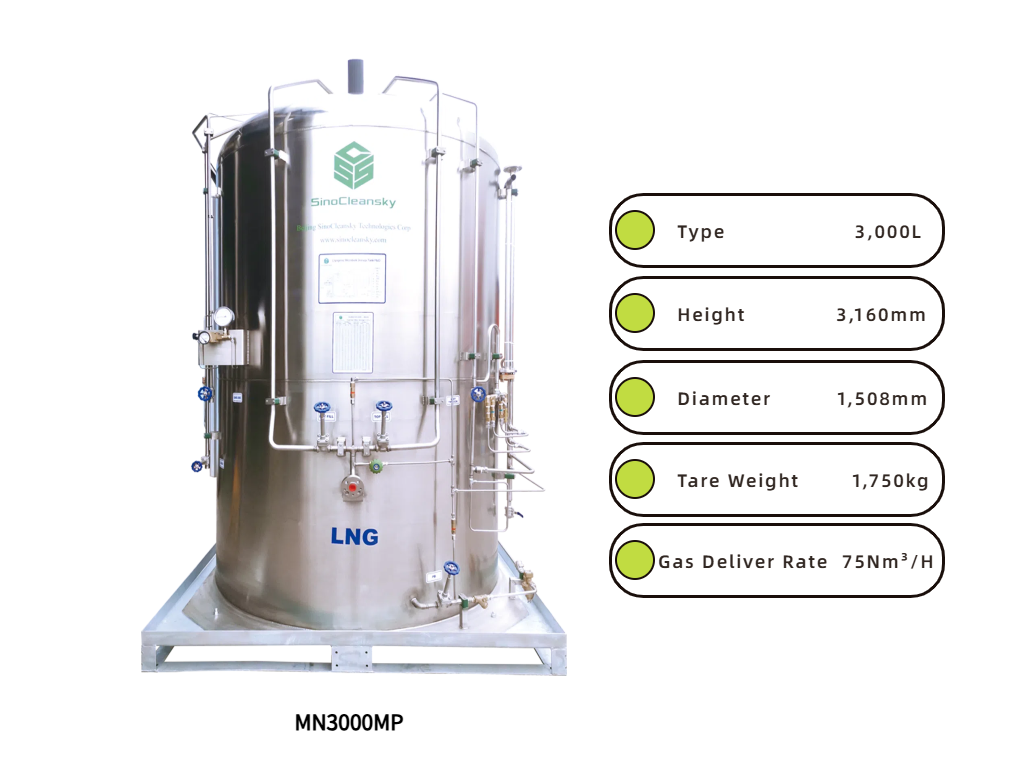
Standard capacity ranges for microbulk systems typically span from 450 to 3,000 liters, accommodating varying physical dimensions and site constraints. To determine the correct volume, calculate your peak daily consumption rate, add your target safety stock days, and factor in the supplier's delivery cycle. This formula yields the recommended tank volume to prevent run-outs. Buyers must also choose between stationary tanks for permanent installations and mobile or skid-mounted configurations, which offer flexibility for temporary projects or evolving site layouts.
When sizing the vessel, engineers must account for the usable volume versus the gross volume. Cryogenic tanks are never filled to 100 percent capacity; a vapor space (ullage) of approximately 10 percent is maintained at the top of the tank to allow for liquid expansion. Therefore, a 1,000-liter tank provides roughly 900 liters of usable LNG. Failing to account for this ullage space during the sizing phase can result in undersized equipment and overly frequent delivery schedules.
Audit current weekly gas consumption in standard cubic feet (SCF).
Convert SCF to liquid liters to determine baseline volumetric requirements.
Multiply daily liquid liter usage by the desired number of days between deliveries.
Add a 20 percent safety margin to account for production spikes or delivery delays.
Divide the final number by 0.9 to account for the required 10 percent vapor space (ullage).
Cryogenic storage relies heavily on multi-layer vacuum-jacketed super-insulation to maintain the extremely low temperatures required for liquefied natural gas. When evaluating an LNG Microbulk Tank, scrutinize the Normal Evaporation Rate (NER) specifications. A low NER ensures minimal product loss during low-usage periods or weekend idle times. High-quality vacuum insulation maintains thermal equilibrium inside the inner vessel, preventing rapid pressure buildup and the premature lifting of the safety relief valve, which would otherwise result in vented gas waste.
The NER is typically expressed as a percentage of the total tank volume lost per day under static conditions. Industry-leading microbulk tanks achieve an NER of less than 1.5 percent per day. If a facility shuts down operations over the weekend, a tank with poor thermal performance will build pressure rapidly. Once the internal pressure exceeds the Maximum Allowable Working Pressure (MAWP), the relief valve opens, venting valuable natural gas into the atmosphere. Selecting a tank with superior vacuum integrity directly prevents this product loss.
Matching the tank’s Maximum Allowable Working Pressure (MAWP) with your specific application is crucial for system performance. Low-pressure burners require different tank configurations compared to high-pressure industrial cutting or processing systems. The internal pressure building circuits within the tank dictate how effectively the system can sustain gas flow rates during continuous draw. Ensure the selected tank can maintain the required delivery pressure without starving the downstream equipment during peak operational hours.
The pressure building circuit works by taking a small amount of liquid from the bottom of the tank, vaporizing it, and routing the gas back into the top vapor space. This process artificially increases the head pressure, pushing the liquid out to the main process vaporizer. If the pressure building coil is undersized for your application, the tank pressure will drop during heavy usage, causing a low-pressure fault at your production equipment. Always verify the maximum sustained flow rate of the tank's internal circuitry against your peak demand.
Microbulk tanks are engineered to maximize storage density within a minimal physical footprint. Vertical tanks utilize vertical space, making them ideal for tight industrial yards, while horizontal tanks may be required where height restrictions exist. Replacing a manifolded cylinder pallet pack with a single compact, high-density microbulk tank dramatically reduces the required floor space. This consolidation frees up valuable real estate for other operational needs while simplifying the piping and connection infrastructure.
A standard 1,000-liter vertical microbulk tank typically requires a footprint of less than 16 square feet, yet it holds the equivalent gas volume of dozens of high-pressure cylinders. This high-density storage capability allows facility managers to install the tank close to the point of use, reducing the length of expensive cryogenic piping runs. When planning the installation, ensure the chosen location provides a clear, unobstructed path for the delivery driver to pull the hose from the truck to the tank fill connection.
Integrated telemetry is a vital feature for modern gas management, providing real-time data on liquid levels and differential pressure. Cellular or Wi-Fi telemetry systems transmit this data directly to the gas supplier. This connectivity enables predictive routing for delivery fleets, triggering automated dispatches before the tank reaches critical low levels. Consequently, operations eliminate the need for manual inventory checks and drastically reduce the risk of unexpected gas run-outs.
Modern telemetry units utilize differential pressure transmitters connected to the top and bottom of the inner vessel. By measuring the pressure difference, the system calculates the exact liquid level with high precision. This data is accessible via web portals, allowing plant managers to monitor consumption trends, track delivery history, and identify abnormal usage spikes that could indicate a leak in the downstream piping network. Reliable telemetry transforms gas supply from a reactive chore into a fully automated utility.
The vaporization system converts the stored liquid back into a usable gas. Internal pressure builders and integrated vaporizers are often sufficient for moderate, intermittent flow requirements. However, when operations demand continuous, high-draw gas conversion, external ambient air vaporizers become necessary to prevent the system from freezing up. Standard plumbing configurations must be evaluated to determine whether the application requires liquid withdrawal or gas withdrawal, ensuring the manifold aligns with the facility's distribution piping.
Vaporizer Type | Flow Capacity | Footprint | Best Application |
|---|---|---|---|
Internal / Integrated | Low to Moderate | Zero (Built into tank) | Intermittent use, low-draw burners |
External Ambient Air | High | Requires adjacent pad space | Continuous industrial processing |
Steam / Water Bath | Extremely High | Large footprint + utility connection | Heavy manufacturing, power generation |
Modern microbulk delivery trucks utilize specialized liquid hoses and vapor return lines to execute closed-loop, "no-loss" filling procedures. This method ensures zero atmospheric venting during the refill process, conserving product and maintaining safety. Standard fill connections and coupling sizes must interface seamlessly with regional industrial delivery fleets. Additionally, tanks must feature dual safety relief valve systems equipped with a three-way diverter valve. This setup ensures continuous over-pressure safety protection even when one valve is isolated for routine maintenance or inspection.
The closed-loop fill process connects the vapor space of the delivery truck to the vapor space of the receiving tank. As liquid is pumped into the tank, the displaced vapor is routed back into the truck, equalizing the pressure. This prevents the receiving tank from over-pressurizing and venting during the fill. Facility managers must verify that the tank's fill fittings match the supplier's hose connections, typically utilizing standard CGA cryogenic fittings, to ensure compatibility and prevent delays during the initial delivery.
Evaluating the financial impact of an LNG Microbulk Tank requires analyzing both upfront installation costs and long-term operational savings. While the initial CapEx for the tank, concrete pad, and piping is higher than renting cylinders, the OpEx drops significantly. Bulk-rate liquid pricing is inherently lower per cubic foot than cylinder gas. Furthermore, many suppliers offer equipment leasing agreements, allowing facilities to roll the tank cost into their monthly gas supply contract, thereby preserving capital for core business investments.
When calculating the return on investment, factor in the hard costs of cylinder rental fees, delivery surcharges, and hazmat fees applied to every cylinder shipment. Microbulk deliveries occur less frequently and deliver a much larger volume of product per trip, diluting these fixed delivery costs. Over a multi-year operational horizon, the shift from high-frequency cylinder deliveries to low-frequency bulk deliveries yields substantial reductions in monthly operating expenses.
Quantifying the financial impact of utilizing 100 percent of delivered gas reveals a major advantage of microbulk systems. With high-pressure cylinders, returning 10 to 15 percent of the gas as residual pressure means you are paying for product you cannot use. A microbulk system eliminates this waste entirely. The liquid is stored and vaporized on demand, ensuring every molecule purchased is routed to the process line.
Additionally, selecting a tank with a superior NER rating directly correlates to reduced product loss over time. If a facility experiences frequent weekend shutdowns, a poorly insulated tank will vent gas to relieve pressure. By investing in high-quality vacuum-jacketed insulation, the tank maintains thermal equilibrium, keeping the pressure below the relief valve setpoint and preserving the inventory until production resumes on Monday morning.
Bulk-style truck deliveries reduce per-unit gas costs by optimizing the supplier's logistics network. Telemetry-enabled tanks allow suppliers to route their trucks efficiently, delivering to multiple customers in a single geographic area based on real-time tank levels. This route optimization reduces the supplier's transportation costs, savings which are often passed down to the end-user in the form of lower bulk gas rates.
Fewer delivery trucks entering your facility also reduces site congestion and minimizes the administrative burden on receiving personnel. Instead of processing weekly invoices for dozens of cylinders, the accounting department processes a single monthly invoice for bulk liquid delivered. This streamlined administrative workflow further contributes to the overall operational efficiency gained by transitioning to a microbulk storage solution.
Installing cryogenic storage requires strict adherence to regulatory standards. Common hurdles include compliance with NFPA 59A (Standard for the Production, Storage, and Handling of Liquefied Natural Gas), alongside local zoning codes. Facility managers must carefully calculate setback distances from property lines, ignition sources, and combustible materials. Furthermore, seismic and wind-load calculations are mandatory to ensure structural compliance and safety in specific geographic regions prone to extreme weather or tectonic activity.
Engaging with the local Authority Having Jurisdiction (AHJ), typically the fire marshal, early in the planning phase prevents costly installation delays. The AHJ will review the site plan to ensure the tank is positioned safely away from building intakes, electrical transformers, and heavy traffic areas. Failure to secure the necessary permits and approvals before pouring the concrete pad can result in mandatory relocation of the equipment, severely impacting the project timeline.
The installation base must be engineered to support the substantial weight of a fully loaded cryogenic tank. Reinforced concrete pads are required to handle these specific weight loads and prevent settling over time. Physical clearances are equally important; the site must provide adequate access for delivery trucks. This includes ensuring the fill point is within the maximum hose reach of the delivery vehicle—typically up to 100 to 150 feet—and that the access route accommodates the necessary turning radius clearances for large commercial trucks.
Soil bearing capacity must be tested to ensure it can support the concrete pad and the fully loaded tank weight.
The concrete pad must extend below the local frost line to prevent heaving during winter months.
Bollards should be installed around the perimeter of the pad to protect the tank and piping from forklift or truck impacts.
The delivery truck parking area must be level and free of overhead obstructions like power lines or pipe racks.
Selecting the right gas supplier is as critical as choosing the tank itself. Evaluate the supplier's microbulk delivery fleet capabilities to ensure they can reliably service your location. Investigate their emergency maintenance response times and the specific terms outlined in their Service Level Agreements (SLAs). The flexibility of their gas supply contracts should align with your projected production fluctuations, ensuring you are not penalized for seasonal variations in gas consumption.
Review the maintenance responsibilities outlined in the contract. If leasing the tank, the supplier typically handles routine maintenance, vacuum testing, and relief valve replacements. If purchasing the tank outright, the facility assumes responsibility for these maintenance tasks. Ensure your internal maintenance team is trained on cryogenic systems, or secure a third-party service contract to keep the equipment compliant with annual inspection requirements.
An LNG Microbulk Tank offers the ideal balance between high-pressure cylinder systems and large-scale bulk storage, providing reliable gas supply, stable operating pressure, and lower long-term operating costs for mid-volume industrial users. By carefully evaluating storage capacity, evaporation performance, site conditions, and regulatory compliance, businesses can significantly improve energy efficiency while minimizing logistics and maintenance costs.
Working with an experienced cryogenic equipment manufacturer is equally important for ensuring product quality and long-term operational reliability. SinoCleansky specializes in advanced LNG storage and transportation equipment, customized cryogenic storage solutions, and comprehensive engineering support, helping industrial customers build safe, efficient, and reliable LNG supply systems for a wide range of energy applications.
Conduct a detailed assessment of current gas consumption and future production requirements before selecting tank capacity.
Verify site layout, concrete pad specifications, and local fire code requirements before installation.
Compare Normal Evaporation Rate (NER), telemetry functions, and vaporization capacity when evaluating different LNG microbulk tanks.
Establish preventive maintenance and inspection plans to maximize equipment safety, operating efficiency, and long-term service life.
A: Standard capacities typically range from 450 liters to 3,000 liters. This volume bridges the gap between manifolded high-pressure cylinder packs and massive permanent bulk tanks, providing sufficient storage for mid-volume industrial consumers without requiring extensive site modifications.
A: The space required includes the physical footprint of the tank itself, plus mandatory regulatory clearances. You must account for setback distances from property lines, building openings, and ignition sources as mandated by NFPA 59A and local fire codes.
A: High-quality tanks utilize multi-layer vacuum-jacketed super-insulation to achieve a low Normal Evaporation Rate (NER). This advanced insulation technology typically keeps daily vent loss below 1.5 percent during idle periods, preventing product waste.
A: Internal pressure builders and integrated vaporizers handle moderate flow. However, if your operation requires sustained, high-draw gas conversion, an external ambient air vaporizer is necessary to prevent the system from freezing and to maintain steady pressure.
A: Telemetry systems use cellular or Wi-Fi sensors to monitor the tank's liquid level and differential pressure in real time. This data is transmitted to the supplier, automatically triggering deliveries before the gas supply runs critically low.
A: Installations must comply with NFPA 59A, which dictates standards for the production, storage, and handling of liquefied natural gas. Compliance involves strict adherence to setback distances, structural pad engineering, and regional fire codes.
A: Tanks are filled on-site by delivery trucks using closed-loop, no-loss systems with specialized liquid and vapor return hoses. This process maintains continuous supply pressure to the process line, meaning operations do not need to shut down during refills.