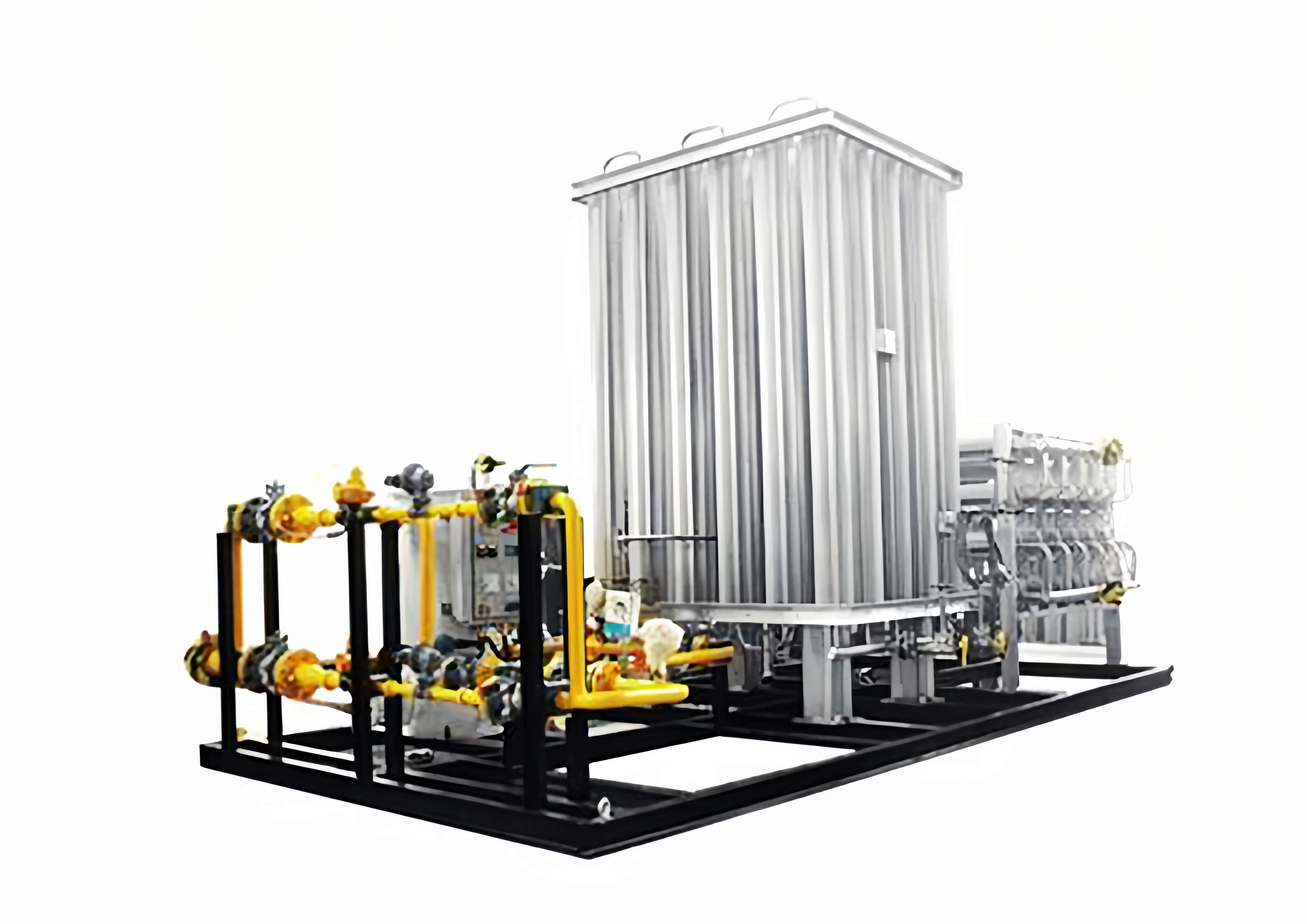
An LNG skid is a unit built on a frame. It helps you move, keep, and use liquefied natural gas fast and easily. You can set it up faster and spend less money than with old LNG systems. The table below shows the differences:
Aspect | Skid-Mounted LNG Systems | Traditional LNG Systems |
|---|---|---|
Installation Time | Quicker deployment | More complex and larger |
Cost | Generally lower | Higher due to complexity |
The worldwide LNG loading and unloading skid market should grow by 13.2% each year from 2026 to 2033.
LNG skids are fast to set up and cost less than old LNG systems.
They help change liquefied natural gas back into gas that people can use.
This process is safe.
Automation in LNG skids makes them easier to use.
People can watch and control them from far away.
Safety tools like emergency shut-off valves and gas detectors stop leaks and accidents.
The modular design means LNG skids are easy to move.
They can grow or shrink to fit what you need.
LNG skids work in factories, faraway places, and small towns.
Using LNG skids saves money because they take less time to set up and use less energy.
Checking valves and pipes often keeps the LNG skid system safe and working well.
Regasification lets you turn liquefied natural gas back into a usable gas form. You use an LNG skid to make this process fast and safe. The skid handles the cold liquid and changes it into gas for your needs.
You can vaporize LNG using different methods. The most common ways are shown in the table below:
Method Type | Description |
|---|---|
Ambient Vaporizer | Uses air around the unit to warm and vaporize LNG. |
Water Bath Vaporizer | Uses heated water to help LNG turn into gas. |
Ambient vaporizers use the air outside to warm the LNG. Water bath vaporizers use hot water to speed up the process. Both methods help you get natural gas ready for use.
Regulation and metering help you control the gas flow and measure how much gas you use. An LNG skid uses special meters, like Coriolis flowmeters, to give you real-time data. You can see exactly how much gas you get. Automated systems keep the gas pressure steady and safe. You can trust the skid to deliver the right amount of gas every time.
Liquefaction lets you turn natural gas into a liquid. You use an LNG skid to cool the gas until it becomes a liquid at very low temperatures. Small-scale LNG skids can produce between 10 and 200 tons of LNG each day. Most often, you see skids making 20 to 80 tons per day. Some skids can make up to 130 tons daily. You can choose the size that fits your needs.
Liquefaction makes it easier for you to store and move natural gas. You can use the liquid for fuel or send it to other places.
Loading and offloading help you move LNG from one place to another. You use an LNG skid to keep the LNG cold, around -162 degrees Celsius, during transfer. The skid has special valves, pumps, and insulated pipes. These parts make sure you move LNG safely and quickly.
Automation helps you control the process with less effort.
Safety systems protect you from accidents.
Flow meters measure the exact amount of LNG you load or unload.
The skid reduces gas losses, saving you money and keeping the operation safe.
You can trust an LNG skid to handle loading and offloading with high accuracy and strong safety features.
You use an LNG skid to keep liquefied natural gas safe. It stores the gas at very cold temperatures, about -162°C. This keeps the gas as a liquid. The skid protects the LNG from heat and leaks.
How Storage Works:
The skid has insulated tanks to hold LNG.
Vacuum-jacketed reservoirs block heat from getting in.
Pressure relief valves keep tanks safe if pressure rises.
Cryogenic instruments check the temperature and pressure.
How Dispensing Works:
Automated valves and pumps control the LNG flow.
The skid sends LNG to trucks, cylinders, or pipelines.
You can choose how much LNG to release.
Metering systems measure the exact amount you use.
Tip: Automation makes things simple. You press a button, and the skid does the work.
Safety Features:
Odorization systems add a smell so you notice leaks.
Emergency shut-off valves stop the flow if there is a problem.
Alarms warn you if temperature or pressure changes too much.
Storage & Dispensing Table
Feature | What It Does |
|---|---|
Insulated Tanks | Keep LNG cold and safe |
Automated Valves | Control LNG flow |
Metering Systems | Measure LNG dispensed |
Odorization | Help you detect leaks |
Emergency Shut-off | Stop LNG flow in emergencies |
You get a system that fits what you need. You can add more tanks or pumps for more storage or faster dispensing. The LNG skid gives you safety and flexibility for storing and using LNG.
You find that piping and valves form the backbone of any LNG skid. These parts move liquefied natural gas safely from one part of the system to another. You use special cryogenic piping that can handle very cold temperatures. This piping keeps the LNG cold and prevents leaks.
You also rely on different types of valves to control the flow. Each valve has a unique job:
Cryogenic Valves: These valves work well with very cold LNG and boil-off gas. They keep the system safe and reliable.
Globe Valves: You use these for precise control. They help you adjust the flow exactly as needed.
Butterfly Valves: These valves are simple and work well for large pipes. They let you move a lot of LNG quickly.
Ball Valves: You choose these when you need a tight seal. They stop leaks and keep the system secure.
Triple-Eccentric Butterfly Valves: These valves give you extra protection against leaks. They work best when you need strict isolation.
You also see vacuum-jacketed reservoirs in the piping system. These reservoirs keep the LNG cold by blocking heat from outside. Pressure relief valves protect you by releasing extra pressure if it builds up. Both features help you avoid dangerous situations.
Tip: Always check your valves and piping for frost or leaks. This keeps your system safe.
Pumps and compressors help you move LNG and gas through the system. You use pumps to transfer LNG from storage tanks to other parts of the skid. These pumps work at very low temperatures, sometimes as cold as -160°C. You can choose pumps with one or more stages, depending on how much LNG you need to move.
Here is a table showing key features of LNG pumps and compressors:
Feature | Details |
|---|---|
Suction Temperature | As low as -160°C |
Process Stages | Single or multi-stage for different needs |
Maintenance Access | Easy inspection with horizontal casing split |
Energy Efficiency | Adjustable inlet guide vanes save energy |
Compressors play a big role in handling boil-off gas. You use special compressor packages that are compact and easy to install. Some compressors can run for years without much maintenance. They help you keep the system running smoothly, even on ships or in remote areas.
Control systems make your LNG skid smart and safe. You use sensors to watch flow rates, pressure, and temperature all the time. The system can adjust valves and pumps automatically to keep everything running right. If something goes wrong, alarms warn you right away.
You also get emergency release systems. These systems disconnect parts of the skid quickly if there is a problem. This stops spills and protects you and your equipment. Batch control starts and stops loading when you need it. Flow control keeps the LNG moving at the right speed. Nitrogen purging helps you find leaks before they become a problem.
Note: Advanced control systems let you run your LNG skid with less effort and more safety.
You need strong safety features when you use an LNG skid. These features protect you, your team, and your equipment from accidents. They also help you meet strict international standards.
You find several layers of safety on every LNG skid. The most important features include fire protection, emergency shut-off systems, and leak detection. Each one plays a key role in keeping your operation safe.
Fire Protection Systems
You must have fire protection on your LNG skid. International rules say you need a fixed dry chemical powder system. This system fights fires in the cargo area. You get at least two hoses or monitors that can reach the manifold area. The system works fast and covers a wide space.
Here is a table that shows what international standards require for fire safety:
Requirement | Description |
|---|---|
Fixed dry chemical powder | Fights fires in the cargo area with at least two hoses or monitors that reach the manifold. |
Monitor discharge rate | Must release at least 10 kg of powder per second and reach 10 to 40 meters. |
Hose discharge rate | Each hose must release at least 3 kg per second and be easy for one person to use. |
System independence | Needs two separate systems with remote control and enough powder for at least 45 seconds. |
Emergency Shut-Off Valves
You use emergency shut-off valves to stop the flow of LNG if something goes wrong. These valves close fast to prevent spills or leaks. You can control them from a safe distance. This feature gives you time to act if there is a problem.
Gas and Leak Detection
You need sensors to find leaks or gas build-up. These sensors check the air for dangerous levels of gas. If they find a problem, alarms warn you right away. You can fix the issue before it gets worse.
Pressure Relief Valves
You find pressure relief valves on every LNG skid. These valves open if pressure gets too high. They keep tanks and pipes from bursting. You stay safe because the system releases extra pressure in a controlled way.
Other Safety Features
Odorization systems add a smell to the gas so you can notice leaks.
Alarms and warning lights tell you if something is wrong.
Safety barriers and shields protect you from moving parts and hot or cold surfaces.
Tip: Always check your safety systems before you start work. Good safety checks help you avoid accidents.
You can trust these safety features to keep your LNG skid running safely every day.
The LNG cylinder group regasification skid has three main parts. Each part helps turn liquefied natural gas into gas you can use. All the parts work together to give you safe and steady gas.
The LNG cylinders group stores liquefied natural gas. It supplies LNG for the next step. You can add more cylinders if you need extra gas. This group lets you move and assemble LNG and boil-off gas. The system keeps the gas cold and safe. You can move the cylinders to different places easily.
Tip: You can add or remove cylinders as needed.
The LNG periportal skid connects the cylinders group to the output skid. It acts like a bridge between the two parts. It sends LNG and boil-off gas for more processing. This part uses automation to control the flow. Sensors and valves help manage the transfer. The system checks pressure and temperature to keep things safe.
Here is a table showing what the periportal skid does:
Feature | What It Does |
|---|---|
Flow Control | Keeps gas moving smoothly |
Pressure Check | Monitors for safety |
Automation | Reduces manual work |
The LNG gasification output skid is the last step. It vaporizes LNG and mixes it with boil-off gas. Heat exchangers turn the cold liquid into gas. The output skid has systems for pressure, metering, and odorization. You can set the flow rate, temperature, and pressure. The system gives you natural gas that fits your needs.
You get a steady supply of gas. Automation makes the process simple. You press a button, and the skid does the work. The output skid makes sure the gas is safe and ready.
Note: You can change the modules to fit your needs.
This modular system gives you natural gas where you want it. The three parts work together to give you safe, automated, and user-chosen gas output.
You start by moving liquefied natural gas from a storage tank or cylinder into the LNG skid. Special cryogenic hoses and pumps help you keep the LNG cold during this step. You connect the hoses to the inlet of the skid. The pumps push the LNG through insulated pipes. You watch the gauges to make sure the pressure and temperature stay safe. If you need to stop the flow, you use emergency shut-off valves. These valves close quickly to protect you and your equipment.
You do not need to check every part by hand. The LNG skid uses sensors to watch the flow, pressure, and temperature all the time. You see the data on a control panel. If something changes, alarms warn you right away. Automation helps you keep the process safe and steady. You can set the system to start or stop at certain times. The control system can adjust valves and pumps for you. This makes your job easier and helps you avoid mistakes.
Tip: Automation lets you focus on other tasks while the system runs safely.
You can connect an LNG skid to many types of industrial or commercial sites. The modular design helps you set up the system quickly. You do not need to build everything from scratch. You bring the skid to your site and connect it to your existing pipes and tanks.
System integration is important for smooth operation.
Modular designs reduce the work you need to do on site and help you start faster.
Advanced automation makes your system safer and more efficient.
You need to choose the right valves, manage boil-off gas, and plan your piping layout.
Good insulation keeps the LNG cold and safe.
A strong automation system helps you control everything from one place.
You can add more skids if you need more gas. You can also move the skid to a new site if your needs change. This flexibility helps you save time and money. You get a system that fits your facility and grows with you.
You can use an LNG skid in many types of factories. Power plants and chemical plants also use these units. They help give natural gas safely and quickly. You can control how much gas you use. This helps machines work well and keeps production going. Heavy-duty actuators and cryogenic valves work together. They handle LNG at very cold temperatures, like -162°C. Electric actuators help you open and close valves when loading or unloading. This makes your work more reliable.
Here are some ways LNG skids help in factories:
Control gas outlet valves for a steady supply
Manage vapor discharge so you do not lose gas
Handle tank pump discharge for safe moving
Operate unloading valves during delivery
Automation and safety systems protect your machines and workers. These features help you follow strict rules. They keep your site safe and running well.
Tip: You can set up an LNG skid fast. You can add more parts if you need them later.
It is hard to get energy in faraway places. Old ways need long pipelines and lots of building. An LNG skid gives you a faster and easier way to get natural gas. You can set up the unit with little work. You can start using gas almost right away.
The table below shows how LNG skids and old ways are different:
Feature | LNG Skids | Traditional Solutions |
|---|---|---|
Deployment Speed | Quick to set up | Slow, needs lots of planning |
Scalability | Easy to make bigger | Hard to make bigger |
Infrastructure Requirements | Needs little building | Needs lots of pipelines |
Environmental Impact | Less pollution with BOG recovery | More pollution from building |
You can get more energy as your site grows. You also make less pollution by using boil-off gas. This makes LNG skids a good choice for mining camps, faraway factories, and small towns.
Note: You save time and money when you pick an LNG skid for remote places.
You can bring clean energy to small towns with an LNG skid. Many small towns do not have big gas pipelines. The skid stores and turns LNG into gas. Then you send the gas to homes, schools, and stores. You can add more units if the town gets bigger.
You can change the flow to fit what people need. Automation helps you watch how much gas you use. It also keeps the system safe. You can put the skid in one place and connect it to the town’s pipes. This gives your town energy without building lots of new things.
Tip: You can make your system bigger easily if your town grows.
You can use an LNG skid to make refueling stations for trucks, buses, ships, and other vehicles. These stations give clean fuel fast and safely. LNG skids are used where big vehicles need strong energy. The modular design helps you set up a station quickly. You do not need to build a huge building. You can pick a fixed station or a mobile unit that moves to new places.
LNG skids give you many choices. You can put them at ports, highways, or factories. You can make the station bigger if more people need fuel. You add more skids or tanks when you need more space. You control how fast fuel goes to each vehicle or ship. Automation helps you run the fueling process. Sensors and meters show how much LNG you use. You get live data about fuel use.
Tip: A mobile LNG skid can go to faraway places or short-term job sites.
Here is a table that shows how LNG skids help refueling stations:
Feature | Benefit for Refueling Stations |
|---|---|
Modular Design | Easy to install and expand |
Fixed & Mobile Units | Flexible for different locations |
Automated Controls | Safe and efficient fueling |
Real-Time Metering | Accurate fuel tracking |
Cryogenic Handling | Keeps LNG cold and safe |
You can give fuel to many types of vehicles. Trucks and buses use LNG for long trips. Ships use LNG for cleaner fuel. You can put a station near a port or busy road. You keep fueling quick and safe. You lower pollution and help the earth.
LNG skids make refueling stations work better. You spend less time setting up. You save money on building costs. You get a system that grows with your needs. You can trust the LNG skid to give fuel where and when you need it.
You can use an LNG skid to make storage places for liquefied natural gas. These places keep LNG cold and ready to use. You store LNG in tanks with insulation to stop heat. You use vacuum-jacketed reservoirs to block outside heat. Pressure relief valves keep tanks safe if pressure gets too high.
You can add more tanks if you need more space. You check the temperature and pressure with special tools. Automation helps you control the storage process. You set the system to keep LNG at the right level. You use pumps and valves to move LNG from storage to other parts of your site.
Here are some ways LNG skids help storage places:
Keep LNG cold and safe in insulated tanks
Check temperature and pressure with sensors
Use automated controls for easy work
Add more tanks for more space
Move LNG to trucks, pipes, or cylinders
Note: You can build a storage place fast with a modular LNG skid. You do not need to build everything from the start.
You can use storage places at factories, ports, or faraway sites. You keep LNG ready for power, refueling, or other uses. You get a system that fits what you need. You can trust the LNG skid to keep your LNG safe and easy to get.
LNG skids help you finish your work faster. They use new technology to make things easier. You can watch your system live on a screen. Automated controls let you change settings from far away. You do not have to check every part yourself. This saves you time and energy.
You can compare the features in the table below:
Component | LNG Skids Features | Traditional LNG Systems Features |
|---|---|---|
Metering Systems | Advanced metering with high precision and reliability | Basic metering systems with less accuracy |
Control Systems | Real-time monitoring, remote control, automated shutdown | Manual control with limited monitoring capabilities |
Safety Systems | Integrated safety features like gas detection and emergency shutdown | Basic safety measures with less integration |
The skid gives you correct data about your gas use. You know how much gas you use each day. You can find problems early and fix them fast. This makes your job easier and helps you avoid errors. The system uses less energy because it works only when needed.
It is important to keep people and equipment safe. LNG skids have strong safety features to help you. You get gas detectors, emergency shut-off valves, and alarms. These parts work together to protect you from leaks and spills.
On April 29, at 1:44 a.m., five workers at Port Arthur LNG were working on a tank. The climbing formwork system broke. Three workers died, and two were hurt. This shows why safety is so important in LNG jobs.
Safety matters a lot. LNG skids give you more control and better protection. Automated systems act faster than people. You can stop gas flow with one button. You get alerts if something is wrong. This helps you act quickly and keep everyone safe.
You spend less money with an LNG skid. You do not need to build big, complicated systems. The skid is ready to use when it arrives. You pay less for setup and installation. Automation does much of the work, so you need fewer workers.
The system uses less energy because it runs only when needed. Better monitoring and control help you avoid expensive mistakes. You can add more skids as your needs grow. This means you do not waste money on extra equipment. The system is easy to fix, so you have less downtime.
Tip: Start with a small system and add more later. This helps you save money and avoid big costs at the start.
You get a safer, faster, and cheaper way to handle LNG. The skid gives you tools to work smarter every day.
You get a big advantage when you use an LNG skid with a modular design. This design lets you build, move, and expand your system quickly. You do not need to wait for months to set up a traditional LNG facility. You can bring the skid to your site, connect it, and start using it almost right away.
The modular design saves space. You can fit the skid in places where you do not have much room. Many sites, like factories or refueling stations, have limited real estate. The compact shape of the skid helps you use every inch wisely. You do not waste space, and you keep your site neat.
You can move the skid to different locations. If your needs change, you can transport the unit to a new site. You do not need to build a new system from scratch. You can use the same skid for different projects. This makes your operation flexible and cost-effective.
You can scale your system up or down. If you need more gas, you add another skid. If you need less, you remove one. You do not have to buy a huge system that you might not use. You can adjust your setup to match your demand. This helps you respond to market changes fast.
Here is a table that shows how modular design helps you:
Feature | Benefit for You |
|---|---|
Space Saving | Fits in small areas |
Easy Transport | Move to new sites quickly |
Scalability | Add or remove units as needed |
Fast Setup | Start operations in less time |
Adaptability | Use for many types of projects |
You can use modular LNG skids for many jobs. You can set up a refueling station, power a factory, or supply gas to a small town. You can add more skids if your business grows. You can take away units if you need less gas. You get a system that fits your needs every time.
Tip: Modular design gives you freedom. You can change your system without big costs or delays.
You do not need to worry about long construction times. You do not need to spend extra money on unused equipment. You get a flexible, easy-to-use solution. Modular LNG skids help you work smarter and faster. You can trust this design to keep your operation running smoothly.
It is important to keep people and equipment safe with LNG. LNG skids help you do this every day. The skid has safety systems like gas detectors, emergency shut-off valves, and alarms. These parts protect you from leaks, spills, and fires. Automation acts fast if something goes wrong. You can see pressure, temperature, and flow rates right away. If there is a problem, the system warns you quickly. You can stop the flow with one button. This fast action keeps everyone safe.
Safety is the most important thing in LNG work. A good skid lowers risks and stops accidents.
You also follow strict safety rules. The skid meets international standards for fire and leak safety. You can feel calm knowing your operation follows these rules.
LNG skids help the industry grow faster. You can set up a skid quickly and use LNG soon. The modular design lets you add more skids as your business grows. You add more units when you need more gas. You can move skids to new places if your needs change. This makes it easy to start new projects and reach more customers.
Automation and digital tools make your work better. You use less energy and need fewer workers. You get correct data about your gas use. This helps you plan and manage your resources well. More people invest in LNG because skids make things easier and safer. Government rules also help LNG grow. More export and import sites use advanced skids now.
LNG skids make moving LNG safe and easy.
Automation makes work safer and faster.
Modular skids help your business get bigger.
More money and rules help the market grow.
More people want advanced skids for new sites.
Tip: LNG skids help your business grow faster. You can change your system when the market changes.
You must follow strict rules when you work with LNG. LNG skids help you meet these rules. The skid has systems that follow safety and environmental laws. You get odorization to find leaks, pressure relief valves to stop accidents, and fire protection for emergencies. Automation helps you keep records and watch your system. You can show inspectors that your system meets all the rules.
You also help the environment. The skid saves boil-off gas and lowers pollution. You use less energy and do not waste gas. This helps you follow environmental laws and keep your work green.
Compliance Feature | How It Helps You |
|---|---|
Odorization | Finds leaks early |
Pressure Relief Valves | Stops tank accidents |
Fire Protection | Handles emergencies safely |
Automation | Keeps records for checks |
BOG Recovery | Lowers pollution |
Note: Following rules keeps your business open and helps the environment.
You can trust LNG skids to help you meet safety, industry, and rule goals. They give you a safe, flexible, and legal way to use LNG.
You now know that an LNG skid gives you a fast and safe way to handle liquefied natural gas. You can use it to store, move, and turn LNG into gas.
You save money and time with its modular design.
You keep your site safe with strong safety systems.
Remember, you can use an LNG skid in many places. It helps you work smarter and grow your business.
You use an LNG skid to store, move, and turn liquefied natural gas into usable gas. The skid helps you handle LNG safely and quickly at your site.
Yes, you can move an LNG skid. The modular design lets you transport it easily. You can set it up at a new site without building a new system.
You keep LNG cold with insulated tanks and vacuum-jacketed reservoirs. These parts block heat from entering. Special sensors help you watch the temperature at all times.
You stay safe with built-in features like gas detectors, emergency shut-off valves, and alarms. Automation helps you react fast if something goes wrong.
You can use an LNG skid at factories, refueling stations, remote sites, or small towns. The system fits many places because of its flexible and modular design.
You control the LNG skid with automated systems. You use a control panel to watch flow, pressure, and temperature. The system can adjust itself to keep everything safe.
The skid uses odorization and gas detectors to find leaks fast. Alarms warn you right away. Emergency shut-off valves stop the flow to keep you safe.