Views: 0 Author: Site Editor Publish Time: 2026-07-15 Origin: Site
The industrial shift toward Liquefied Natural Gas drives the global energy transition. Off-grid and high-demand facilities use it to drastically reduce emissions and fuel consumption compared to diesel, heavy fuel oil, or propane. However, a major storage and infrastructure gap exists in industrial energy management. High-pressure compressed gas cylinders require labor-intensive manual swapping. They introduce safety hazards and cause frequent operational downtime. Conversely, traditional large-scale bulk cryogenic tanks require massive capital expenditure, extensive site preparation, strict environmental permitting, and a large physical footprint. The LNG Microbulk Tank serves as a strategic, space-saving, and budget-friendly middle ground. It provides a secure onsite source of continuous, low-pressure liquid product. Automated telemetry allows scheduled refills without operator intervention. Its compact footprint is perfectly tailored for mid-volume industrial consumers looking to optimize their energy supply chain without overcommitting yard space or engineering resources.
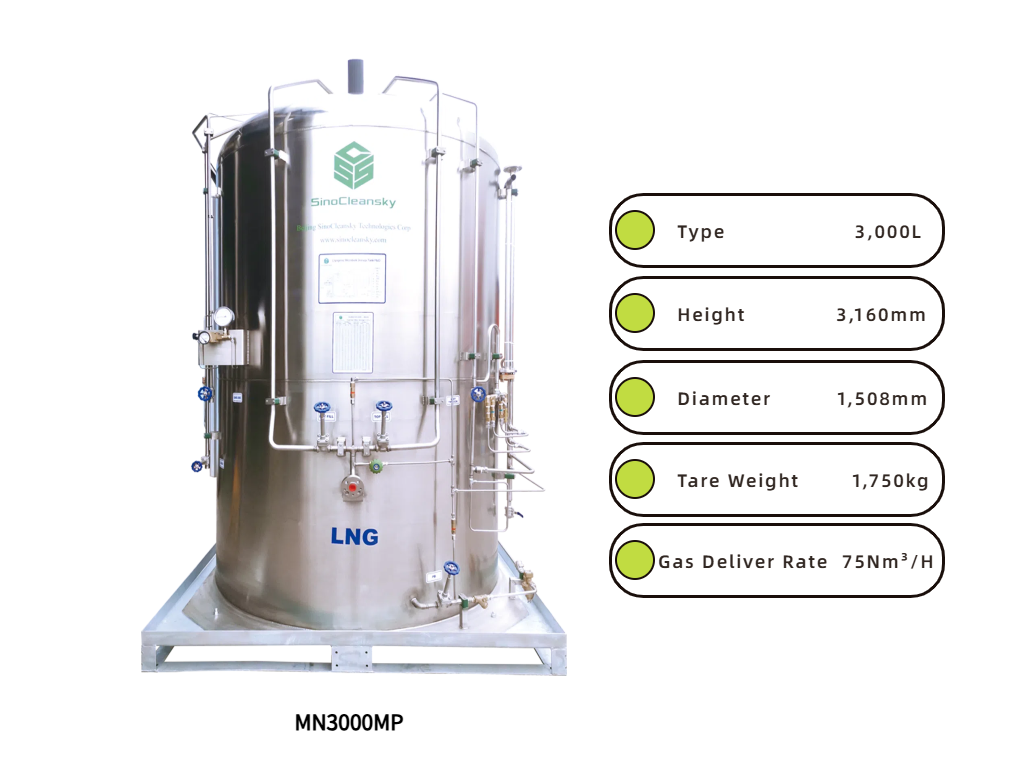
Bridging the Volume Gap: LNG microbulk tanks (typically 1,000L to 5,000L capacities) eliminate cylinder handling while avoiding the heavy civil engineering and infrastructure costs of massive bulk storage.
Primary Industrial Use Cases: Crucial for off-grid power generation, high-heat manufacturing, aggregate drying, industrial food processing, and localized heavy-duty fleet fueling.
Efficiency and Thermal Performance: Modern vacuum-jacketed microbulk systems utilize advanced insulation and calibrated safety relief valve settings to optimize hold times and minimize Boil-Off Gas (BOG).
Streamlined Compliance and Safety: Smaller physical footprints and lower total cryogenic volumes simplify adherence to NFPA 59A and local fire codes, offering enhanced safety over high-pressure gas alternatives.
Table of Contents
Transitioning to onsite LNG requires a clear understanding of baseline operational parameters. Facilities must define their uninterrupted flow rates, vaporization capacity, and footprint constraints. Specific burner or engine pressure requirements dictate the necessary equipment configuration. Establishing these success criteria ensures the selected storage solution aligns perfectly with daily energy demands. Without precise parameters, operations risk undersizing their supply or overspending on unnecessary infrastructure. You need to know your peak hourly draw. If a kiln pulls 5,000 SCFH during a cold start, the storage and vaporization skid must handle that spike without dropping line pressure.
Operations relying on high-pressure cylinders face steep labor costs and constant manual handling. Residual gas waste, known as the leftover heel, further diminishes efficiency. Cylinders also present significant safety risks due to their high-pressure nature. On the other end of the spectrum, 10,000-gallon bulk tanks present massive spatial hurdles and require complex permitting. Storing fuel as a low-pressure cryogenic liquid offers inherent safety advantages over high-pressure compressed natural gas. A microbulk setup eliminates cylinder swapping while avoiding the sprawling footprint of traditional bulk installations.
Storage Method | Footprint Requirement | Operating Pressure | Labor Intensity | Infrastructure Needs |
|---|---|---|---|---|
High-Pressure Cylinders | Small (but requires storage racks) | High (up to 3,000+ PSI) | High (constant manual swapping) | Minimal |
Compact (skid-mounted) | Low (typically under 250 PSI) | Low (automated telemetry) | Standard concrete pad | |
Large Bulk Cryogenic Tank | Massive (requires large yard) | Low to Medium | Low (bulk deliveries) | Extensive (pilings, diking, fencing) |
Many industrial sites operate far from established natural gas grids. Microbulk tanks serve as the critical endpoint of a localized virtual pipeline. This system allows facilities without pipeline access to receive scheduled, metered liquid deliveries. Specialized bobtail trucks transport the fuel directly to the site. This logistical model guarantees a steady energy supply, bridging the gap between remote operations and clean-burning fuel sources. We see this constantly in remote mining camps where running a physical pipeline is geographically impossible.
Remote mining, drilling, forestry, and agricultural operations require continuous, reliable power. Microbulk tanks supply uninterrupted natural gas to onsite generators, replacing dirty diesel alternatives. This setup ensures heavy machinery and remote camps maintain power in isolated environments. Furthermore, facilities integrate these tanks into peak shaving systems. By switching to onsite gas during peak demand periods, operations offset volatile grid-electricity tariffs and stabilize their energy budgets. When the grid hits peak load, the transfer switch flips, and the onsite generators take over the facility load using stored liquid natural gas.
Glass, ceramics, and metal processing demand highly consistent, clean, and high-BTU fuel. Kilns, furnaces, and smelters cannot tolerate pressure drops or fuel impurities. Microbulk systems paired with ambient air vaporizers deliver the exact pressure and volume required. This precision temperature control directly reduces product defect rates. Manufacturers achieve cleaner burns, less equipment fouling, and higher overall product quality. A sudden drop in burner pressure ruins a batch of ceramics. The integrated pressure-building circuits in these tanks prevent that exact scenario.
Food and beverage plants are rapidly transitioning to LNG for clean combustion. Industrial ovens, boilers, and pasteurization systems benefit from the lack of particulate matter. In the agricultural sector, localized grain drying often happens where pipeline gas is unavailable. Using diesel for drying poses severe contamination risks to the crops. LNG provides a clean, safe alternative that protects agricultural yields while meeting high thermal demands. You do not want diesel exhaust anywhere near a commercial grain dryer.
Rotary dryers and asphalt plants face stringent particulate matter and carbon emission regulations. Transitioning from diesel or fuel oil to LNG helps these facilities maintain compliance. Skid-mounted microbulk units offer exceptional portability and scalability. As road construction projects migrate along a highway, the fuel supply easily relocates with the plant. This mobility ensures uninterrupted production without sacrificing environmental standards. We move these skids from quarry to quarry using standard flatbed trailers.
Logistics hubs utilize microbulk tanks as localized, onsite fueling stations. LNG-powered trucking fleets, terminal tractors, forklifts, and small marine vessels rely on these stations for rapid refueling. Modular storage scales incrementally alongside fleet adoption rates. A hub can start with a single tank and add capacity as more vehicles transition to natural gas. This phased approach prevents stranded capital while supporting green logistics initiatives.
Pilot-scale industrial research and development processes require controlled thermal environments. Remote laboratories utilize microbulk setups to secure reliable, clean-burning test fuels. Consistent gas composition is critical for accurate testing and validation. The compact nature of the tanks allows labs to maintain strict environmental controls without dedicating massive square footage to fuel storage.
Double-walled, vacuum-jacketed stainless steel construction dictates thermal efficiency. The quality of the vacuum insulation directly affects hold times, determining how long the tank can store liquid without venting. Superior insulation prevents heat leak from the ambient environment. Low daily evaporation rates correlate directly with fuel cost savings. Minimizing Boil-Off Gas ensures that purchased fuel goes into the burner, not into the atmosphere. If the vacuum space loses integrity, you will see frost forming on the outer jacket, indicating a severe insulation failure.
Optimized safety relief valve pressure settings prevent premature venting. Tank design must account for the specific operating pressure of the downstream equipment. Calibrated venting achieves lower daily liquid losses compared to substandard alternatives. Proper pressure management maintains the integrity of the cryogenic liquid, ensuring the system operates efficiently even during periods of low demand. You want the relief valves set just high enough to handle normal pressure building cycles without chattering.
Modern tanks integrate digital liquid level gauges and differential pressure transmitters. Remote telemetry units transmit this data to suppliers in real time. These systems enable the milk run delivery model. Local suppliers monitor tank levels and dispatch bobtails automatically. This automation eliminates fuel stockouts, reduces administrative overhead, and ensures the facility never experiences downtime due to an empty tank. The dispatcher sees the tank hit 30% and routes a truck for the next morning.
Internal pressure-builder loops maintain operating pressure during low-flow scenarios. They vaporize a small amount of liquid to keep the tank pressurized. However, high continuous flow rates require external ambient air vaporizers. These external units convert the cryogenic liquid back to gas rapidly enough to feed large industrial burners. Understanding the difference ensures the system is correctly sized for the application's peak flow demands. If you rely solely on the internal builder for a massive boiler, you will freeze the lines and starve the burner.
A realistic cost-benefit analysis reveals distinct advantages. Microbulk requires lower upfront equipment, shipping, and installation costs. While it may carry a slightly higher per-unit fuel delivery cost than full-sized bulk tanker drops, the overall capital outlay is significantly reduced. Facilities avoid tying up massive amounts of cash in oversized infrastructure, allowing them to allocate funds to core operational improvements. You get the benefits of bulk liquid storage without the million-dollar site prep.
Compact, skid-mounted units require simple concrete pads. This contrasts sharply with the extensive foundational pilings, containment diking, and security fencing demanded by large bulk installations. The streamlined site preparation accelerates deployment timelines. Facilities can transition to natural gas weeks or months faster than if they were constructing a traditional bulk storage yard. Pouring a 10x10 reinforced pad takes a few days; engineering a bulk tank foundation takes months.
Facilities can manifold multiple tanks together to meet growing gas demand. This modularity avoids over-capitalization on an oversized bulk tank on day one. If production increases, another unit simply connects to the existing manifold. This asset flexibility allows the energy infrastructure to grow in exact proportion to the facility's operational output. We often install two 2,000L tanks rather than one 4,000L tank to provide redundancy during maintenance cycles.
Specific setback distances, clearance requirements, and regulatory standards govern storage installations. The lower liquid volumes of microbulk systems drastically reduce these setback requirements. This allows installation in tight, space-constrained industrial layouts where a large bulk tank would be legally prohibited. Engaging with local fire marshals early in the planning process ensures smooth permitting and compliance. You must maintain clear distances from property lines, ignition sources, and building openings.
Regulatory Factor | Microbulk Consideration | Impact on Installation |
|---|---|---|
Setback Distances | Reduced due to lower volume | Fits in tighter industrial yards |
Ventilation | Requires open-air placement | Cannot be installed indoors |
Spill Containment | Often integrated into the skid | Eliminates need for large concrete dikes |
Handling cryogenic liquids at -260°F (-162°C) presents physical risks, including freeze burns and rapid phase transition hazards. Mitigation systems are non-negotiable. Installations must include Emergency Shutdown Valves, thermal relief devices, and proper personal protective equipment. Routine staff training ensures operators understand how to interact safely with the equipment, recognize potential leaks, and execute emergency protocols effectively. A cryogenic burn is severe; operators must wear face shields and cryogenic gloves when interacting with the fill manifold.
Evaluating local suppliers is critical for a successful deployment. Facilities must confirm bobtail truck compatibility and secure delivery frequency guarantees. Telemetry integration compatibility ensures the supplier can actually read the tank's automated signals. A robust supply chain guarantees the virtual pipeline remains uninterrupted, regardless of weather or regional logistical challenges. Ask the supplier for their average response time during winter storms.
Verify the supplier operates bobtail trucks capable of navigating your facility gates.
Confirm the supplier's telemetry software integrates with your specific tank gauges.
Establish a written service level agreement for emergency fuel deliveries.
Review the supplier's safety record and driver training certifications.
An LNG Microbulk Tank provides an ideal balance between high-pressure cylinders and large bulk storage systems, delivering reliable gas supply, excellent thermal performance, and lower operating costs for mid-volume industrial applications. By selecting the appropriate tank capacity, insulation performance, telemetry system, and vaporization configuration, businesses can improve energy efficiency while ensuring safe and continuous LNG supply.
Working with an experienced cryogenic equipment manufacturer is equally important for achieving long-term operational reliability and project success. SinoCleansky specializes in advanced LNG storage and transportation equipment, customized cryogenic system solutions, and comprehensive engineering support, helping customers develop efficient, safe, and reliable LNG supply systems for industrial, energy, and clean fuel applications.
Evaluate your facility's peak gas demand, available installation space, and future expansion plans before selecting tank capacity.
Compare thermal insulation performance, boil-off gas management, and telemetry capabilities when evaluating different LNG microbulk systems.
Verify compliance with NFPA 59A and all applicable local safety regulations before installation.
Establish preventive maintenance procedures and supplier service agreements to maximize equipment performance, safety, and long-term operational efficiency.
A: The standard capacity ranges between 1,000 and 5,000 liters. This specific sizing bridges the gap between small, labor-intensive liquid cylinders and massive, capital-intensive large bulk tanks, making it ideal for mid-volume industrial consumers.
A: It utilizes high-quality vacuum insulation and calibrated safety relief valves to hold pressure and prevent daily evaporation losses. These optimized pressure settings minimize venting, ensuring the cryogenic liquid remains stable for extended periods.
A: Yes. Storing fuel as a low-pressure cryogenic liquid eliminates the high-pressure explosion hazards associated with compressed gas cylinders. It also removes the physical risks and potential for injury caused by the constant manual handling and transport of heavy cylinders.
A: The primary requirements include a level, reinforced concrete pad, adequate open-air ventilation, and sufficient clearance for bobtail delivery trucks to maneuver. The smaller volume also allows for compliance with reduced NFPA 59A setback distances.
A: While tanks include integrated pressure-building circuits for low-flow operations, high-demand industrial burners and generators require an external ambient air vaporizer. This ensures complete gasification of the liquid at the target flow rate required by heavy equipment.
A: LNG offers a significantly higher energy density than CNG because it is a liquid. A microbulk setup stores far more energy in a much smaller footprint at low pressure, requiring fewer deliveries and less storage space than high-pressure CNG tube trailers.