Views: 0 Author: Site Editor Publish Time: 2026-08-11 Origin: Site
Establishing a reliable off-grid natural gas supply requires precise equipment matching. Deploying the wrong storage or transport asset guarantees stranded capital, logistical bottlenecks, or pressure drops during dispensing. Project engineers and procurement teams often struggle to delineate the operational boundaries between transport assets and dispensing assets. Over-sizing equipment complicates logistics and inflates infrastructure requirements. Under-sizing drives up operational delivery frequency and strains supply chains.
This technical guide breaks down the structural differences, deployment criteria, and operational variables across CNG tube trailers, Multiple-Element Gas Containers (MEGCs), and jumbo tube cascades. We examine the engineering principles behind each system. You will learn how to evaluate transport modalities, site constraints, and dispensing physics to right-size your gas supply architecture.
Modality Dictates Asset Choice: CNG tube trailers are purpose-built for high-volume, road-only transport, whereas MEGCs utilize standardized ISO frames for multi-modal (truck, rail, marine) logistics.
Dispensing Physics Matter: Jumbo tube cascades are not just storage; they utilize tiered pressure banks to optimize gas transfer rates to end-users or daughter stations without requiring continuous mechanical compression.
Right-Sizing is Critical: Selecting the optimal system requires balancing daily volume demand, delivery route distance, site footprint constraints, and regional regulatory compliance (DOT, ISO, ADR).
CapEx vs. OpEx Trade-offs: Investing in higher-capacity trailers reduces delivery frequency (OpEx) but requires heavier upfront investment and larger site turning radii (CapEx/Infrastructure).
Table of Contents
Before evaluating specific hardware, stakeholders must define their primary success criteria and establish a clear operational baseline. Project teams often debate CNG versus LNG for off-grid supply. CNG is generally the practical choice for lower-volume demand and shorter delivery routes. LNG fits long-haul, massive-volume requirements. Once you confirm CNG is the right phase for your gas, you must determine your logistical goal. You need to know if you are building a point-to-point transport route, setting up multi-modal shipping, or prioritizing high-efficiency on-site dispensing. Answering these questions dictates your equipment selection.
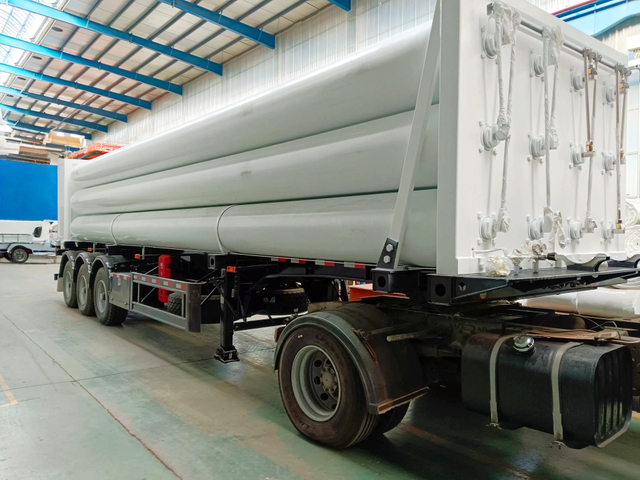
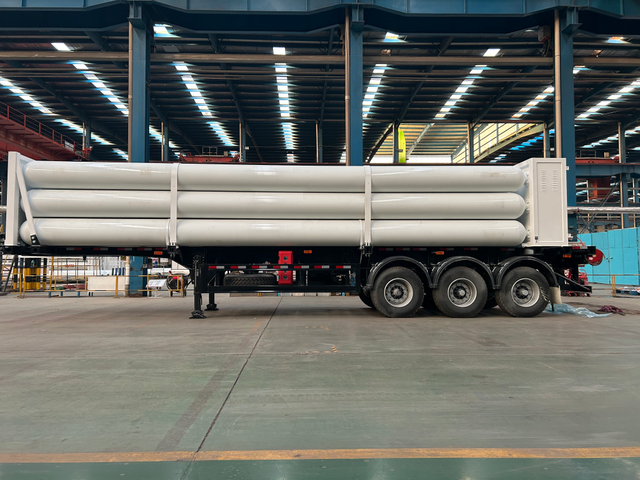
CNG tube trailers serve as the backbone of domestic virtual pipelines. These units consist of high-pressure cylinders permanently mounted to a specialized trailer chassis. Manufacturers build them specifically for highway and regional road networks. The permanent chassis integration means the trailer acts as a single, cohesive vehicle unit.
The primary use case is point-to-point transport. A truck tractor hauls the trailer from a mother station directly to an industrial site or daughter station. The main advantage here is maximum payload capacity for road networks. Because the cylinders attach directly to the chassis, engineers eliminate the dead weight of secondary container frames. This allows for more gas volume per trip within legal axle weight limits. You will typically see these trailers utilizing large Type I (steel) or Type IV (carbon fiber composite) cylinders. Type I cylinders offer durability for rugged environments, while Type IV cylinders maximize the gas-to-weight ratio for long-distance highway hauling.
Multiple-Element Gas Containers (MEGCs) prioritize logistical versatility over raw road payload. An MEGC consists of high-pressure tubes securely enclosed within a standardized ISO container frame. These frames typically measure 20 feet or 40 feet in length. The ISO frame includes standard corner castings. These castings allow standard container handling equipment to lift, move, and stack the units.
The primary use case involves multi-modal logistics. You use MEGCs for international shipping, rail transport, or complex sites requiring crane lifting. The main advantage is intermodal compatibility. A truck can deliver an MEGC to a port. A reach stacker lifts it onto a cargo ship. At the destination, a crane moves it to a rail car. This modularity also benefits site storage. You can stack MEGCs on top of each other at a crowded industrial facility, drastically reducing the required ground footprint.
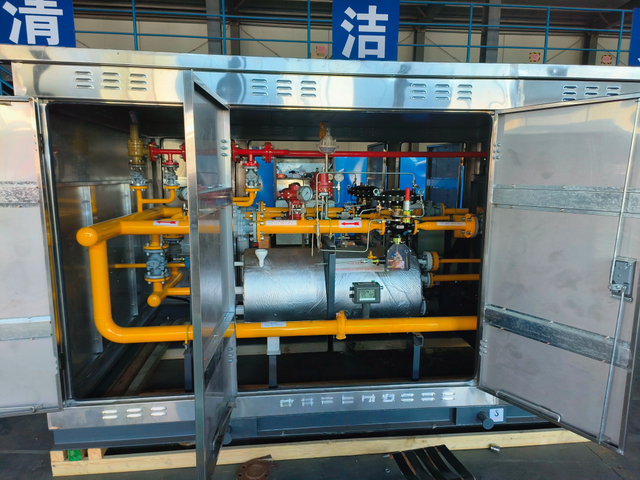
Jumbo tube cascades serve a completely different function than trailers or MEGCs. They are stationary or skid-mounted dispensing assets. A cascade consists of multiple cylinders plumbed together into distinct pressure tiers. Engineers typically configure these tiers as high, medium, and low-pressure banks. The system includes a complex manifold of valves, pressure gauges, and regulators.
The primary use case is end-point gas distribution. You find cascades at city gas distribution hubs, Natural Gas Vehicle (NGV) fueling stations, and industrial buffering sites. The main advantage is maximizing gas extraction efficiency. Cascades utilize sequential dispensing. This thermodynamic process pushes gas into a receiving tank much faster and more completely than a single bulk tank can achieve. They act as the intelligent buffer between the transport vehicle and the final consumer.
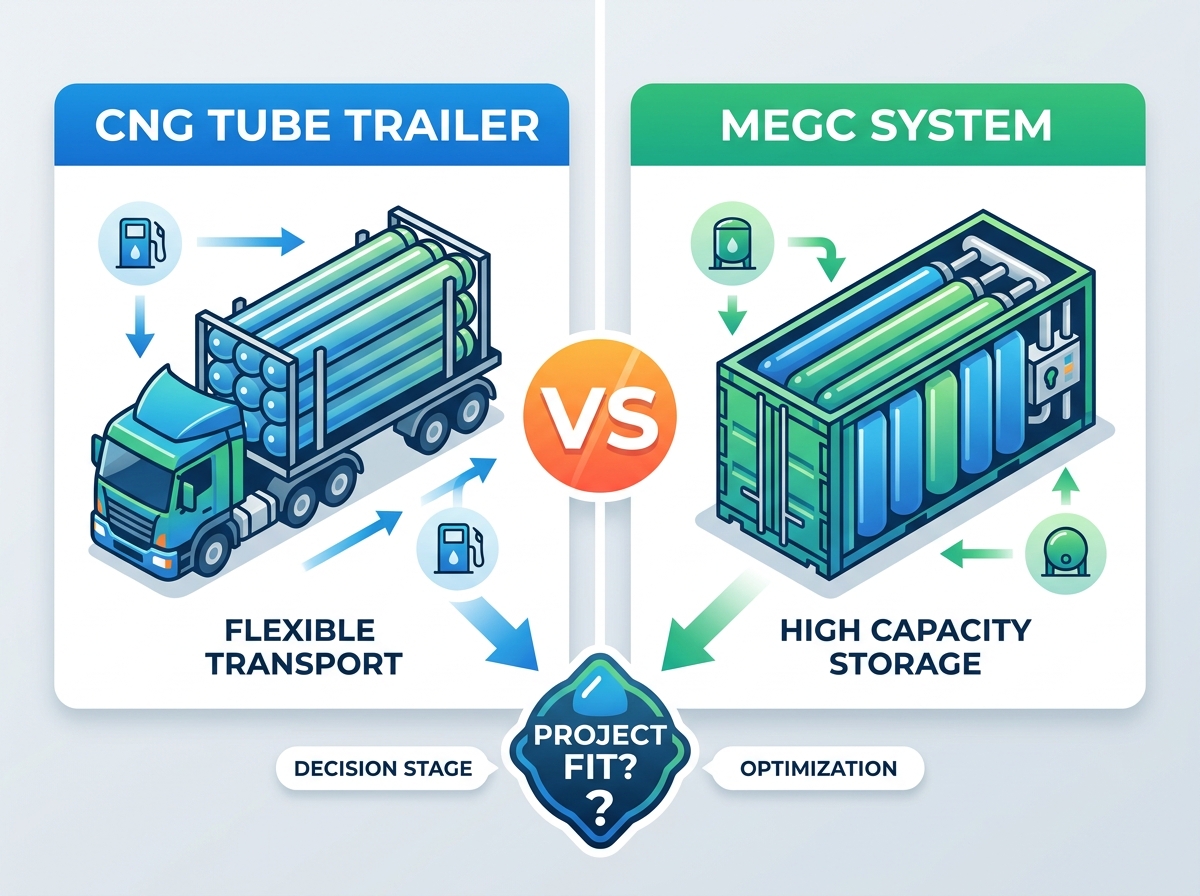
Choosing between a trailer and an MEGC requires a strict analysis of your logistical environment. Both systems transport high-pressure gas, but their structural differences dictate where and how they operate. A direct CNG tube trailer vs MEGC comparison reveals distinct operational boundaries.
Trailers are strictly road-exclusive assets. They require a truck tractor for movement. When a trailer arrives at a site, the driver performs a drop-and-hook operation. They back the trailer into the designated bay, lower the landing gear, disconnect the pneumatic lines, couple an empty trailer, and drive away. This process takes about fifteen minutes and requires no specialized site equipment. However, a trailer cannot cross an ocean. It cannot be loaded onto a standard train car easily. It remains bound to the highway network.
MEGCs break the road boundary. They are built for multi-modal transport. If your virtual pipeline crosses a body of water, you must use an MEGC. If your route relies on a freight rail network to cover massive distances, MEGCs are the standard choice. The logistical friction comes during the transfer. Moving an MEGC requires heavy machinery. You need reach stackers, gantry cranes, or heavy-duty forklifts to load and unload the container from the truck chassis. This requires specific infrastructure and trained operators at both the loading and unloading points.
The gas-to-weight ratio heavily influences transport efficiency. Every highway system enforces strict maximum gross vehicle weight (GVW) and axle-weight regulations. You want to move gas, not steel.
Trailers generally offer higher road payloads. They lack the heavy structural ISO frame required for MEGCs. The chassis itself serves as the structural support. This weight savings allows manufacturers to install larger or heavier cylinders, increasing the total gas volume per trip. If you are operating strictly on roads, a trailer maximizes your payload within legal weight limits.
MEGCs carry a tare weight penalty. The robust steel ISO frame adds significant dead weight to the asset. This frame is necessary to withstand the immense structural stresses of crane lifting and marine stacking. Consequently, an MEGC mounted on a standard skeletal trailer will typically carry less gas than a dedicated tube trailer of the same overall weight. You sacrifice some road payload capacity to gain multi-modal lifting capabilities.
Operational speed dictates asset utilization rates. Drop-and-hook trailer operations are incredibly efficient. The transport asset spends minimal time idling at the site. This keeps the wheels turning and the gas flowing.
MEGC operations take longer at the transfer points. Lifting a container off a chassis, securing it to a storage pad, and loading an empty container back onto the chassis requires coordinated machinery operation. This process adds turnaround time. However, MEGCs offer an advantage in modular storage. You can drop multiple MEGCs at a site and stack them, creating a large-volume storage depot without tying up multiple trailer chassis.
Feature | CNG Tube Trailer | MEGC (ISO Container) |
|---|---|---|
Primary Function | Point-to-point road transport | Multi-modal transport & storage |
Structural Frame | Integrated road chassis | Standardized ISO container frame |
Modality | Highway and regional roads | Truck, rail, and marine |
Handling Equipment | Standard truck tractor | Cranes, reach stackers, forklifts |
Turnaround Method | Drop-and-hook | Lift-and-place |
Transporting gas to a site is only half the challenge. Moving that gas from the transport asset into the end-user's system efficiently requires specialized equipment. Jumbo tube cascades manage the physics of gas transfer at the destination.
Cascades come in two primary configurations: fixed ground storage and mobile units. Fixed cascades sit permanently at a daughter station or industrial facility. Engineers bolt them to reinforced concrete pads. These fixed systems are ideal for NGV fueling stations. They provide the high-pressure buffer needed to fill vehicle tanks quickly. They sit between the incoming tube trailer and the dispensing pump, ensuring the pump always has adequate suction pressure.
Mobile CNG cascade vans serve a different, highly specialized role. These are smaller cascade systems mounted inside box trucks or on light trailers. They are common in the city gas distribution sector. Mobile cascades provide temporary, reliable gas supply to off-grid residential areas or industries. Operators deploy them during pipeline outages or maintenance periods. They also serve as a bridge solution, supplying gas to a new development before the physical pipeline commissioning is complete. They ensure continuous Piped Natural Gas (PNG) availability without permanent infrastructure.
Understanding cascades requires understanding gas thermodynamics. When you connect two pressurized vessels, gas flows from high pressure to low pressure until they equalize. If you dispense directly from a single bulk tank into a vehicle, the pressure in the trailer drops as it empties. Eventually, the trailer pressure equals the vehicle tank pressure. Gas flow stops. You leave a massive amount of unusable gas stranded in the trailer unless you use a mechanical compressor.
Cascades solve this through sequential dispensing. A cascade divides its cylinders into three distinct banks: low, medium, and high pressure. When a vehicle arrives to fill, the system first draws from the low-pressure bank. Once that bank equalizes with the vehicle, the system switches to the medium-pressure bank. This pushes more gas into the vehicle. Finally, the system opens the high-pressure bank to top off the vehicle tank.
This tiered approach prevents premature pressure equalization. It ensures maximum gas extraction from the storage cylinders before any mechanical compression is needed. It drastically reduces compressor run times, lowers energy consumption, and speeds up the filling process. Direct-draw systems simply cannot match this efficiency.
Cascade Bank | Function in Dispensing Cycle | Typical Pressure Range (Bar) |
|---|---|---|
Low Pressure | Initiates the fill, moving large volumes of gas quickly into an empty receiving tank. | 50 - 100 |
Medium Pressure | Takes over when the low bank equalizes, continuing to build pressure in the receiving tank. | 100 - 180 |
High Pressure | Completes the fill, topping off the receiving tank to its maximum rated capacity. | 180 - 250 |
Selecting the right equipment requires a strict evaluation of your project parameters. You must analyze demand, site constraints, and regulatory environments to architect a functional virtual pipeline.
Your daily gas consumption dictates your asset capacity requirements. You must calculate your demand in Standard Cubic Meters (SCM) per day. This baseline determines how much storage you need on-site and how much transport capacity you need on the road.
Right-sizing is a mandatory engineering step. It is a common mistake to simply throw the largest available tube trailer at a project. If your daily demand is low, a massive trailer will sit on-site for weeks slowly dispensing gas. This ties up a highly capable transport asset as a static storage tank, which is incredibly inefficient. Conversely, if demand is high and you use small MEGCs, your delivery frequency skyrockets. Trucks will constantly run back and forth, increasing logistical friction and traffic on site. You must match the asset capacity to achieve a manageable delivery schedule, typically aiming for one drop every one to three days.
Physical site limitations often eliminate certain equipment options immediately. You must conduct a thorough logistical audit of the destination site before finalizing equipment specifications.
Turning Radii and Access: Large CNG tube trailers often exceed 40 feet in length. They require massive turning radii. If your industrial site sits at the end of a narrow, winding access road, a large trailer simply will not fit. You must evaluate gate widths, corner angles, and overhead clearances.
Storage Footprint: Space is often at a premium at daughter stations or manufacturing plants. Trailers take up significant linear ground space. If ground space is limited, MEGCs offer a distinct advantage. Because of their ISO frames, you can stack them two or three high using a crane. This vertical storage drastically reduces the required square footage.
Civil Engineering Requirements: Jumbo tube cascades are extremely heavy. They require substantial civil engineering preparation. You cannot place a fixed cascade on standard asphalt. It requires a heavily reinforced, level concrete pad designed to bear the concentrated static load. You must factor this site preparation into your deployment timeline.
High-pressure gas transport is heavily regulated. Jurisdictional requirements dictate exactly which assets you can deploy. Ignoring these standards guarantees project failure and severe legal penalties.
DOT/TC: In North America, the Department of Transportation (DOT) and Transport Canada (TC) regulate road transport. Trailers and MEGCs moving on highways must meet strict DOT cylinder specifications.
ADR: In Europe, the European Agreement concerning the International Carriage of Dangerous Goods by Road (ADR) governs transport. Equipment must carry ADR certification for road use across European borders.
ISO/IMDG: If your MEGC touches a cargo ship, it must comply with International Organization for Standardization (ISO) frame requirements and the International Maritime Dangerous Goods (IMDG) code. The frame must pass rigorous structural testing for marine environments.
ASME: Stationary pressure vessels, including fixed jumbo tube cascades, typically fall under the American Society of Mechanical Engineers (ASME) Boiler and Pressure Vessel Code. This dictates the manufacturing and safety relief valve standards for ground storage.
Deploying a virtual pipeline involves significant logistical coordination. Beyond the physical hardware, you must manage the ongoing operational workflow. Efficient operations require meticulous planning and proactive risk mitigation.
Procuring the equipment is only the first step. You must manage the logistics of getting the assets to your site and integrating them into your workflow. Bare tube trailers arrive ready to roll, requiring only a compatible truck tractor. MEGCs, however, require you to source and position heavy lifting equipment at both ends of the pipeline before the first delivery arrives.
Complex cascade systems require specialized installation. Plumbing a cascade into a daughter station involves high-pressure stainless steel tubing, precision regulators, and automated control panels. You must schedule certified gas fitters and electrical engineers to integrate the cascade with your site's dispensing pumps and safety shutdown systems. Site preparation, including concrete pads and reinforced access roads, must be completed weeks before the equipment arrives.
The daily operation of a virtual pipeline relies on strict scheduling and route management. Delivery frequency dictates your logistical burden. You must manage driver hours of service, monitor toll routes, and account for traffic delays. A delayed truck means a potential gas outage at the destination.
Fuel usage is a major operational factor. Hauling heavy steel cylinders requires massive amounts of diesel fuel. Many operators improve efficiency by utilizing natural gas-powered tractors to haul the trailers. Running the freight trucks on the very gas they transport creates a closed-loop fuel system, streamlining logistics and reducing reliance on external diesel suppliers.
Statutory testing is a non-negotiable operational reality. High-pressure cylinders require periodic recertification. Depending on the cylinder type and local regulations, you must perform hydrostatic testing every five to ten years. This process requires removing the asset from service, depressurizing it, filling it with water, and pressurizing it to test for structural expansion. You must build redundancy into your fleet to maintain supply while assets undergo mandatory testing.
Virtual pipelines face unique implementation risks. Supply routes change. Industrial demands fluctuate. You must build flexibility into your architecture to mitigate these risks.
Risk: Stranded Assets. If an off-grid factory eventually connects to a physical pipeline, your transport assets become redundant. Mitigation: Consider leasing modular MEGCs during the initial project phase. Leasing provides flexibility. You can return the assets if the supply route changes, avoiding the commitment of purchasing custom, single-purpose trailers.
Risk: Supply Interruption. Road closures, severe weather, or truck breakdowns can halt deliveries. If the destination site runs out of gas, manufacturing stops. Mitigation: Size your on-site cascade storage appropriately. Never size storage for exactly one day of demand. Engineer the cascade buffer to hold a minimum of 1.5 to 2 times the daily volume demand. This buffer provides an operational window to resolve transport delays without interrupting the end-user's gas supply.
Risk: Equipment Incompatibility. Arriving at a site with an MEGC only to realize the local forklift cannot lift the gross weight. Mitigation: Conduct a comprehensive site audit prior to deployment. Verify the exact lifting capacity of all site machinery and ensure it exceeds the maximum gross weight of a fully loaded MEGC.
Beijing SinoCleansky Technologies Corp is a specialized manufacturer of key equipment for the natural gas industry and an integrated provider of CNG, LNG, and NGV solutions, combining product manufacturing, technology, and technical services. With advanced high-pressure equipment capabilities, strict quality control, and internationally recognized certifications, the company provides reliable and customized solutions for gas transportation, storage, and dispensing applications.
When planning a virtual pipeline project, selecting the right CNG transport and dispensing equipment requires careful consideration of demand, logistics, site conditions, and regulatory requirements. Before making a procurement decision:
Conduct a site-specific logistical audit to measure turning radii, gate widths, and lifting capabilities at all loading and unloading points.
Calculate your exact daily volume demand in standard cubic meters to establish baseline capacity needs and prevent asset over-sizing.
Consult with a specialized gas equipment engineer to finalize cylinder specifications, manifold designs, and pressure tier configurations.
Verify local regulatory compliance requirements, including DOT, ISO, or ADR certifications, before issuing any procurement orders.
A: A CNG tube trailer integrates high-pressure cylinders directly onto a wheeled chassis for road-exclusive transport. An MEGC encloses cylinders within a standardized ISO container frame. This allows operators to lift MEGCs with cranes and transport them across multiple modalities, including cargo ships, rail cars, and standard flatbed trucks.
A: You use a jumbo tube cascade for stationary, high-efficiency dispensing at the destination. Tube trailers handle mobile bulk transport. Cascades utilize tiered pressure banks to push gas into receiving tanks quickly without continuous mechanical compression. Position a cascade at a fueling station to act as an intelligent buffer between the transport trailer and the final consumer.
A: Trailer size depends on your daily gas consumption, distance from the mother station, and site access constraints. Calculate your demand in standard cubic meters. Over-sizing a trailer for low demand ties up a valuable transport asset as static storage. Right-size the trailer to achieve a manageable delivery schedule, typically one drop every one to three days.
A: Yes, MEGCs serve as the industry standard for long-distance, multi-modal natural gas transport. Their standardized ISO frames integrate directly into global shipping and freight rail networks. This makes them ideal for moving gas across oceans or spanning massive continental distances where standard road-bound tube trailers cannot operate legally or physically.
A: Mobile CNG cascade vans provide temporary gas supply to off-grid residential areas or industries. Operators park the van on-site and connect it to the local distribution network. The cascade's tiered pressure system dispenses gas smoothly into the grid. They maintain continuous supply during pipeline outages, maintenance periods, or prior to final pipeline commissioning.
A: In North America, the DOT and Transport Canada govern road transport. In Europe, the ADR standard applies to road networks. For international maritime shipping, equipment must meet ISO frame standards and the IMDG code. Stationary ground storage, like fixed cascades, typically must comply with ASME pressure vessel codes.