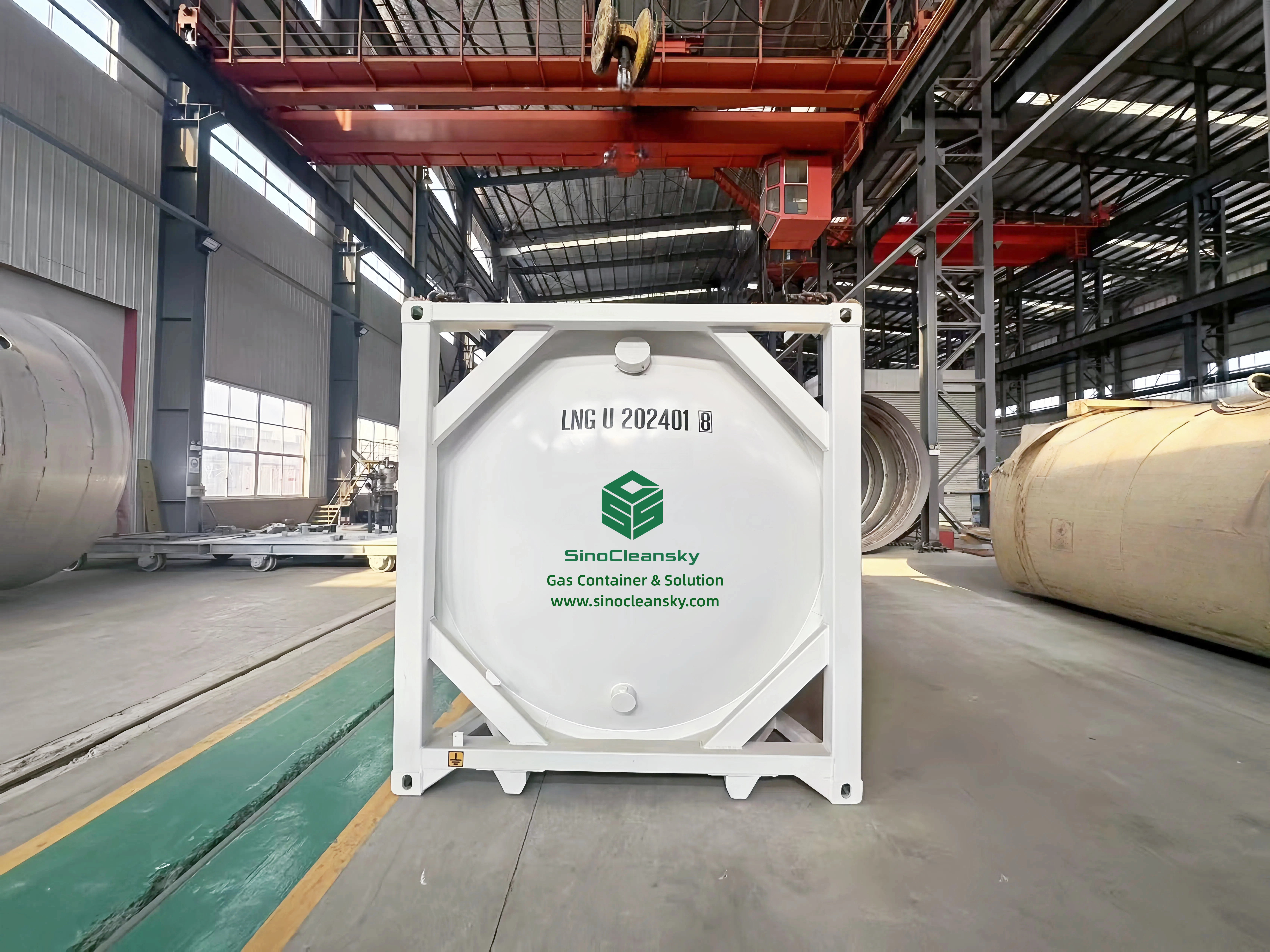
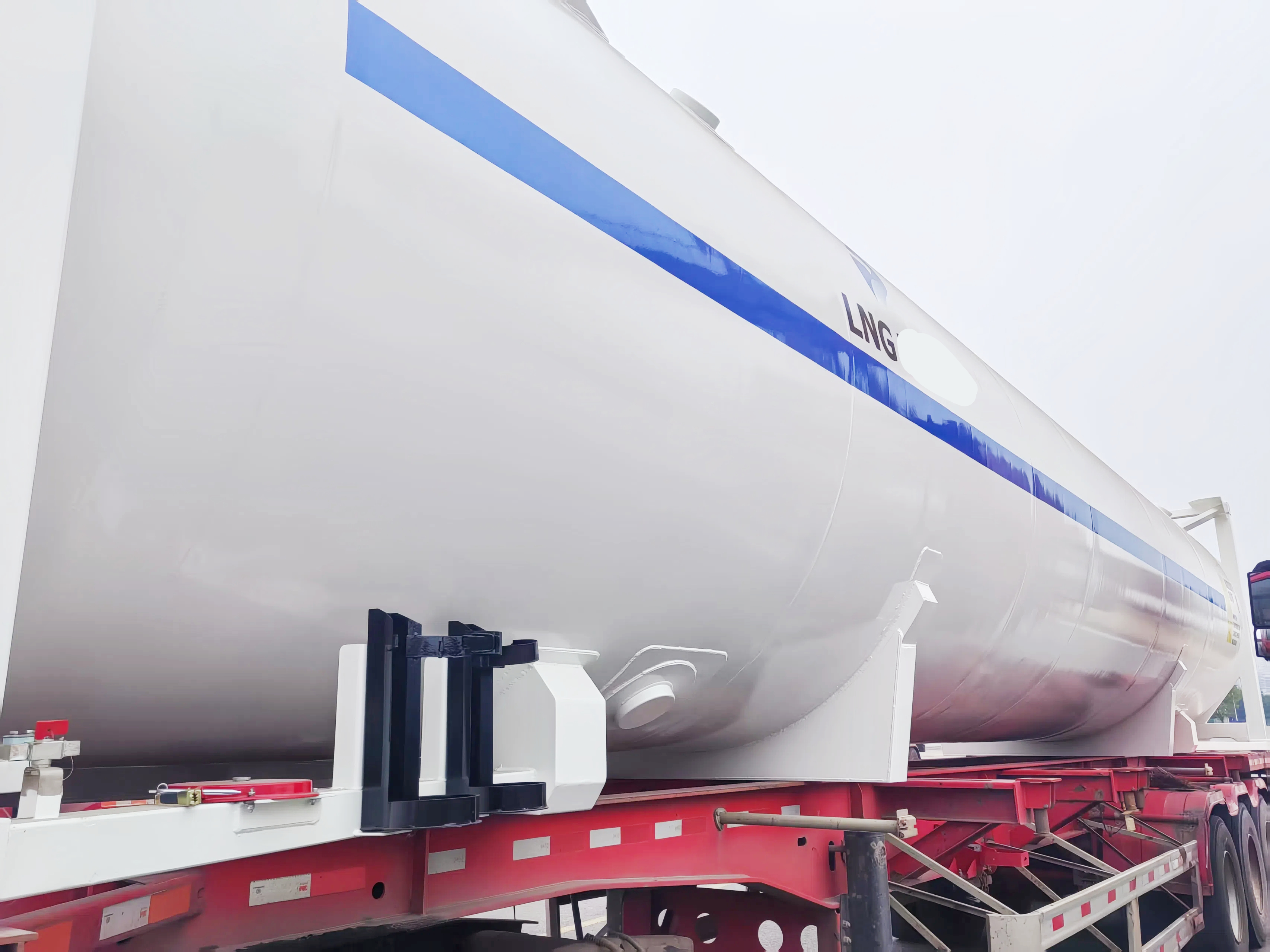
SinoCleansky’s 20ft 16bar LNG ISO Tank Container is a compact, high-pressure solution for LNG storage and multi-modal transportation. Compliant with ASME and EN13530 standards, this tank is designed for clients with moderate LNG demand—such as small industrial sites, remote refueling stations, and emergency energy supply.
Key features:
Balanced capacity: 21.0M³ total volume (18.9M³ effective volume) ensures sufficient LNG supply without excessive space requirements—fitting in standard 20ft containers.
High working pressure: 1.6MPa (16bar) working pressure allows for flexible LNG regasification, making it suitable for applications requiring higher gas output.
Superior insulation: High-vacuum multi-layer insulation minimizes heat ingress, reducing boil-off rates and ensuring LNG remains liquid for extended periods (holding time: up to 32 days for UN1073).
Safety & reliability: Equipped with Herose valves (high-quality, low maintenance), pressure relief valves (set pressure 1.6MPa), and leak detection systems—certified by Lloyd’s Register.
Multi-modal transport: Designed as a standard ISO container, compatible with 20GP containers, trucks, and railcars—ideal for global shipping.
This tank is a cost-effective choice for clients seeking a portable, compliant LNG storage solution.
| Standard | Type number | Filling medium | Working pressure | Water capacity | Material Inner/ Outer vessel |
| ASME | TCSCS-D21DB (T75-20ft-16Bar) | LNG/LOX/LIN/LAR/ LC2H4/LC2H6 | 1.6MPa | 21M³ | SA-240M 304/Q345R |
| ASME | TCSCS-D21D (T75-20ft-16Bar) | LNG/LOX/LIN/LAR/ LC2H4/LC2H6 | 1.6MPa | 21M³ | SA-240M 304/Q345R |
| EN13530 | TCSCS-D22B (T75-20ft-18Bar) | LNG/LOX/LIN/LAR/ LC2H4/LC2H6 | 1.8MPa | 21.7M³ | 1.4315/Q345R |
| EN13530 | TCSCS-A21A (T75-20ft-18Bar) | LNG/LOX/LIN/LAR/ LC2H4/LC2H6 | 1.8MPa | 21.4M³ | 1.4315/Q345R |
Model: SCS-LNG-T75-20FT-16BAR
Capacity (Total): 21.0 M³
Effective Volume: 18.9 M³
Loading Medium: LNG (Liquefied Natural Gas)
Design Code: ASME Section VIII, Division 1
Inner Vessel Material: SA-240M 304 (stainless steel)
Outer Vessel Material: Q345R (carbon steel)
Design Temperature: -196°C ~ +50°C
Working Pressure: 1.6 MPa (232 psi)
Isolation Type: High-vacuum multi-layer insulation
Total Net Weight: 7750 KG
Dimensions (L×W×H): 6058×2438×2591 mm (20ft)
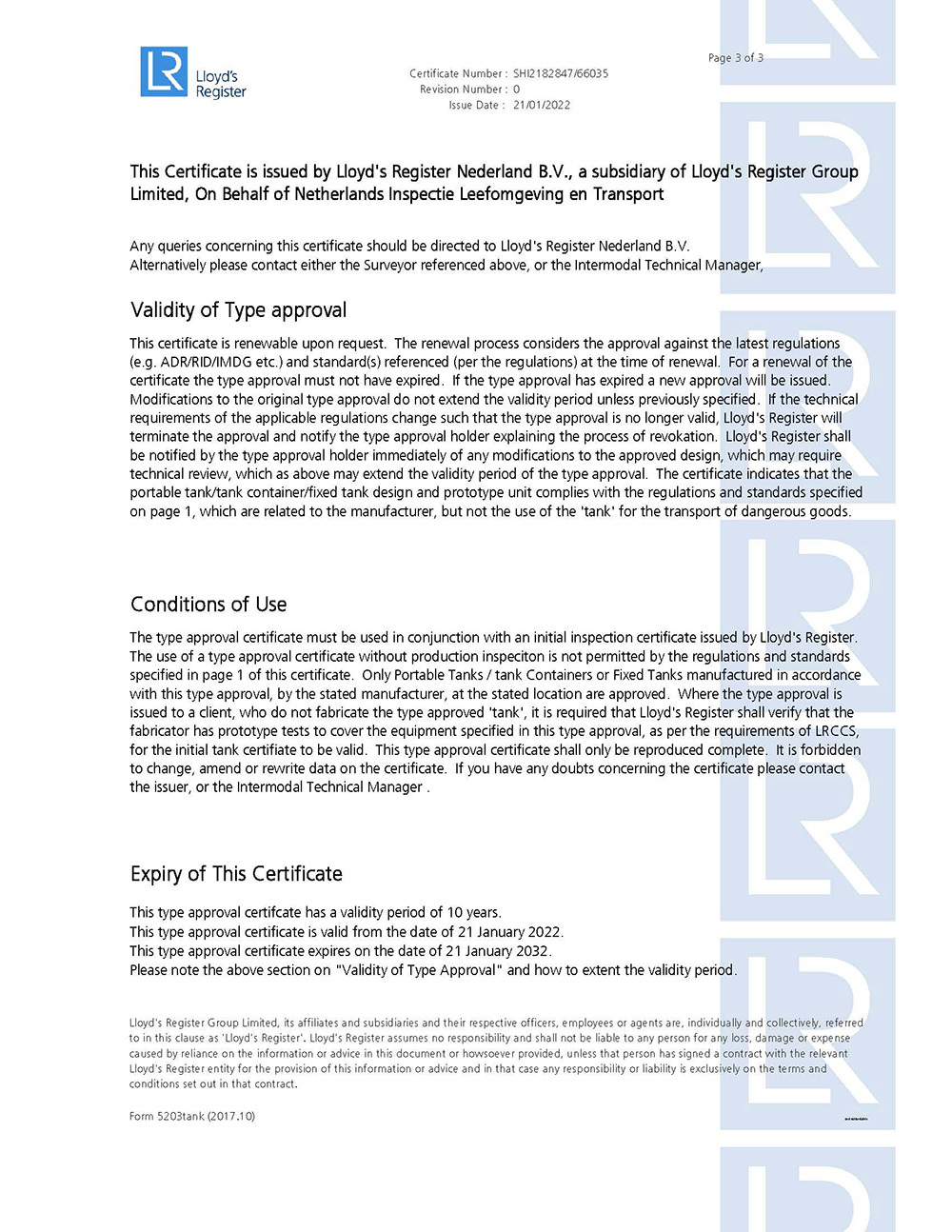
Certification Authority: Lloyd’s Register (Classification Society Certificate)
Test Pressure: 2.4 MPa (hydrostatic)
Approved Cargo: UN1073 (LNG), UN1951, UN1977
Additional Compatibility: LOX, LIN, LAR, LC₂H₄, LC₂H₆
NAME | PARAMETERS | |
1 | Model No | SCS-LNG-T75-20FT-16BAR |
2 | Capacity | 21.0M3 |
3 | Effective Volume | 18.9M3 |
4 | Loading Medium | LNG |
5 | Design Code | ASME |
6 | Main Material | Inner Vessel: SA-240M 304 Outer Vessel: Q345R |
7 | Design Temperature | ‐196/+50℃ |
8 | Working Pressure | 1.6Mpa |
9 | Isolating Type | High Vaccum multi‐layer insulation |
10 | Total Net Weight | 7750KG |
11 | Dimensions | 6058X2438X2591mm |
12 | Certification Authority | Lloyd's Register Classification Society Certificate |
SinoCleansky ensures the 20ft 16bar LNG ISO Tank Container meets global quality and safety standards:
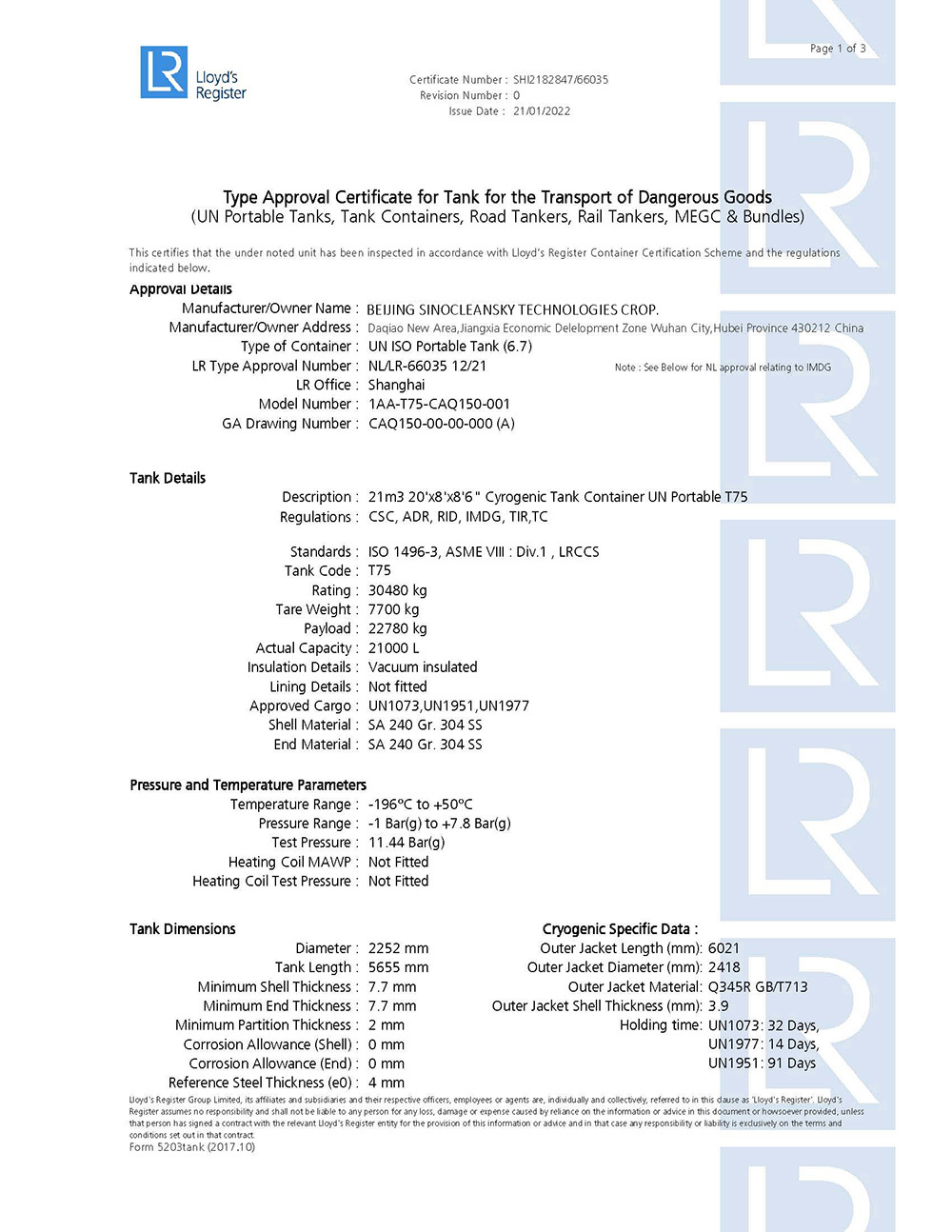
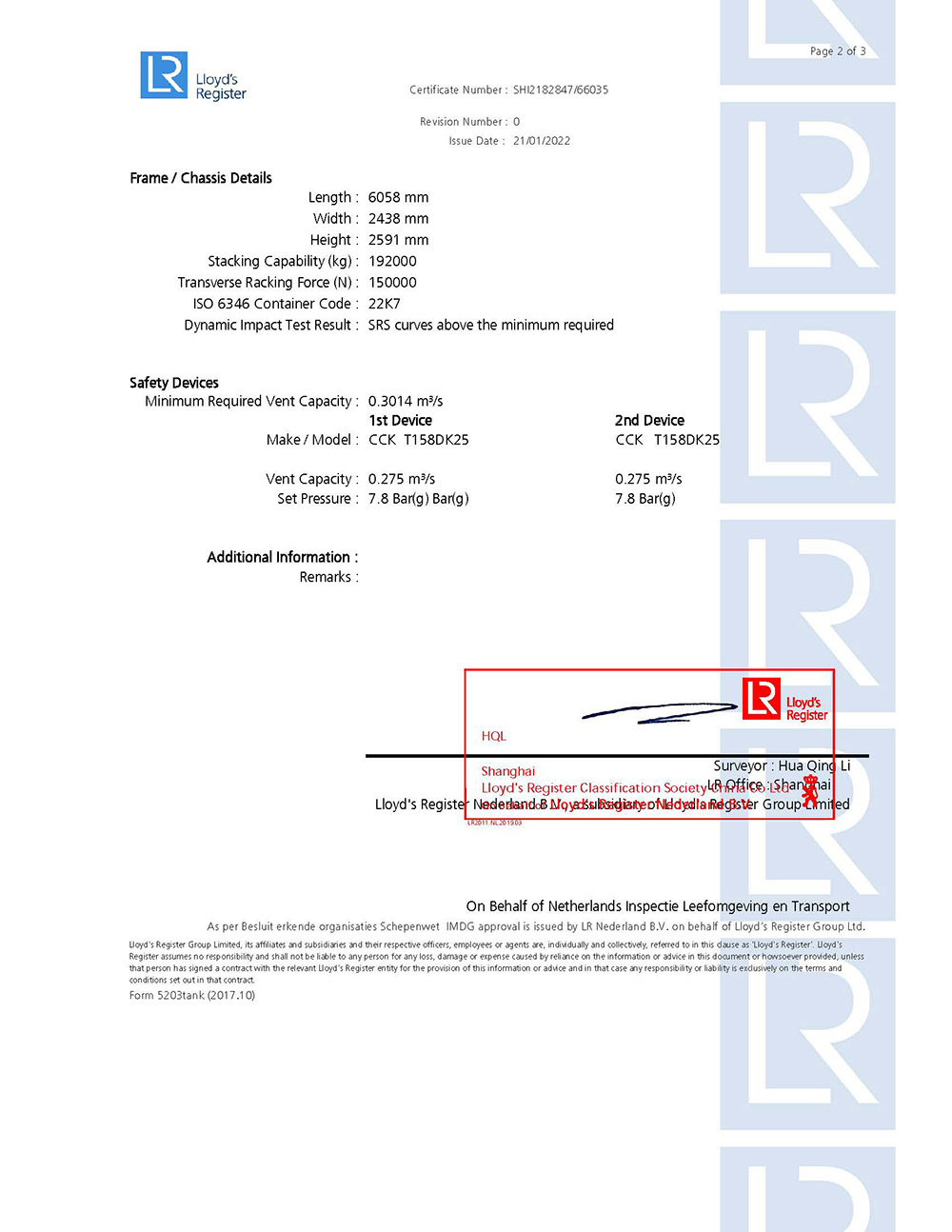
Lloyd's Register certification: Valid from 2022 to 2032 (Certificate No.: SH12 182847 66035), compliant with CSC, ADR, RID, IMDG, and TIR regulations.
Third-party inspection: Inspected by Lloyd’s Register, with reports covering:
Hydrostatic test (2.4MPa, no leakage).
Vacuum insulation test (low heat ingress).
Visual/dimensional inspection (compliant with ASME standards).
Traceability: 100% traceable raw materials (SA-240M 304, Q345R) and components—detailed quality certificates (e.g., material test reports, helium leak test results) provided to clients.
Warranty: 5-year warranty for the inner vessel (cryogenic durability) and 2-year warranty for valves/fittings. SinoCleansky offers annual vacuum maintenance to preserve insulation performance.
Reference certifications and reports:
The 20ft 16bar LNG ISO Tank Container is shipped as a standard ISO container, simplifying logistics:
Direct shipping: Shipped as a standard 20ft ISO container—no need for special packaging, reducing shipping costs.
Securement: For sea shipping, the tank is lashed to the vessel’s deck with high-strength ropes to prevent movement during rough seas.
Protective measures: Valves and fittings are covered with weatherproof caps; the outer shell is painted with anti-corrosion coating to resist saltwater and humidity.
Multi-modal support: Compatible with 20GP containers, trucks, and railcars—ideal for clients needing to move LNG across regions (e.g., Europe, Southeast Asia).
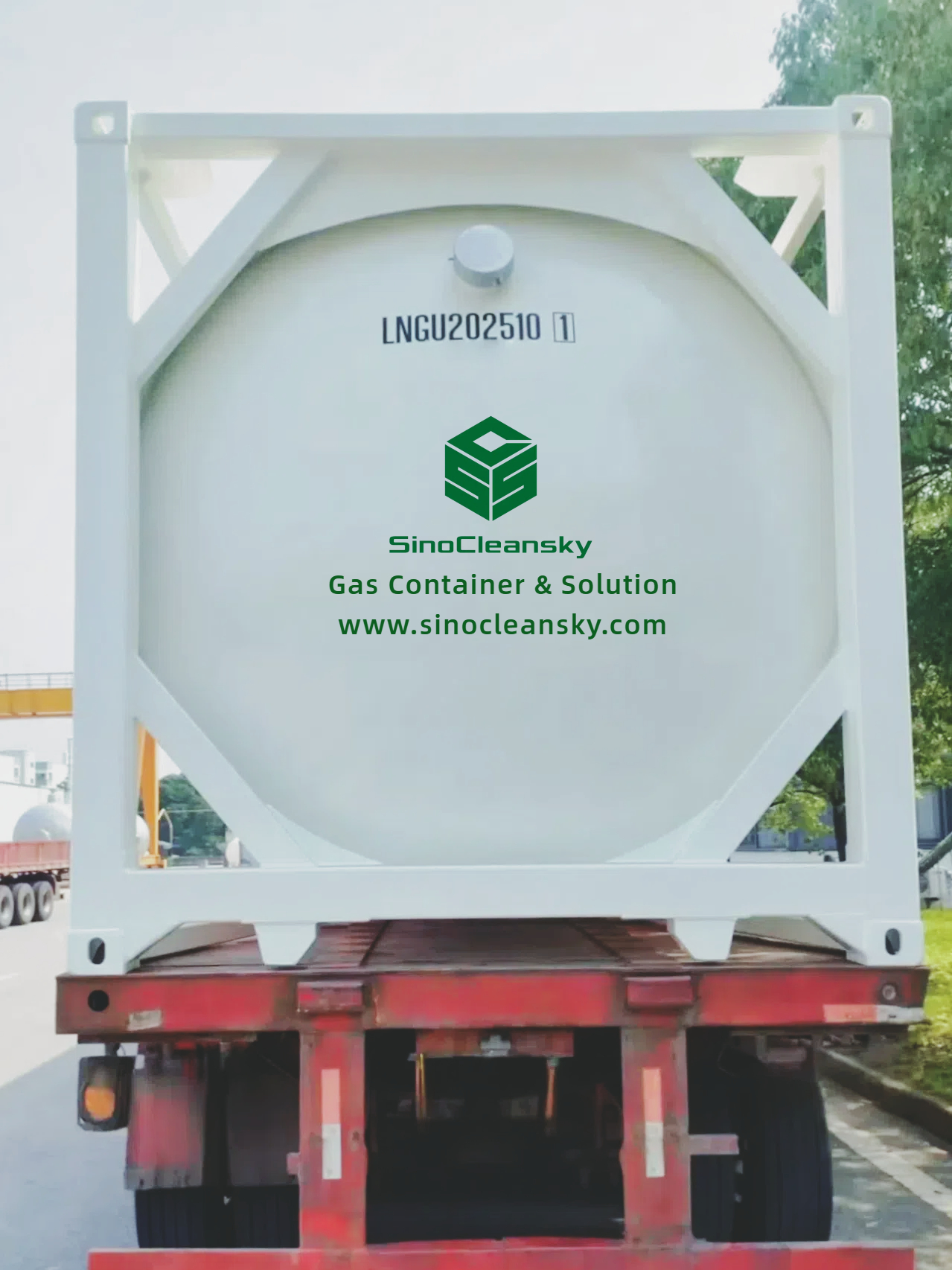
The LNG ISO TANK container is shipped as standard container directly.
What are LNG exports and why are they reshaping global energy markets? Simply put, LNG exports involve turning natural gas into a liquid form so it can travel long distances safely and efficiently. Learn how U.S. LNG exports work, their economic benefits, emerging markets, and innovative technologies driving growth in the global energy sector.
What is LNG used for? Liquefied Natural Gas (LNG) is more than just a fuel—it powers homes, businesses, industries, and even transportation. Its high energy density, cleaner combustion, and flexible transport make LNG ideal for residential heating, industrial processes, and off-grid applications. Learn what LNG is used for across sectors from heating and cooking to transport and manufacturing. Discover its role in cleaner energy, cost savings, and reliable global supply.
What is LNG? Simply put, LNG, or liquefied natural gas, is natural gas cooled into a liquid for easier storage and transport. It’s a versatile, low-carbon energy source powering homes, industries, and transportation worldwide. Learn all about LNG—liquefied natural gas—its storage, transport benefits, and role in cleaner energy. Explore innovations, environmental advantages, and global market trends.
How LNG is produced is a fascinating journey from natural gas extraction to advanced liquefaction technologies. Learn how LNG is produced efficiently and safely. Explore liquefaction techniques, modular systems, cold energy recovery, and environmental responsibility in today’s LNG industry.
What is LNG and how is it transported is becoming a key question for industries seeking cleaner, efficient energy. LNG, or liquefied natural gas, allows natural gas to travel long distances in liquid form, using ships, trucks, rail, and containers. Learn everything about LNG, its liquefaction, transportation across oceans and roads, storage solutions, and regasification for homes and industries.
A CNG skid serves as a critical solution for the safe storage and transport of compressed natural gas. This equipment supports industries that need efficient energy sources for vehicles, heating, and manufacturing. The market for these systems continues to expand rapidly:The global CNG Tube Skids ma
When dealing with large volumes of liquids and gases, choosing the right storage and transport solution is crucial. One of the most common options is the ISO tank, which is designed for safe and efficient transport. However, there’s another essential option: the storage tank. In this article, we will explore the key differences between ISO tanks and storage tanks. You’ll gain insights into their designs, functionalities, and how to choose the right one for your specific needs.
In this article, we will explore the importance of ISO standards in LNG production. You will learn how ISO certification helps enhance efficiency, safety, and sustainability across the LNG supply chain.
In this article, we will explore what LNG storage tanks are, why they are essential, and how they keep LNG in its liquid form. You’ll also learn about the different types of storage tanks and the safety features that make them reliable for large-scale operations.
IntroductionCNG cylinders are transforming the way we fuel vehicles and industries. As the world seeks cleaner energy alternatives, these cylinders play a key role in storing and transporting compressed natural gas (CNG).In this article, we will explore what CNG cylinders are, their various types, how they work, and their many benefits. You’ll also learn how these cylinders are crucial in the shift toward sustainable energy solutions.
IntroductionHave you ever wondered how compressed natural gas (CNG) powers vehicles and industries while reducing emissions? As the world shifts toward greener energy, CNG has emerged as a cleaner and more sustainable alternative to gasoline and diesel.In this article, we will explore how CNG cylinders work, their design, and safety features. You’ll also learn about the environmental and economic benefits of CNG and how it’s transforming industries.
Lorry Tanker - Application in MexicoLorry Tanker - Application of Low Temperature Tankers in JordanLorry tanker - Application of low-temperature tanker transportation in Vietnam
ISO Tank - Application of Aluminum Alloy Tank Container Transportation in AlbaniaISO Tank - Peruvian LNG Substation for Storage and Transportation Applications
Lorry Tanker Transforming Cryogenic Gas Logistics in Jordan and Vietnam What distinguishes our solution is its integrated design: a high-performance cryogenic storage tank paired with a purpose-built operation compartment. This combination eliminates the need for separate transport and filling equip
Microbulk Tank is designed with skid-mounted and vaporizer built-in, high quality, efficient, reliable, lower charge loss and longer liquid gas hold time…… Microbulk Tank layout will help you to be the “Hero” in wide applications including industrial , medical, welding, laser cutting, lab, etc. It’s
Industrial gas and LNG companies across nations have unlocked new efficiency with our ISO Tank. Its standard container design integrates into diverse transport systems—road, rail, sea—adapting to global logistics needs. For cryogenic gas transport, it’s the best transport container. Inside the opera
Email:
Telephone:
Mobile & WhatsApp:
Address: