

Views: 0 Author: Site Editor Publish Time: 2026-10-12 Origin: Site


Procuring cryogenic storage infrastructure carries immense financial and safety stakes. Selecting the wrong design code often results in stranded assets, failed site inspections, or severe regulatory penalties. Importers and project engineers must constantly navigate conflicting global regulatory frameworks when sourcing these vessels. You have to balance strict regional compliance against manufacturing constraints, overall tank weight, space availability, and delivery lead times. Choosing between ASME and EN frameworks is never merely a matter of superior safety. It requires a strategic alignment of design philosophy, jurisdictional legality, environmental impact, and your specific operational use case. If you import a vessel built to the wrong code, local authorities will deny your operating permits. This leaves you with a massive piece of unusable metal. We see this happen when buyers ignore the legal baseline of their installation site. You must understand how these codes dictate fabrication before you sign a purchase order.
Jurisdictional Supremacy: ASME holds dominant recognition in the Americas and Middle East, while EN standards (specifically under the PED directive) are mandatory for the European Economic Area.
Design Philosophy Differences: ASME traditionally utilizes more conservative safety margins resulting in thicker, heavier vessels, whereas EN standards often allow for higher yield strength utilization, reducing overall tank weight and maximizing volume.
Certification Economics: The cost of ASME U-stamp certification and third-party inspections must be weighed against the logistics and payload advantages of lighter EN-designed tanks, particularly for intermodal transport.
Global Sourcing Realities: Importers sourcing from major manufacturing hubs (e.g., China) must verify overlapping local codes (e.g., GB150 for China, AS1210 for Australia) to ensure imported tanks pass domestic commissioning and meet international integrity levels.
Table of Contents
LNG storage tank standards establish essential requirements for safe design, manufacturing, inspection, and installation. Selecting the appropriate standard helps buyers ensure regulatory compliance, reliable performance at approximately −162°C, and efficient long-term operation.
Regulatory Compliance: Meet applicable international standards and local regulations.
Cryogenic Safety: Ensure materials withstand extremely low temperatures.
Structural Integrity: Verify pressure resistance, welding quality, and tank strength.
Thermal Performance: Maintain effective insulation and control boil-off gas (BOG).
Quality Verification: Provide complete inspection, testing, and certification records.
Different LNG tank designs require different engineering and regulatory considerations.
LNG Tank Type |
Typical Application |
Key Consideration |
|---|---|---|
Pressurized Bullet Tank |
Industrial and satellite LNG storage |
Pressure resistance and insulation |
ISO Tank Container |
LNG transportation |
Transport regulations and structural safety |
Non-Containerized Transport Tank |
Specialized LNG transportation |
Weight limits and transport approvals |
Flat-Bottom Tank |
Large-scale LNG storage terminals |
Foundation design and secondary containment |
Spherical Tank |
Specialized cryogenic storage |
Structural design and pressure requirements |
Site conditions influence tank selection and installation requirements. Buyers should evaluate available space, safety distances, secondary containment, emergency venting, and environmental regulations. The applicable standards and local requirements determine the necessary protective measures.
Complete technical documentation is essential for regulatory approval and project acceptance. Buyers should request:
Material Test Reports (MTRs)
Welding and NDT inspection records
Pressure and leak testing reports
Applicable certification documents
Manufacturing quality and acceptance records
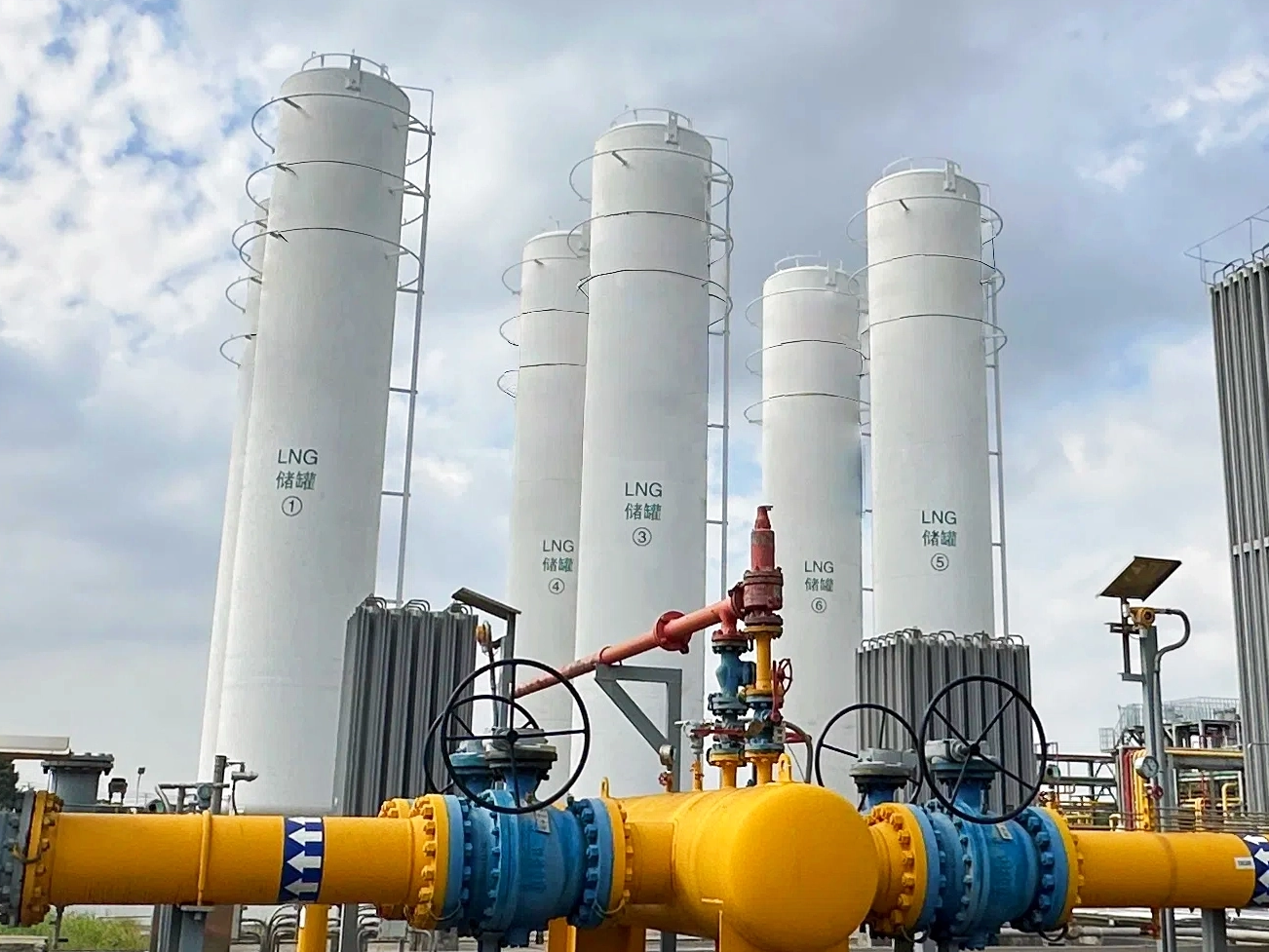
ASME Section VIII provides design, fabrication, inspection, testing, and certification requirements for pressure vessels within its scope, including certain pressurized LNG storage tanks.
The ASME Boiler and Pressure Vessel Code, Section VIII, Division 1 establishes requirements for pressure vessel construction, material selection, welding, inspection, and pressure testing.
Division 1 and Division 2 offer different engineering approaches, and the appropriate division depends on the vessel design, operating conditions, and project requirements.
However, not every LNG storage tank is classified as an ASME Section VIII pressure vessel. Large atmospheric or low-pressure refrigerated tanks may fall under different design standards.
Standard |
Main Features |
Suitable Applications |
|---|---|---|
Division 1 |
Established design formulas and fabrication requirements |
Conventional pressure vessels |
Division 2 |
Advanced stress analysis and alternative design rules |
Complex or material-optimized vessels |
ASME pressure vessel design considers material strength, allowable stress, wall thickness, and operating conditions. LNG tanks also require materials suitable for cryogenic temperatures. Proper material selection and traceability help maintain structural integrity during long-term operation.
ASME U-Stamp certification verifies that a qualifying pressure vessel has been manufactured under an authorized ASME quality control program. It involves material documentation, welding qualification, inspection, and required testing, with Authorized Inspector oversight.
ASME is commonly specified for:
North American Projects: Where applicable regulations require ASME compliance.
Industrial LNG Storage: Pressure vessels used in stationary facilities.
International Energy Projects: Contracts specifying ASME Section VIII.
European EN standards provide design and safety requirements for different types of LNG storage equipment. Selecting the correct standard depends on vessel construction, installation method, and intended application.
Standard |
Primary Application |
|---|---|
EN 13530 |
Large transportable vacuum-insulated cryogenic vessels |
EN 14620 |
Site-built, vertical, cylindrical, flat-bottom tanks for refrigerated liquefied gases |
PED 2014/68/EU |
Applicable European pressure equipment conformity requirements |
LNG equipment intended for the European market must satisfy the applicable European regulatory requirements. For qualifying pressure equipment, the Pressure Equipment Directive 2014/68/EU establishes requirements for conformity assessment and placing equipment on the market.
Where the PED applies, the conformity assessment procedure depends on the equipment classification and relevant technical requirements. Notified Body involvement and CE marking requirements must be determined accordingly.
However, PED requirements should not automatically be applied to every LNG storage tank or transportable cryogenic vessel. Buyers must first confirm the equipment's regulatory classification and applicable exclusions.
Material utilization and vessel weight influence LNG transportation efficiency. Optimized engineering designs can reduce tare weight while maintaining required structural strength. However, actual weight savings depend on the chosen design code, vessel dimensions, materials, and operating conditions.
EN standards are particularly relevant for:
European LNG Projects: Equipment subject to applicable EU requirements.
Cryogenic Transportation: Transportable vessels designed under relevant standards.
Large LNG Storage Facilities: Site-built refrigerated storage tanks.
Payload-Sensitive Applications: Projects requiring optimized weight and capacity.
Both ASME and EN frameworks emphasize pressure vessel safety, structural reliability, and manufacturing quality, but their design rules and compliance pathways differ.
Technical Factor |
ASME Section VIII |
EN Standards |
|---|---|---|
Design Approach |
Division-specific pressure vessel design rules |
Product-specific European design requirements |
Cryogenic Materials |
Approved materials with applicable low-temperature requirements |
Materials meeting relevant European cryogenic requirements |
Wall Thickness |
Based on design calculations and allowable stress |
Based on applicable EN design criteria |
Weld Inspection |
NDT requirements based on vessel design and fabrication rules |
NDT requirements defined by applicable standards |
Certification |
ASME certification where required |
Applicable EU conformity assessment and CE marking |
Typical Market |
North America and international industrial projects |
Europe and projects specifying EN standards |

LNG storage temperatures can approach −162°C, requiring materials with suitable low-temperature toughness. Depending on vessel design, 9% nickel steel and specific stainless steel grades may be considered. Material selection must follow the applicable code and verified mechanical properties.
Weld quality directly affects LNG tank safety. ASME and EN requirements may involve radiographic testing, ultrasonic testing, and other inspection methods. Inspection scope depends on vessel construction, weld design, and the governing standard.
Cryogenic insulation minimizes heat transfer and LNG boil-off losses. Vacuum-insulated vessels require suitable insulation materials, leak-tight construction, and verified thermal performance. These requirements should be evaluated according to the applicable vessel design and product standard.
Choosing between ASME and EN requirements involves more than initial vessel pricing. Buyers should evaluate manufacturing costs, certification requirements, transportation efficiency, and long-term operating costs.
Cost Factor |
Key Consideration |
|---|---|
Material Cost |
Vessel weight, wall thickness, and approved materials |
Engineering Cost |
Design complexity and required analysis |
Inspection Cost |
Required third-party involvement and testing |
Certification Cost |
Applicable approvals and documentation |
Lifecycle Cost |
Maintenance, insulation performance, and operating efficiency |
LNG tank transportation requirements depend on vessel dimensions, total weight, transport mode, and regional regulations. Equipment intended for road, rail, or maritime transportation may require additional approvals beyond its pressure vessel design certification.
When sourcing LNG storage tanks internationally, buyers should verify the manufacturer's experience with the specified design code.
Key checks include:
Valid Certifications: Verify the manufacturer's applicable ASME or European conformity credentials.
Manufacturing Capability: Review welding qualifications, quality systems, and inspection processes.
Technical Documentation: Request material certificates, design records, and test reports.
Export Experience: Confirm familiarity with destination-market requirements.
Manufacturers with experience across multiple standards can simplify international LNG tank procurement. Consistent quality control, documentation, and technical support help buyers manage projects across different regions without compromising compliance.
Key Takeaway: ASME and EN standards provide different engineering and compliance frameworks for LNG tanks. The appropriate choice depends on tank type, destination-market regulations, operating conditions, weight requirements, and project specifications, rather than assuming one standard is universally lighter, safer, or more economical.
Audit potential manufacturers to verify their ASME and EN certificates are currently active and in good standing with the issuing regulatory bodies.
Request sample documentation from previous builds, including Material Test Reports (MTRs), ASME U-1 forms, or PED declarations of conformity, to verify their paperwork accuracy.
Consult with local regulatory authorities and fire marshals in the installation jurisdiction to confirm exact secondary containment and setback requirements before finalizing the tank geometry.
Hire an independent third-party inspector to monitor the fabrication process from raw material intake through to the final helium mass spectrometer vacuum testing.
Map out the entire logistics route to ensure the selected tank design complies with all regional highway weight limits and maritime transport regulations.
A: ASME relies on conservative safety margins, resulting in thicker, heavier tanks, and requires U-Stamp certification via Authorized Inspectors. EN standards utilize higher yield strength allowances, producing lighter, payload-efficient tanks, and align with the European Pressure Equipment Directive (PED) for CE marking.
A: Not automatically. Europe mandates compliance with the Pressure Equipment Directive (PED). While ASME designs can sometimes be justified under the PED through a Particular Material Appraisal (PMA), it is a complex and expensive process. Defaulting to EN standards is the standard legal pathway for European acceptance.
A: EN standards generally result in lighter tanks. By utilizing advanced design-by-analysis and allowing for higher yield strength utilization, EN codes permit thinner vessel walls. This reduces the tare weight and increases the volume of transportable liquid, making it ideal for highway logistics.
A: GB150 (China) and AS1210 (Australia) are strict domestic codes. While they share metallurgical principles with ASME and EN, they are rarely accepted outside their home countries. Global buyers sourcing from China must ensure the manufacturer can build strictly to export codes rather than defaulting to GB150.
A: Inland waterway transport involves crossing multiple regional jurisdictions with unique maritime rules. Non-containerized tanks often require separate, localized approvals from each regional authority. This patchwork of regulations makes applying a single universal standard extremely difficult without extensive localized engineering appraisals.
A: Yes, dual certification is possible but expensive. The manufacturer must design the tank to meet the thickest wall requirements, usually dictated by ASME, while fulfilling the testing, inspection, and documentation requirements of both the ASME U-Stamp and the European CE mark simultaneously.


