| Availability: | |
|---|---|
| Quantity: | |
The 5000L LNG Microbulk Tank (Model: MN5000MP) is SinoCleansky’s flagship solution for small-to-medium LNG applications, bridging the gap between compact tanks and large-scale storage systems. Engineered for versatility, it integrates core functions—LNG storage, vaporization, pressure regulation, and gas measurement—into a single skid, making it suitable for industrial heating, small power plants, and LNG refueling stations.
Combined "storage-regas-filling" design: Eliminates the need for separate equipment, cutting installation time by 40% and on-site footprint by 30%.
Enhanced insulation performance: High multi-layer vacuum insulation reduces daily boil-off rate to just 0.4% (nitrogen), ensuring minimal LNG loss during long-term storage.
Durable stainless steel construction: The outer shell resists weathering, chemical corrosion, and physical impact, extending the tank’s service life to over 15 years.
Flexible operation: Optional modules (odorization, remote monitoring, auto-shutoff) allow customization for specific client needs, from industrial gas supply to residential energy provision.
With a 5000L water capacity and 100Nm³/H gas delivery rate, this tank ensures a stable, continuous LNG supply for applications requiring higher throughput than compact models.
Model: MN5000MP
Maximum Allowable Working Pressure (MAWP): 1.6 MPa (230 psi)
Max Pre-set Operating Pressure: 0.8 MPa (116 psi)
Gross Volume: 5168 L (1365 gal)
Net Volume: 4651 L (1228 gal)
Nitrogen Boil-off Rate (NER): 0.4%/Day
Tare Weight: 2613 kg (5761 lbs)
Gaseous Volume (NG): 6743 Nm³ (238127 SCF)
Gas Delivery Rate: 100 Nm³/H (3532 SCFH)
Pallet Dimensions: 2100 mm × 2100 mm (82.67 inch × 82.67 inch)
Tank Diameter: 1910 mm (75.2 inch)
Overall Height: 3150 mm (124.02 inch)
Working Temperature Range: -196°C to +50°C
Required Ground Base: 1~2 M³ (small, non-specialized)
| Model | MN5000MP |
MAWP: Mpa(psi) | 1.6(230) |
Max. Pre-set Operating Press: Mpa(psi) | 0.8(116) |
Gorss Volume: L(gal) | 5168(1365) |
Net Volume: L(gal) | 4651(1228) |
NER (Nitrogen): %/Day | 0.4 |
Tare Weight: kg(lbs) | 2613(5761) |
Gaseous Volume (CO2/NG): Nmˆ3(SCF) | 6743(238127) |
Gas delivery rate: Nmˆ3/H(SCFH) | 100(3532) |
Pallet Width "A": mm(inch) | 2100(82.67) |
Pallet Length "B": mm(inch) | 2100(82.67) |
Tank Diameter "D": mm(inch) | 1910(75.2) |
Overall Height "H": mm(inch) | 3150(124.02) |
SinoCleansky adheres to strict international quality standards for the 5000L LNG Microbulk Tank, ensuring reliability and compliance:
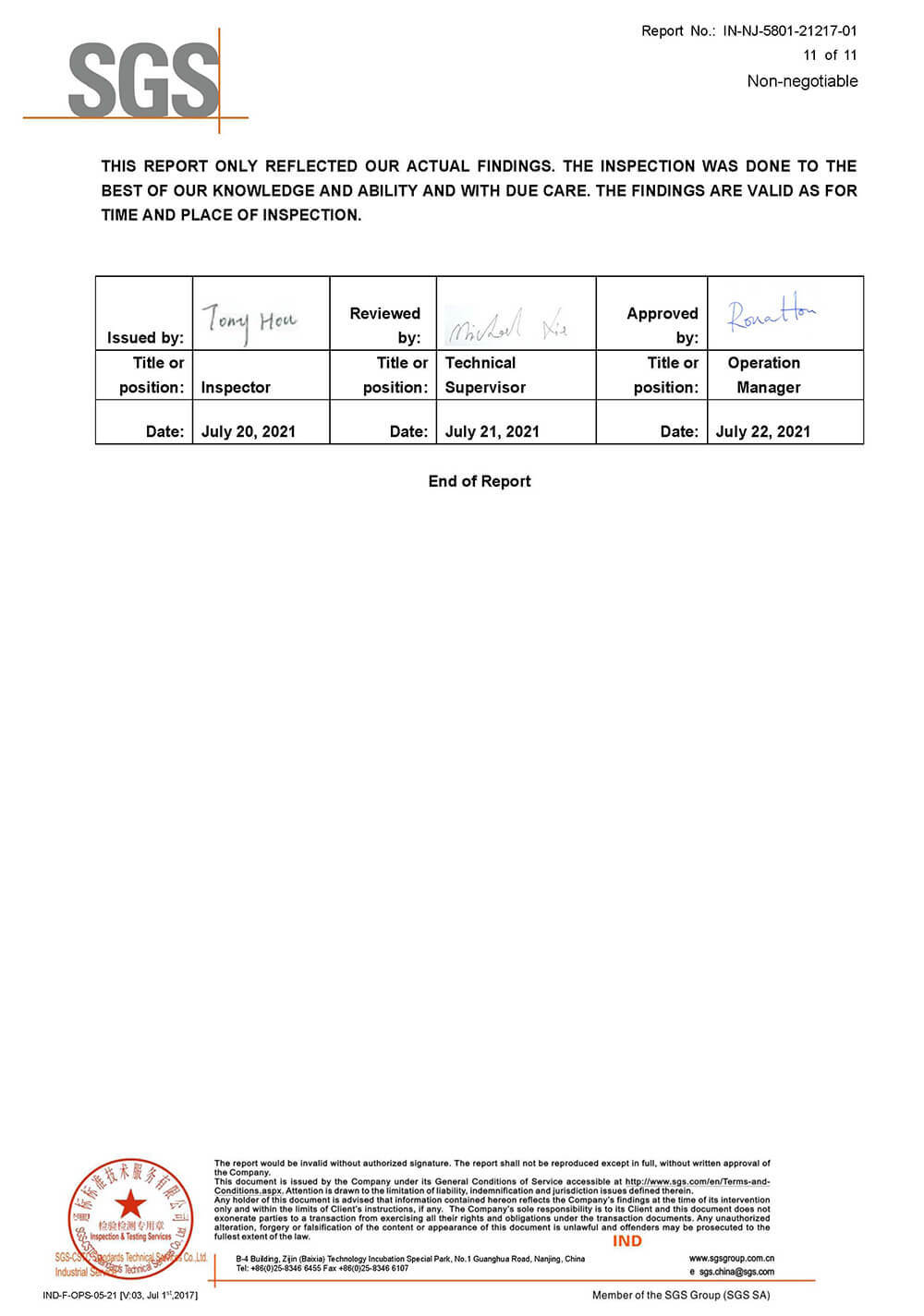
Third-party validation: Inspected by SGS (Report No.: IN-NJ-5801-21217-01), with tests covering air leakage (1.5MPa test pressure, no leakage), dimensional accuracy, and material quality.
Certifications: Complies with ISO standards for cryogenic storage, with optional certificates (e.g., ASME, CE) available to meet regional regulations (e.g., EU, North America).
Traceability: All components—from the stainless steel shell to valves—are 100% traceable, with detailed records (raw material certificates, heat treatment reports) provided to clients.
Warranty & support: Includes a standard manufacturer’s warranty (terms customizable) for defects, plus technical support for installation, maintenance, and troubleshooting.
Reference certifications and reports:
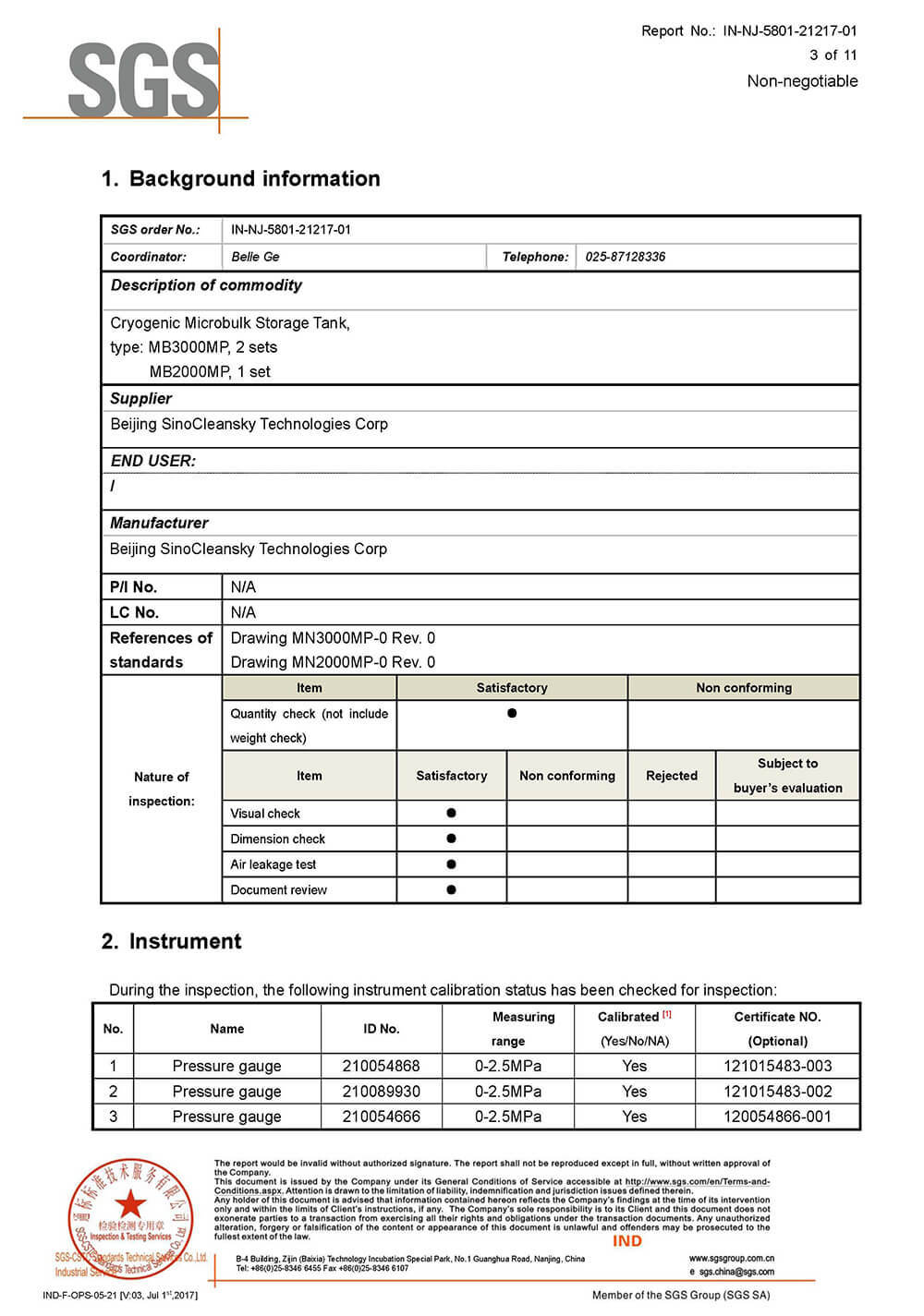
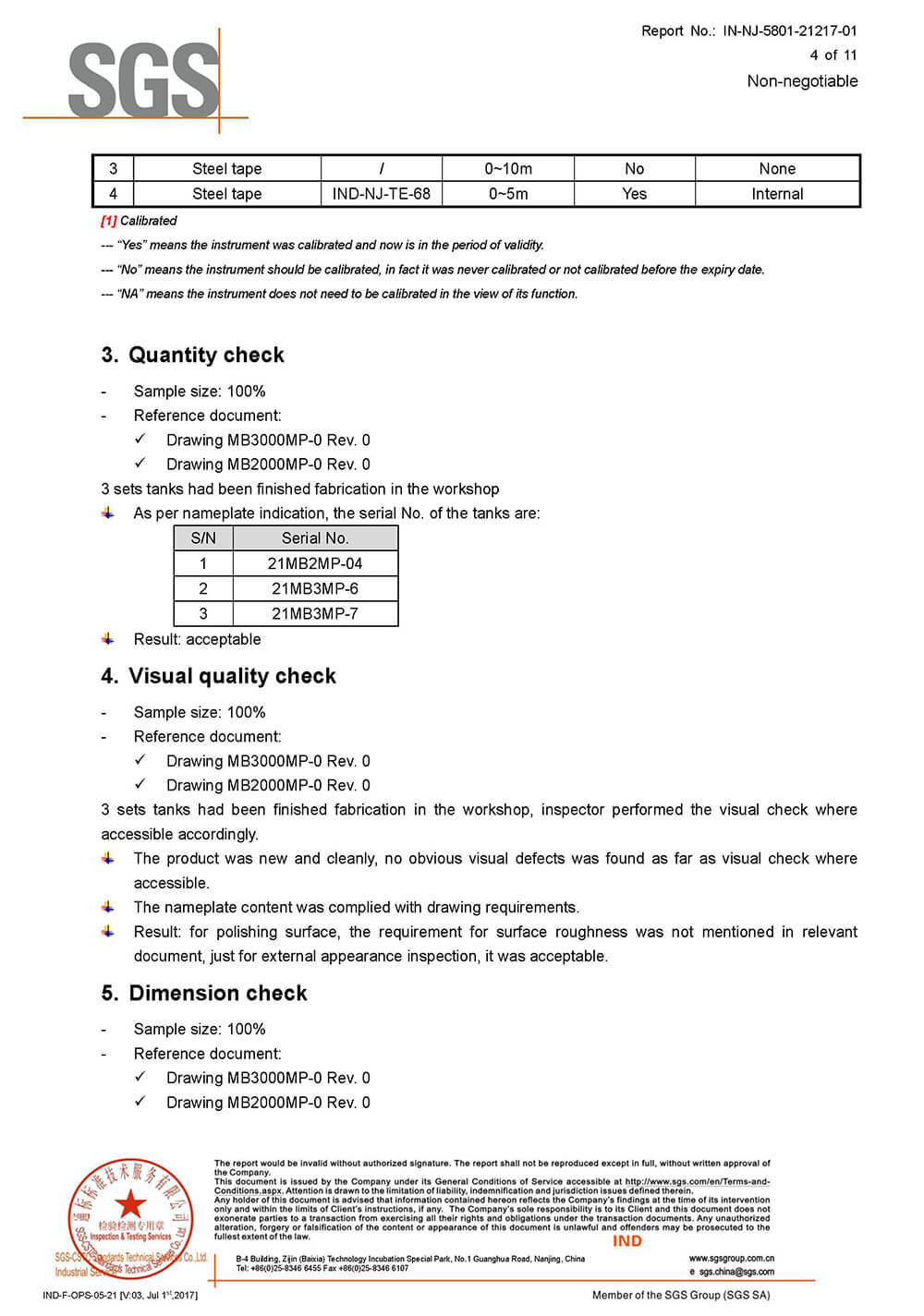
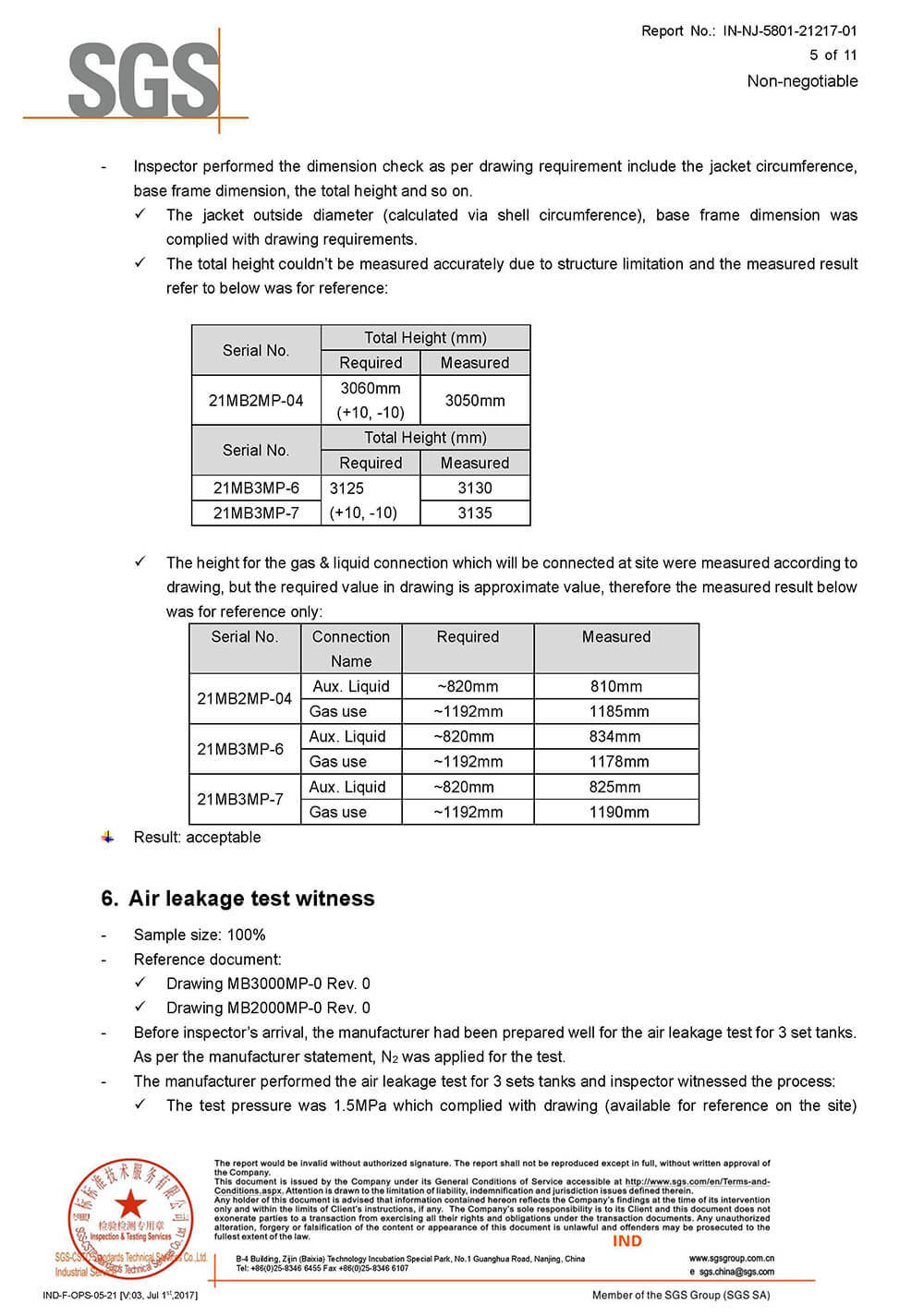
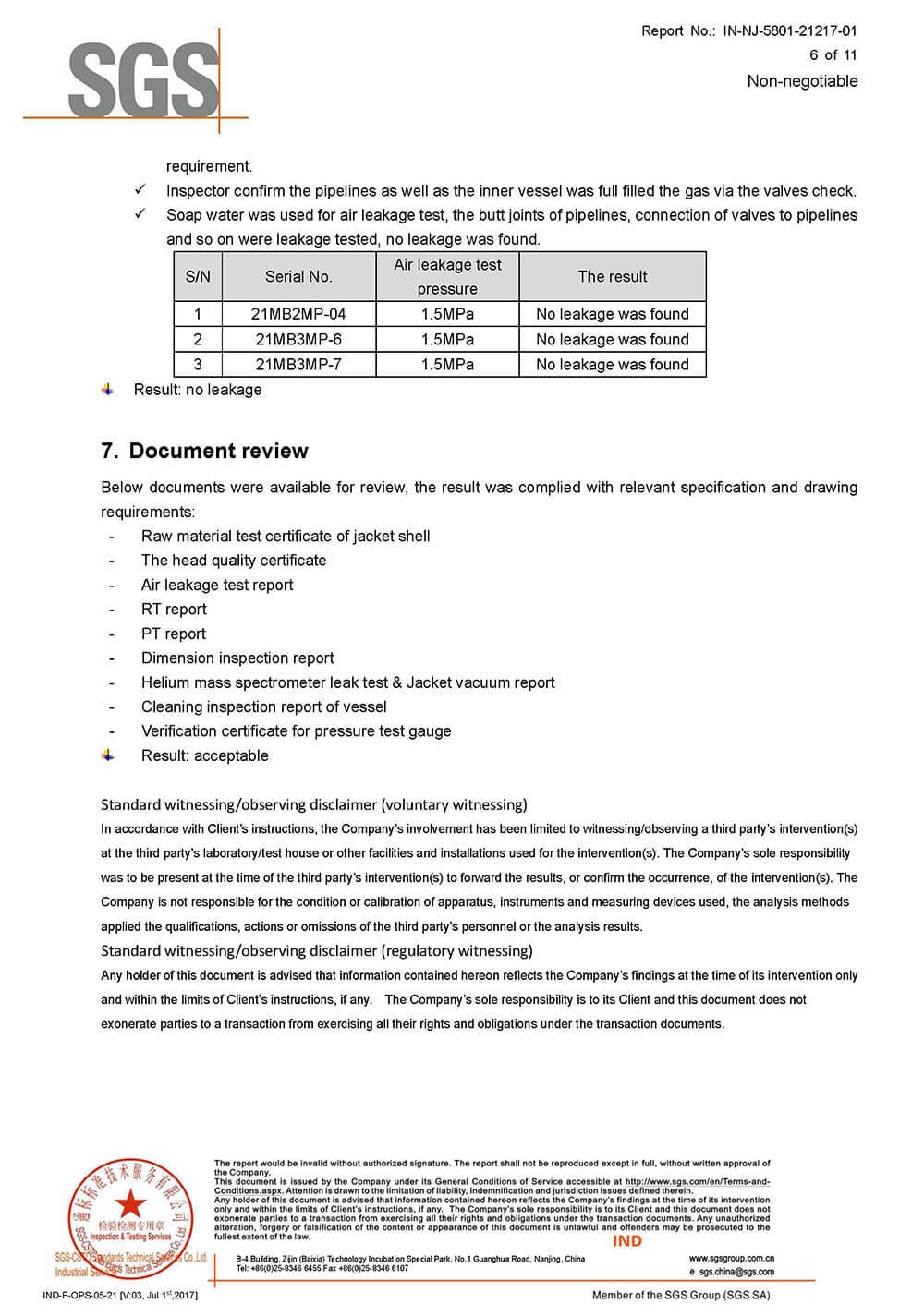
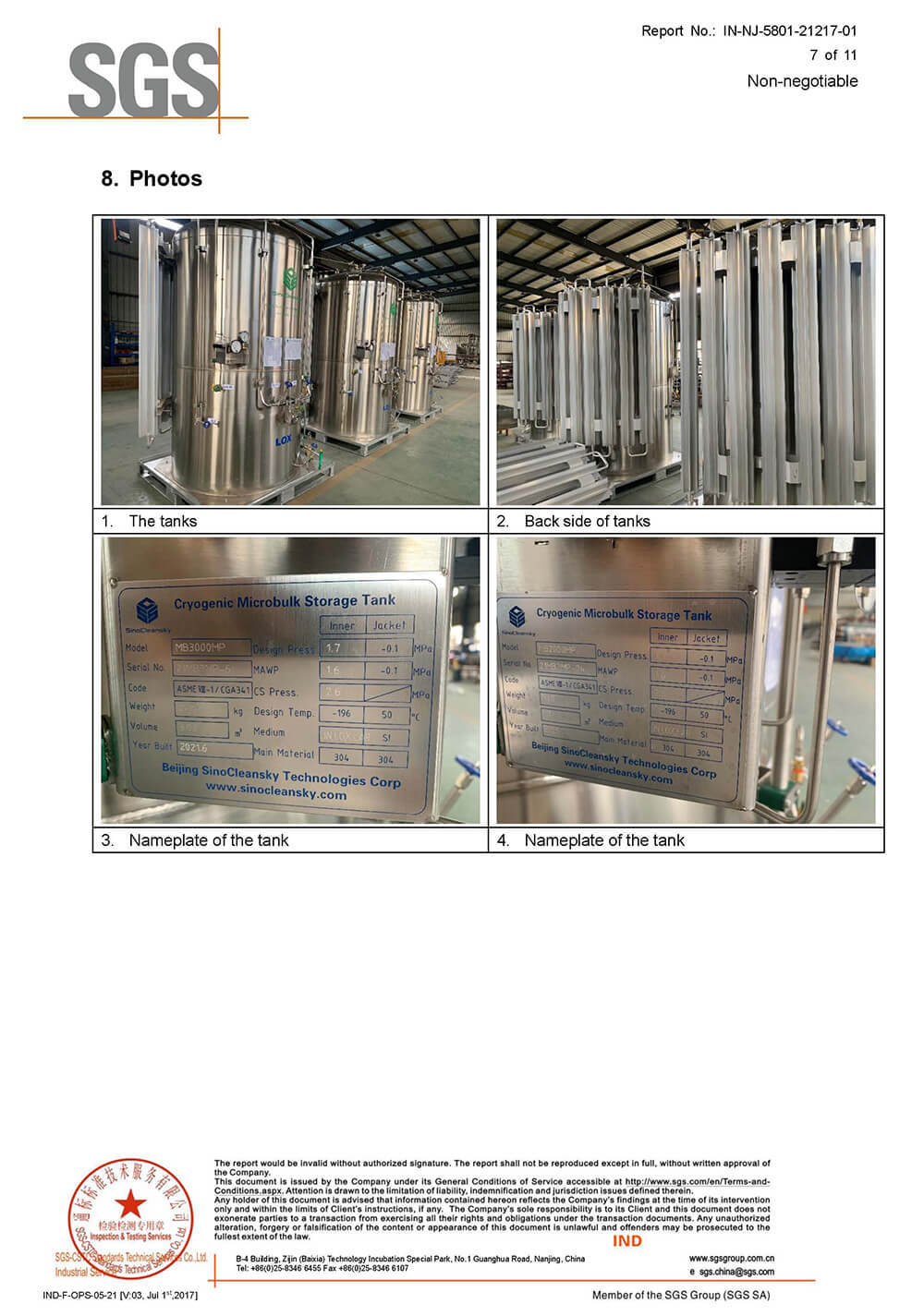
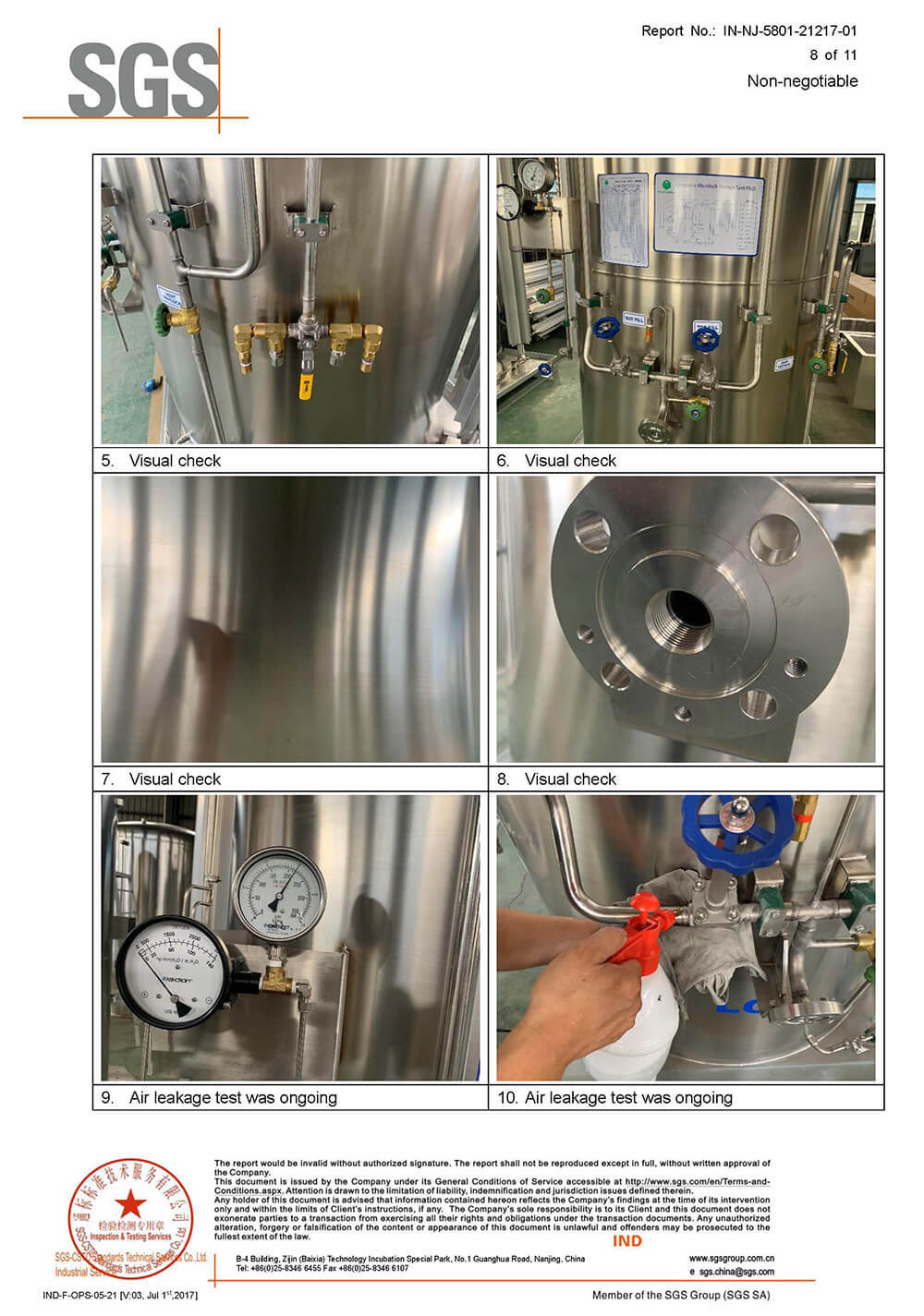
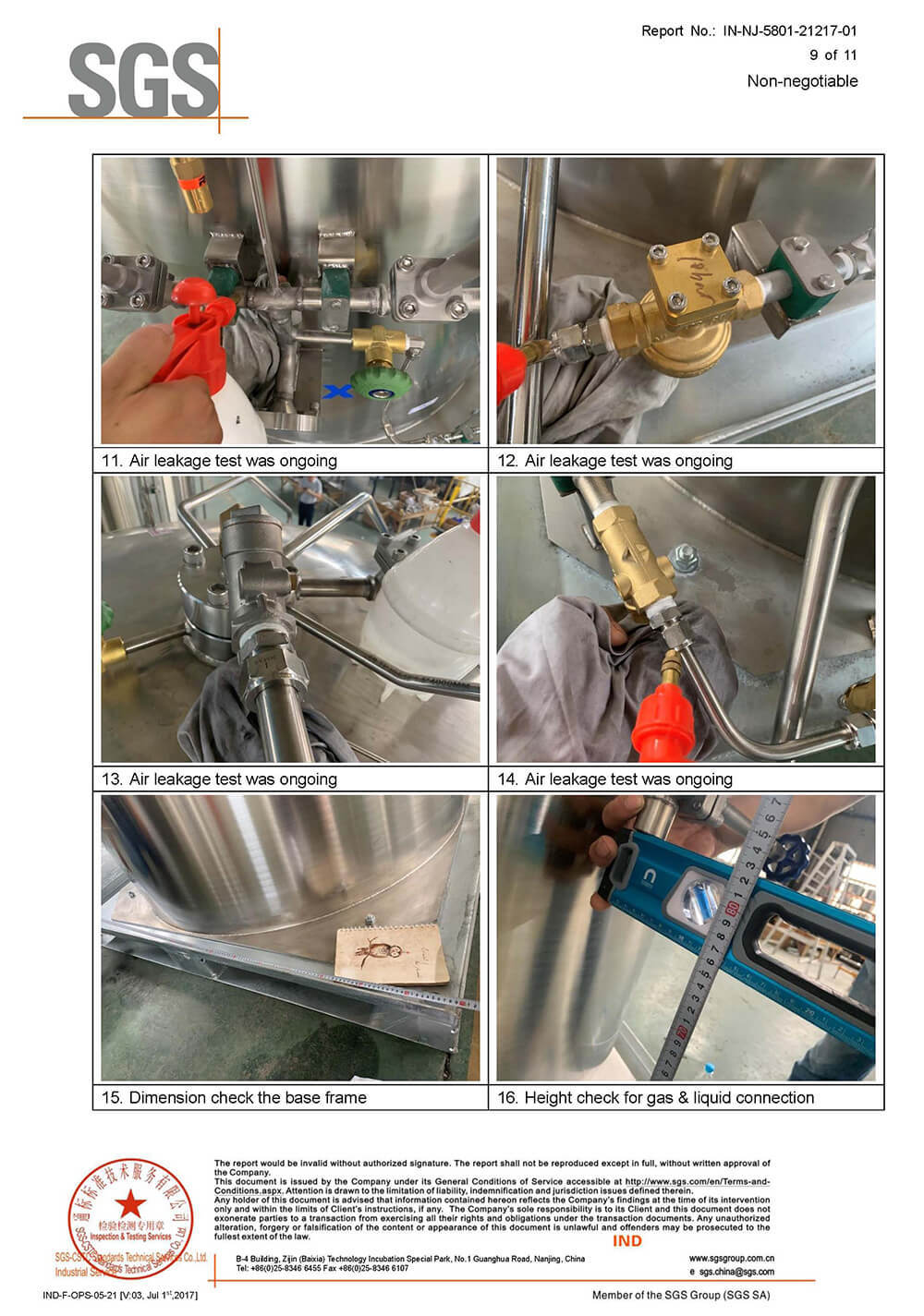
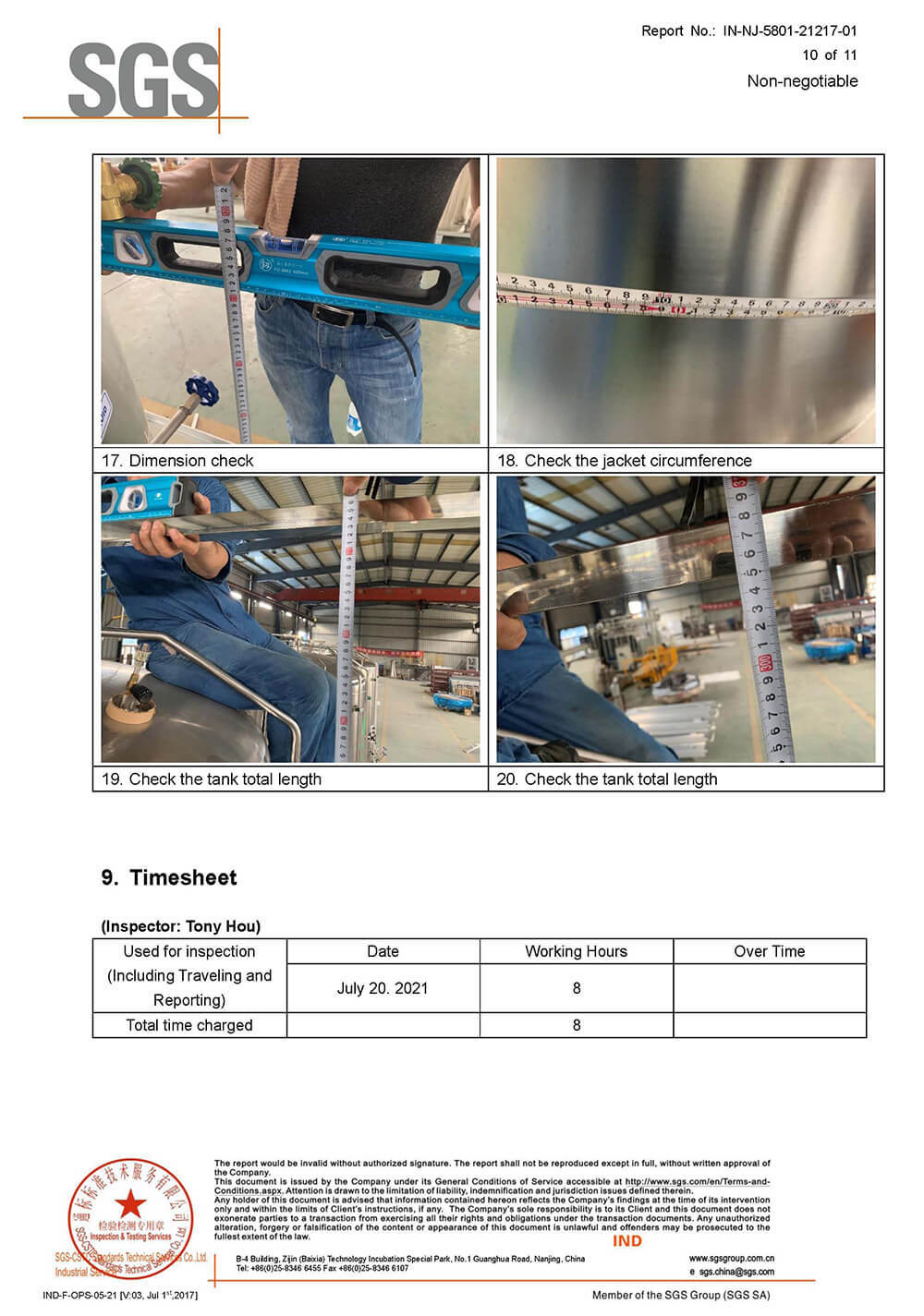
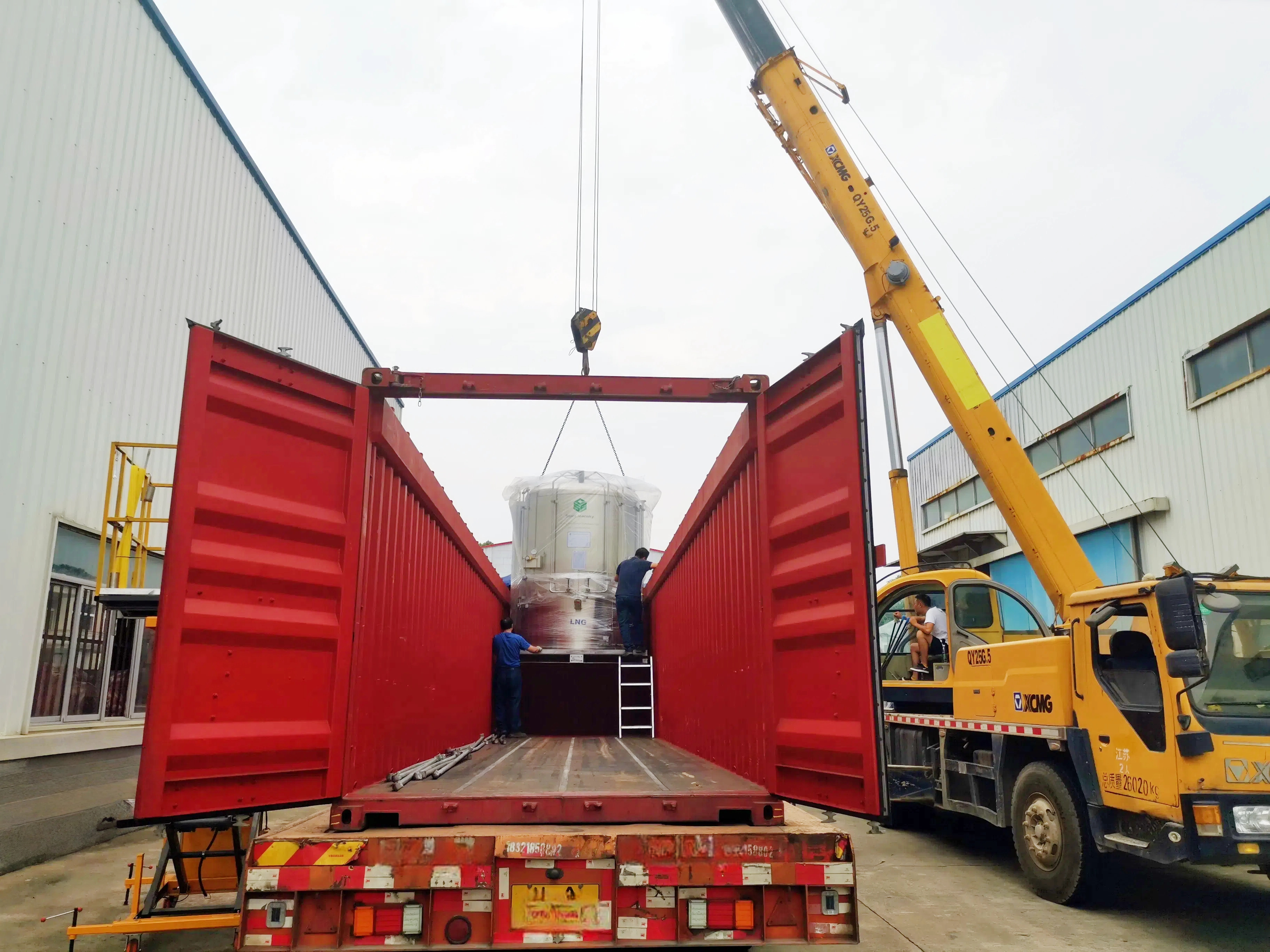
The LNG Microbulk can be shipped by various types of container, such as standard container 20GP, 40GP, 40HQ; pen top container, such as 20OT, 40OT and etc.
The 5000L LNG Microbulk Tank is shipped to global clients with a focus on safety and efficiency:
Container compatibility: Fits in standard 40GP/40HQ containers or open-top containers (20OT, 40OT) for easy loading/unloading.
Securement: Fixed to heavy-duty skids and secured with anti-slip pads and steel ropes to prevent shifting during sea, land, or rail transit.
Weather protection: The stainless steel shell is coated with a protective film to avoid scratches or corrosion during shipping.
Documentation: Includes all necessary paperwork—certifications, inspection reports, packing lists—to ensure smooth customs clearance. For remote regions, SinoCleansky coordinates with local logistics partners to deliver to site.

SinoCleansky participated Hospitalar 2026 in Brasil, Let's explore it together!
FABTECH Mexico 2026 was held from May 12 to 14, 2026, at the Centro Banamex International Convention and Exhibition Center in Mexico City. As the largest and most influential international trade show for metal fabrication, welding, and industrial manufacturing in Latin America.Compared to the 2025 e
SinoCleansky made its first-time appearance at this premier event, showcasing its full range of medical gas supply solutions at Booth H-60, demonstrating to the Latin American market the technological strength and product excellence of China's leading gas container manufacturer.
SinoCleansky will participate Hospitalar 2026 at May 19–22, São Paulo Expo, Brazil. As we celebrated 20 years of excellence, this Hospitalar show marked another milestone in SinoCleansky's expanding global presence. The connections made and partnerships forged here will drive our growth in the Latin American market and beyond. Thank you to everyone who visited our booth. We look forward to building on this momentum together.
SinoCleansky Shines at Mexico Industrial Trade Show SinoCleansky proudly showcased our latest product line at a major industrial exhibition in FABTECH Mexico. The event brought together industry professionals from across the Americas and beyond. Our team delivered warm, professional consultations to visitors — walking them through product specifications, application scenarios, and custom project requirements. From technical deep-dives to new business discussions, every conversation reflected our commitment to customer success. As we celebrated 20 years of excellence, this FABTECH Mexico show marked another milestone in SinoCleansky's expanding global presence. The connections made and partnerships forged here will drive our growth in the Latin American market and beyond. Thank you to everyone who visited our booth. We look forward to building on this momentum together.
Choosing the right CNG transport and dispensing equipment is essential for building a reliable virtual pipeline. This guide compares CNG tube trailers, MEGCs, and jumbo tube cascades, explaining how transport mode, payload capacity, site space, delivery frequency, and pressure management affect equipment selection. CNG tube trailers are suited to high-volume road transport, while MEGCs provide greater multi-modal flexibility. Jumbo tube cascades support efficient gas storage and dispensing at the destination. By matching equipment capacity with demand, site conditions, and regulatory requirements, project teams can improve logistics, control operating costs, and maintain a stable CNG supply.
CNG pressure reduction unit sizing is essential for maintaining stable gas flow, safe downstream pressure, and reliable system operation. This guide explains the key factors engineers need to evaluate, including inlet and outlet pressure, minimum and peak flow rates, gas temperature, specific gravity, line size, and regulator Cv. It also covers the Joule-Thomson effect, pre-heater sizing, critical flow, redundancy, overpressure protection, and common risks caused by oversized or undersized regulators. By following these principles, CNG system designers can select suitable pressure reduction equipment and improve operational safety, stability, and long-term performance.
LNG boil-off gas is an unavoidable challenge in cryogenic storage and transportation, but effective management can significantly reduce cargo losses, emissions, and operating costs. This guide explains how LNG boil-off gas is generated and presents practical strategies for minimizing, recovering, and utilizing BOG. It covers subcooling, advanced insulation, predictive modeling, voyage optimization, propulsion fuel use, onboard reliquefaction, compression, and power generation. By selecting the right BOG management approach, LNG operators can improve cargo retention, energy efficiency, regulatory compliance, and long-term operational performance.
Choosing between an LNG microbulk station and a modular regasification station depends on gas demand, site conditions, investment capacity, logistics, and long-term expansion plans. LNG microbulk systems provide compact footprints, lower upfront CAPEX, and faster deployment for low-to-moderate, predictable demand. Modular regasification stations are better suited to high-throughput industrial, marine, and municipal applications, offering greater storage capacity, lower operating costs at scale, and stronger supply resilience. This guide compares LNG microbulk vs regasification station options across capacity, infrastructure, cost, maintenance, scalability, safety, logistics, commissioning time, and operational requirements.
An L-CNG refueling station provides off-grid CNG fueling by receiving delivered LNG, pressurizing it as a liquid, and vaporizing it before dispensing. This guide explains the main L-CNG refueling station cost factors, including cryogenic storage, high-pressure pumps, vaporizers, CNG cascades, civil works, energy, maintenance, and LNG delivery. It also covers station sizing, site requirements, safety compliance, boil-off gas management, contractor selection, and ROI analysis, helping fleet operators compare infrastructure options and plan a reliable natural gas fueling project and investment strategy.
An LNG Microbulk Tank offers a practical and efficient energy storage solution for industrial facilities that require more capacity than high-pressure cylinders but less infrastructure than traditional bulk storage. With advanced vacuum insulation, automated telemetry, stable pressure control, and compact installation requirements, microbulk systems improve operational reliability while reducing fuel waste and delivery costs. This guide explores industrial applications, key technical specifications, thermal performance, regulatory compliance, and deployment strategies to help businesses build safe, efficient, and scalable LNG supply systems.
An LNG Microbulk Tank provides an efficient and cost-effective storage solution for industrial users whose gas demand exceeds cylinder systems but does not justify large bulk installations. By offering stable pressure, low evaporation rates, automated telemetry, and compact installation requirements, microbulk systems improve operational efficiency while reducing delivery frequency and gas waste. This guide explains capacity selection, thermal performance, installation requirements, safety regulations, and ROI considerations, helping businesses choose the right LNG storage solution for reliable and continuous gas supply.
An LNG ISO Tank Container provides a flexible and cost-effective solution for transporting liquefied natural gas to locations where traditional pipeline infrastructure is unavailable or impractical. Compared with conventional bulk LNG transportation, ISO tank containers offer greater intermodal flexibility, lower infrastructure investment, and dual-use functionality for transportation and temporary storage. This guide compares both transportation methods, explains key technical specifications and safety requirements, and helps energy companies select the most efficient LNG logistics solution for decentralized and small-scale LNG distribution.
A CNG Jumbo Tube Skid is the foundation of an efficient virtual pipeline system for transporting compressed natural gas where conventional pipelines are unavailable. Selecting the right skid requires evaluating cylinder materials, pressure ratings, payload efficiency, structural design, safety systems, and international compliance standards. This guide explains the key technical specifications, compares different cylinder technologies, outlines operational safety requirements, and provides practical procurement strategies to help energy companies improve transport efficiency, reduce lifecycle costs, and ensure safe, reliable gas distribution.
A CNG Jumbo Tube Skid provides an efficient solution for transporting and storing compressed natural gas where traditional pipeline infrastructure is unavailable. By optimizing cylinder configuration, pressure ratings, manifold design, and gas utilization, these systems improve payload efficiency while reducing transportation costs. This guide explains the key technical specifications, compares cylinder materials and skid configurations, and outlines the critical safety, compliance, and operational factors that help engineering teams select reliable CNG transport solutions for industrial, petrochemical, and energy applications.
What are LNG exports and why are they reshaping global energy markets? Simply put, LNG exports involve turning natural gas into a liquid form so it can travel long distances safely and efficiently. Learn how U.S. LNG exports work, their economic benefits, emerging markets, and innovative technologies driving growth in the global energy sector.
On the occasion of SinoCleansky’s 20th anniversary, the company has officially become a sponsor of Gasworld (Asia-Pacific Industrial Gases Conference) 2025, demonstrating the strength of a professional gas supplier. This sponsorship is an important measure to expand the international market. Relying on a full range of gas equipment and one-stop solutions, SinoCleansky unwaveringly serves global customers and deepens cooperation with Asia-Pacific industry partners to explore new industry opportunities.
Email:
Telephone:
Mobile & WhatsApp:
Address: