| Availability: | |
|---|---|
| Quantity: | |
SinoCleansky microbulk LNG microbulk station is a smart and modular design for small LNG applications.
The whole LNG station is built on skid, with LNG storage, regasification, pressure regulation, measurement, odorization and etc, which is very convenient for installation and operation.
Typical models are 1M3, 2M3, 3M3, 5M3, 7.2m3, 14.4m3 and more. Customization is available upon your specific requirements.
SinoCleansky’s 14.4m³ LNG Microbulk Regas Station is a decentralized energy solution designed for medium-scale LNG users—such as small industrial parks, hotels, and rural gas networks.
Comprising two 7,200L LNG microbulk tanks (total capacity 14.4 m³) and an integrated regasification skid, this system provides continuous gas supply with no interruptions for refueling. It operates at a working pressure of 1.6 MPa and supports a customizable gas flow rate (up to 400 NM³/H via 2 sets of 200 NM³/H vaporizers), adapting to varying demand. The high vacuum multi-layer insulation ensures low boil-off loss, while the ASME-compliant design guarantees safety in cryogenic environments. As a comprehensive LNG service provider, we offer end-to-end support—from site layout design to post-commissioning maintenance—to help clients maximize operational efficiency.

Total Gross Volume: 14.4 m³ (2×7215 L microbulk tanks; model: LMS14400-100)
Gas Flow Rate: Customizable (standard: 200 NM³/H; max: 400 NM³/H with upgraded vaporizers)
Working Pressure: 1.6 MPa (inlet); outlet pressure adjustable to 0.1-1.5 bar
Design Temperature: -196℃ (tank) to 50℃ (regas skid)
Layout: Skid-mounted (tanks + regas components on a single steel frame for easy installation)
Tanks: Inner/outer vessels made of SA-240M 304 stainless steel; high vacuum multi-layer insulation (boil-off rate <0.4% per day).
Vaporizers: 2 sets of ambient vaporizers (1 work, 1 standby); optional water-bath vaporizers for temperatures below -10℃.
Regulation & Safety: Fisher brand double-route pressure regulators; over-pressure cut-off (1.8 MPa) and pressure release valves; flame arrester for fire safety.
Metering & Odorization: Mass flow meter (accuracy ±0.5%); pressure-differential odorizer (adds mercaptan to meet local gas safety standards).
| Item | Parameters | |
LMS14400-100 | ||
Gross Volume | 7,215 L x 2 sets | |
Loading Medium | LNG | |
Design Code | ASME Ⅷ Sec.1 | |
Main Material | Inner Vessel | SA-240M 304 |
Outer Vessel | SA-240M 304 | |
Design Temperature | ‐196~50℃ | |
Working Pressure | 1.6 Mpa | |
Isolating Type | High vacuum Multi-layer | |
Vaporizing skid | 100NM3/H x 2 ambient vaporizers (one work & one stand-by); customized gas flow rate | |
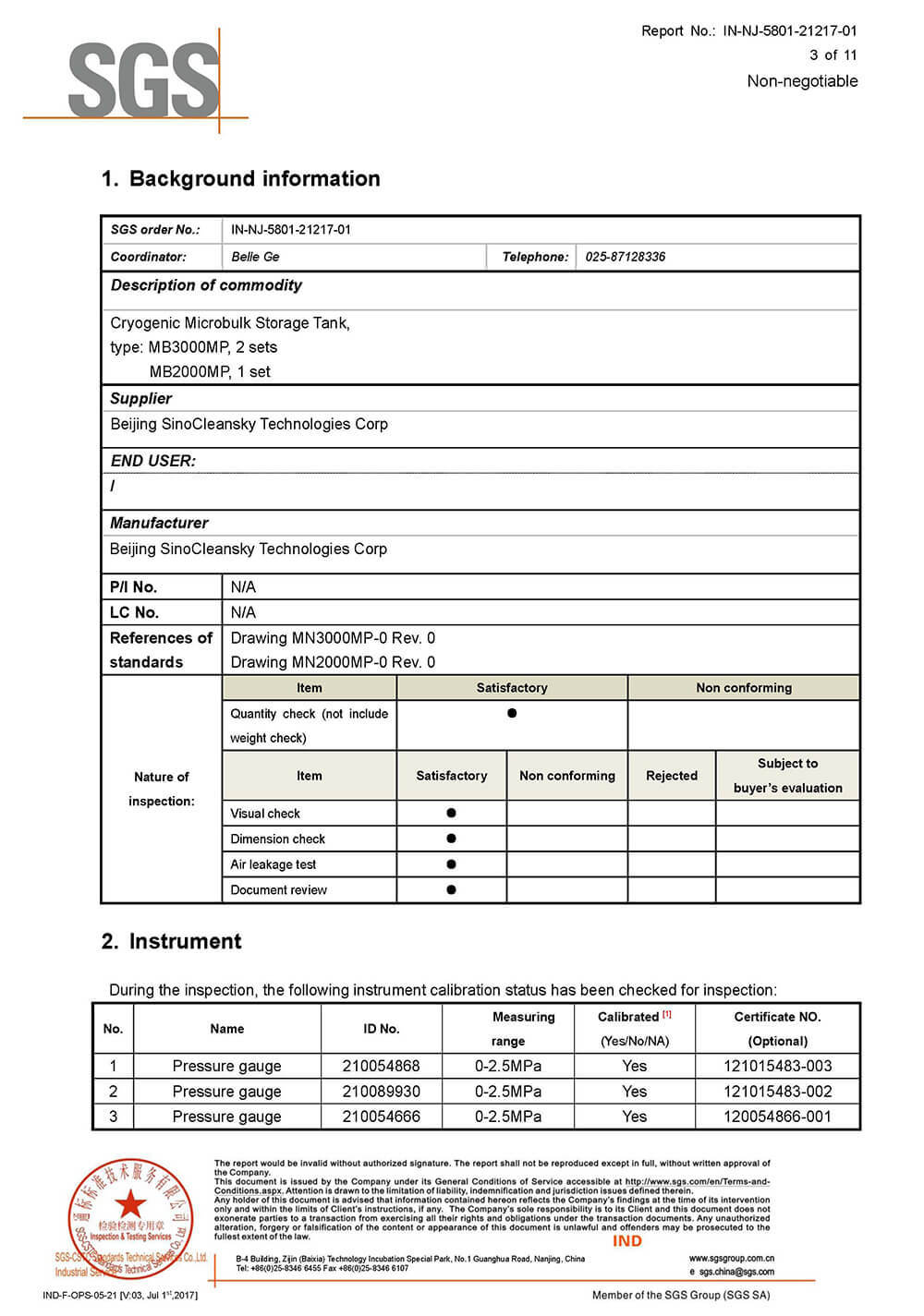
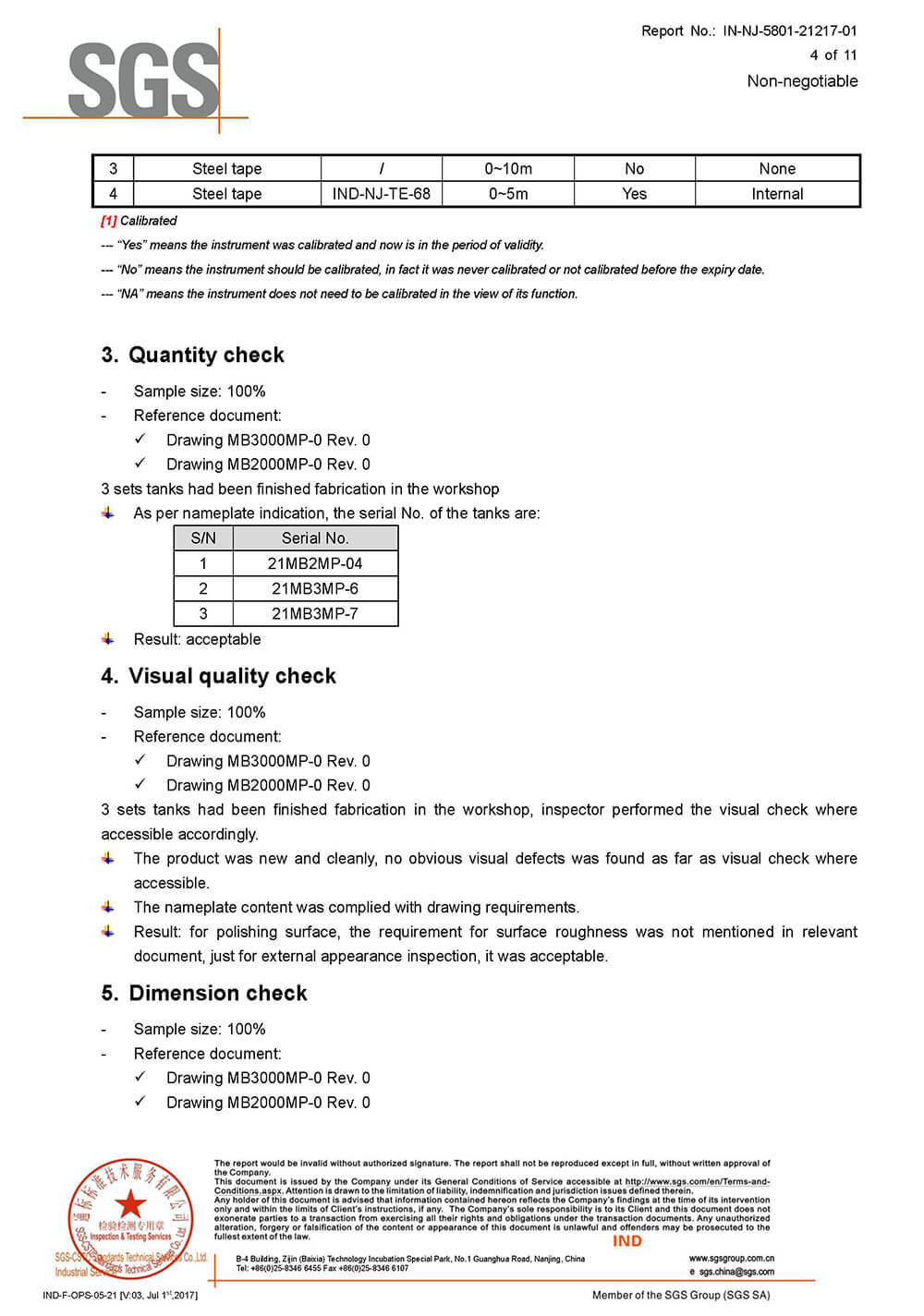
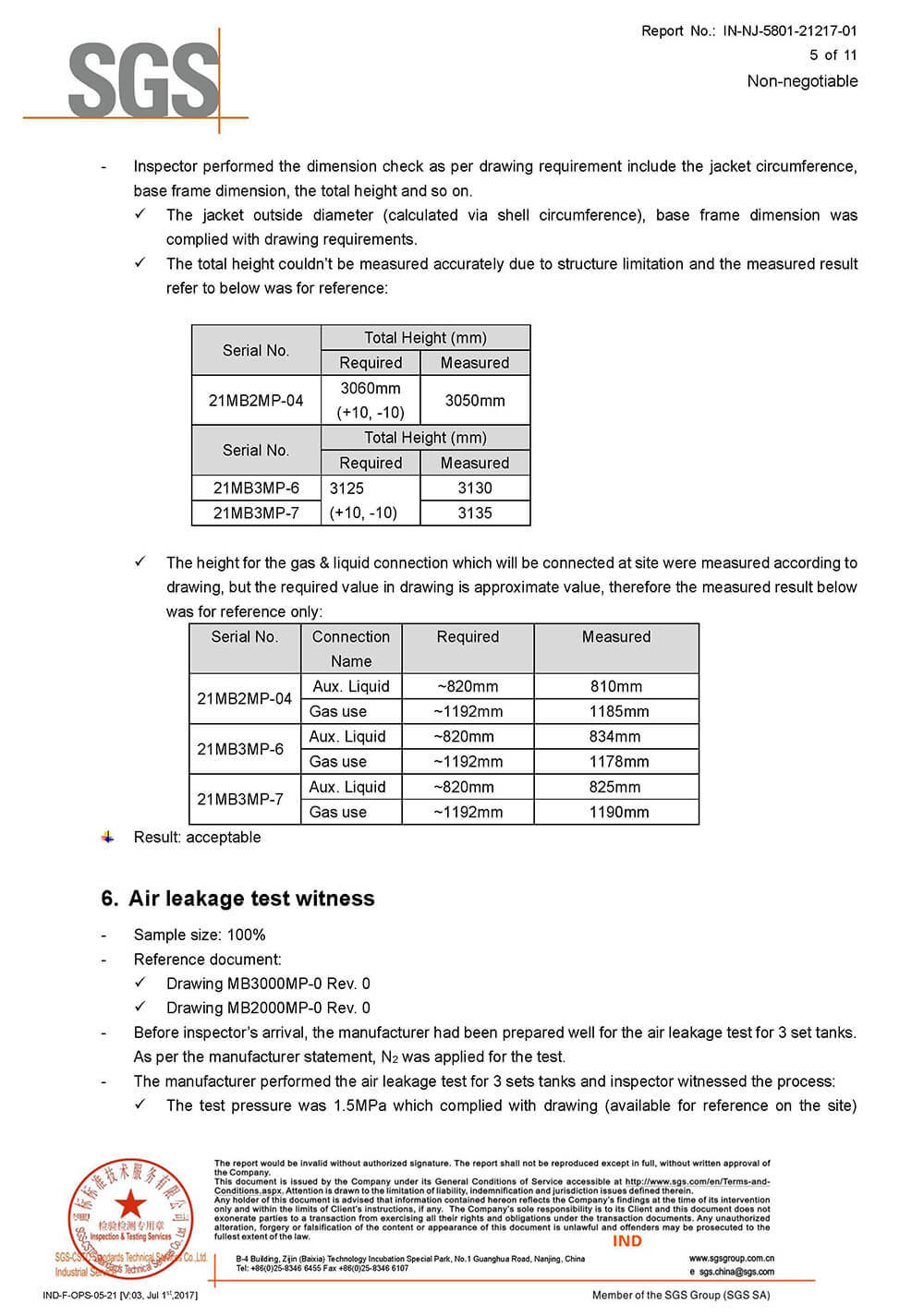
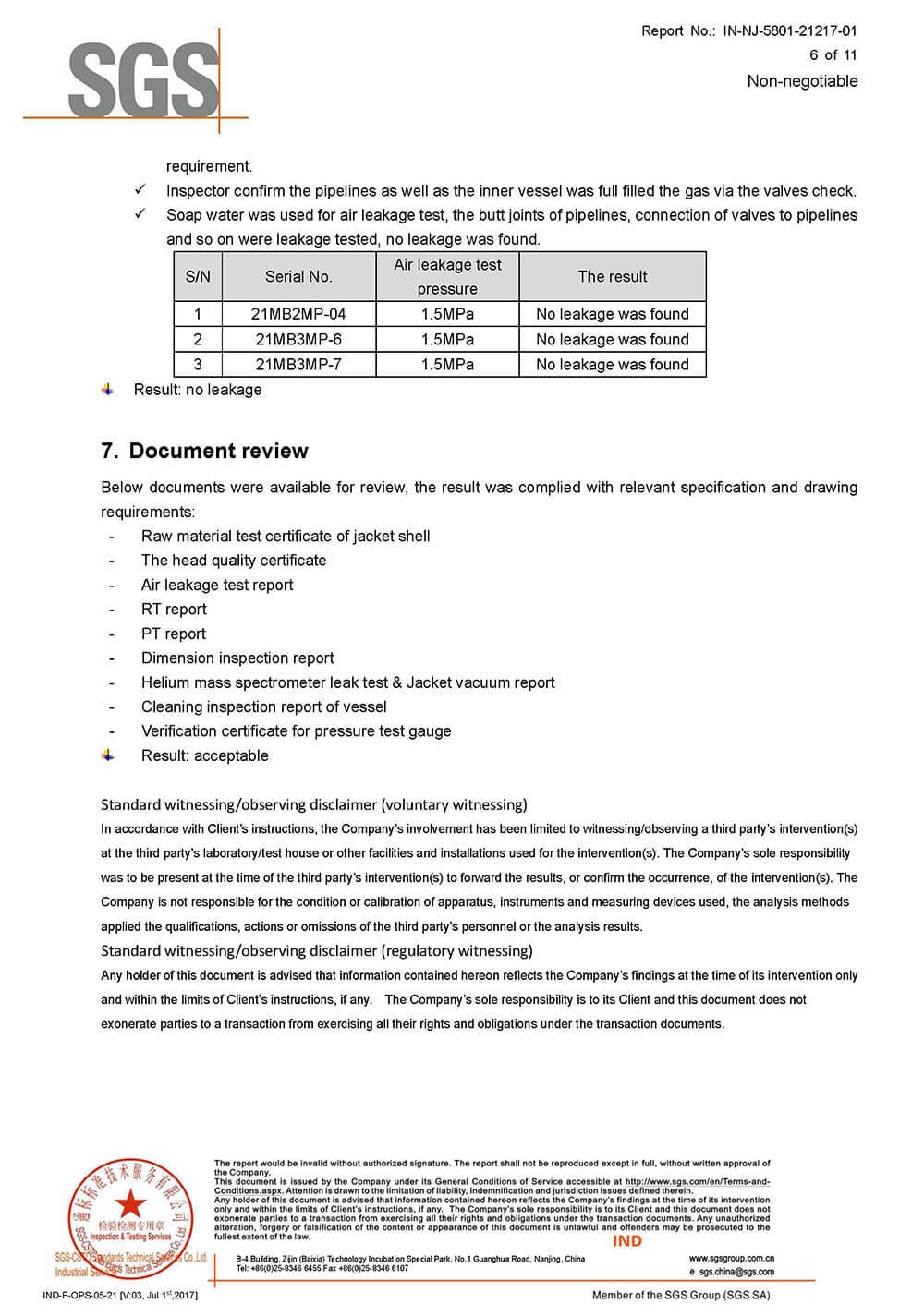
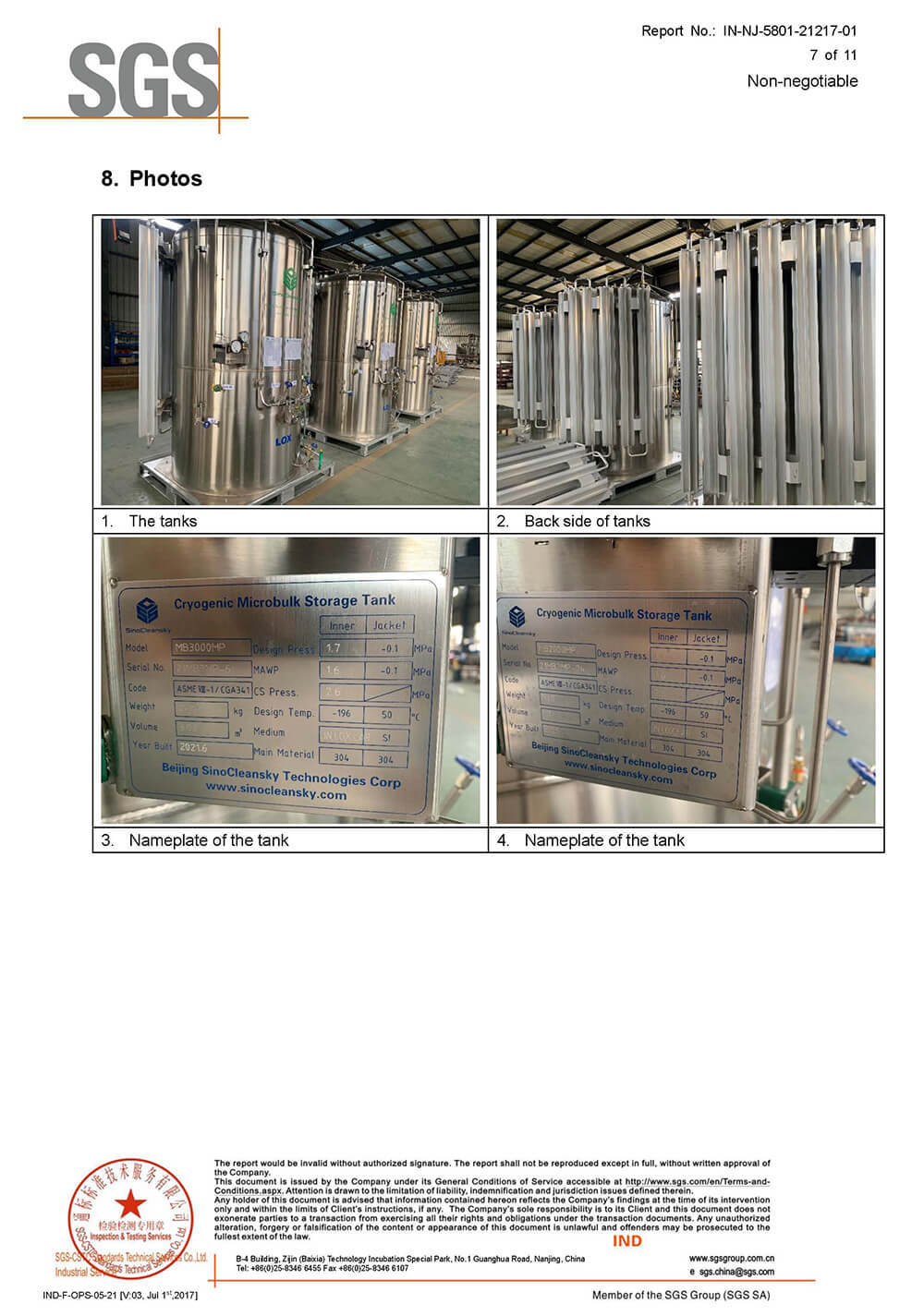
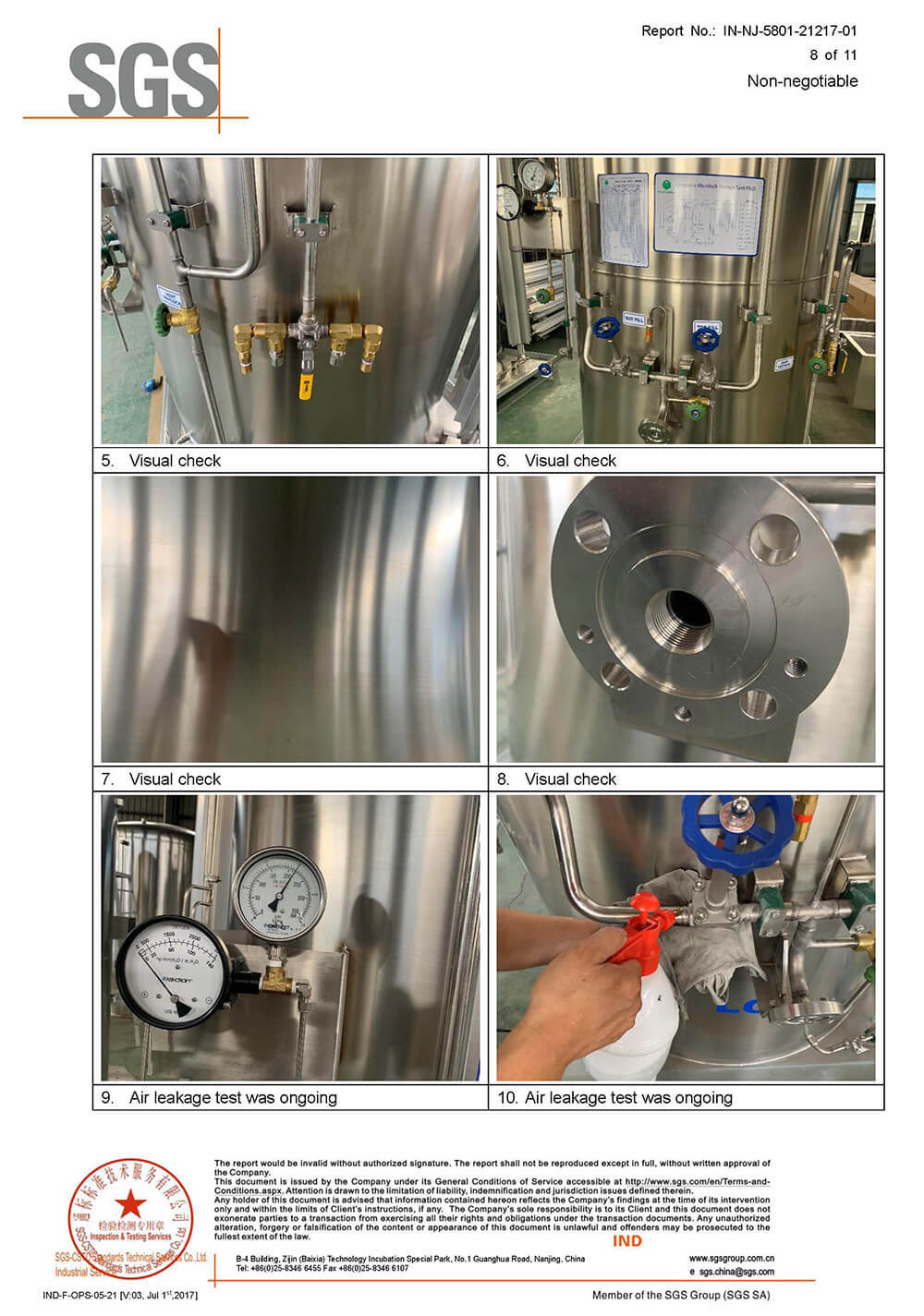
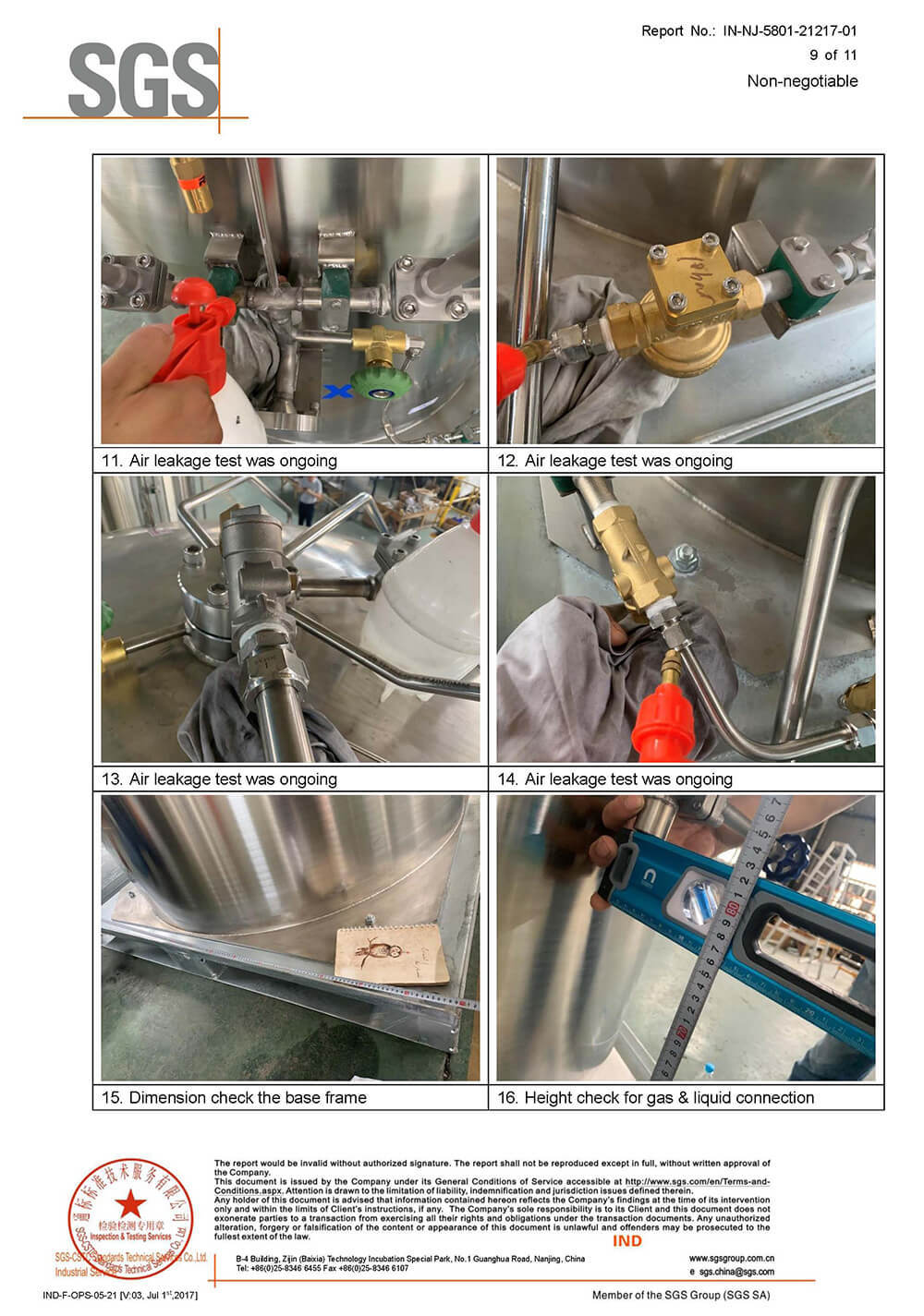
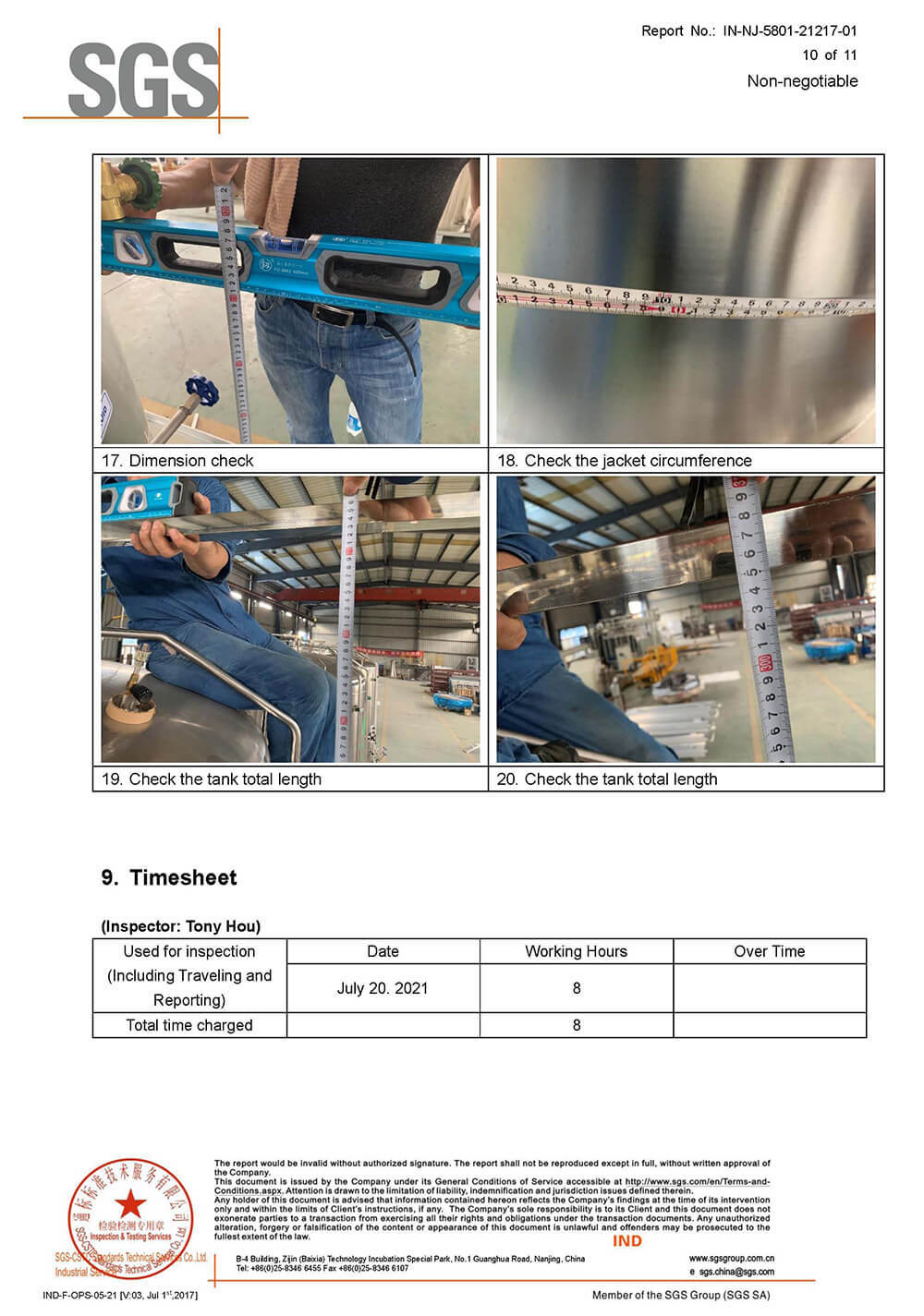
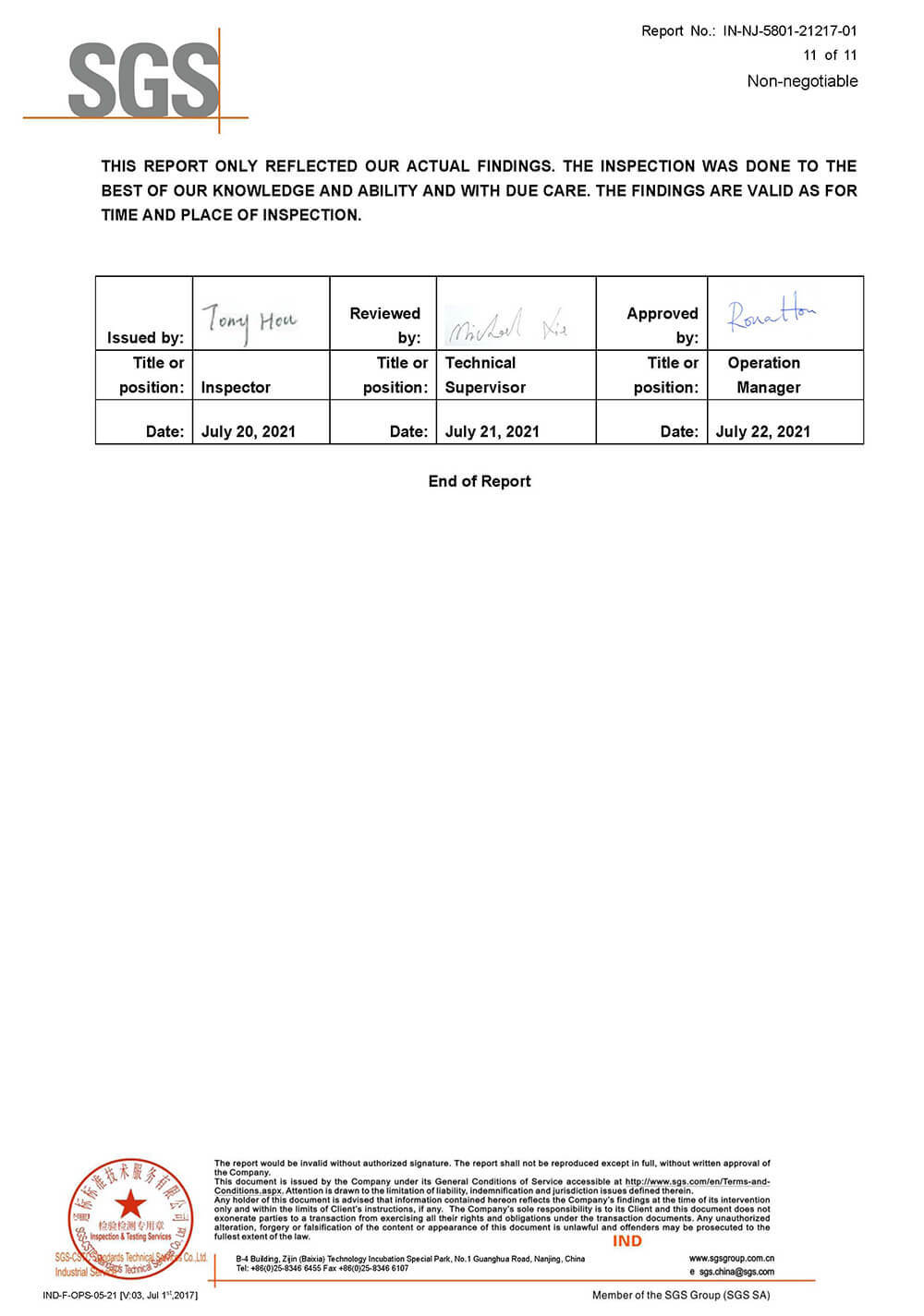
Quality Standards: Complies with ASME VIII Section 1 (cryogenic vessels) and GB 50183-2015 (LNG station design); SGS inspected (Report No.: IN-NJ-5801-21217-01) with passing results for visual checks, dimension tests, and air leakage tests.
Inspection Reports: Provides full documentation, including tank hydrostatic test reports, weld NDT reports, helium leak test records, and material traceability certificates.
Custom Certifications: Offers CE (EU), CSA (North America), and ISO certifications upon request; all documents are compliant with international trade and safety regulations.
Warranty & Support: 24-month warranty on tanks and insulation; 18-month warranty on vaporizers and regulators; free technical consultation for the lifetime of the product.
Reference certifications and reports:
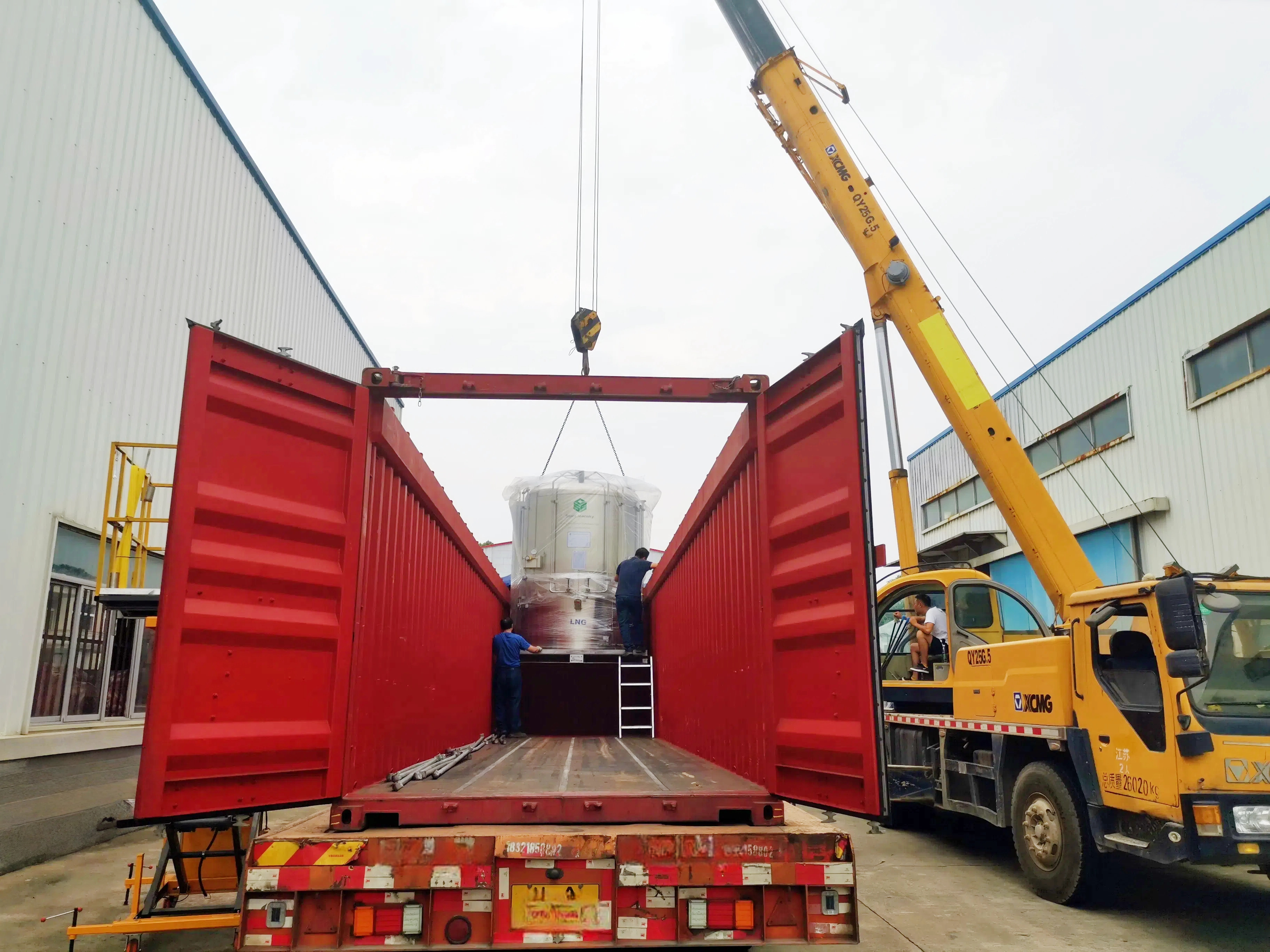
Packaging: Tanks and skid are shipped separately in 40OT open-top containers; components are fixed with steel brackets and wrapped in anti-corrosion film. Valves and gauges are packed in waterproof crates to avoid damage.
Shipping Methods: Sea freight (primary for global clients); land freight (for regional markets like Central Asia); air freight (for urgent orders, with skid disassembled into smaller modules).
Logistics Planning: Provides a detailed shipping timeline and loading plan; coordinates with freight forwarders to ensure the system arrives in sequence (tanks first, then skid) for on-site assembly.
On-Site Assistance: Offers optional on-site assembly and commissioning by our technicians; provides a spare parts kit (valves, gaskets) to minimize downtime.
The LNG Microbulk station can be shipped by open top container, such as 20OT, 40OT and etc.;

What are LNG exports and why are they reshaping global energy markets? Simply put, LNG exports involve turning natural gas into a liquid form so it can travel long distances safely and efficiently. Learn how U.S. LNG exports work, their economic benefits, emerging markets, and innovative technologies driving growth in the global energy sector.
What is LNG used for? Liquefied Natural Gas (LNG) is more than just a fuel—it powers homes, businesses, industries, and even transportation. Its high energy density, cleaner combustion, and flexible transport make LNG ideal for residential heating, industrial processes, and off-grid applications. Learn what LNG is used for across sectors from heating and cooking to transport and manufacturing. Discover its role in cleaner energy, cost savings, and reliable global supply.
What is LNG? Simply put, LNG, or liquefied natural gas, is natural gas cooled into a liquid for easier storage and transport. It’s a versatile, low-carbon energy source powering homes, industries, and transportation worldwide. Learn all about LNG—liquefied natural gas—its storage, transport benefits, and role in cleaner energy. Explore innovations, environmental advantages, and global market trends.
How LNG is produced is a fascinating journey from natural gas extraction to advanced liquefaction technologies. Learn how LNG is produced efficiently and safely. Explore liquefaction techniques, modular systems, cold energy recovery, and environmental responsibility in today’s LNG industry.
What is LNG and how is it transported is becoming a key question for industries seeking cleaner, efficient energy. LNG, or liquefied natural gas, allows natural gas to travel long distances in liquid form, using ships, trucks, rail, and containers. Learn everything about LNG, its liquefaction, transportation across oceans and roads, storage solutions, and regasification for homes and industries.
A CNG skid serves as a critical solution for the safe storage and transport of compressed natural gas. This equipment supports industries that need efficient energy sources for vehicles, heating, and manufacturing. The market for these systems continues to expand rapidly:The global CNG Tube Skids ma
When dealing with large volumes of liquids and gases, choosing the right storage and transport solution is crucial. One of the most common options is the ISO tank, which is designed for safe and efficient transport. However, there’s another essential option: the storage tank. In this article, we will explore the key differences between ISO tanks and storage tanks. You’ll gain insights into their designs, functionalities, and how to choose the right one for your specific needs.
In this article, we will explore the importance of ISO standards in LNG production. You will learn how ISO certification helps enhance efficiency, safety, and sustainability across the LNG supply chain.
In this article, we will explore what LNG storage tanks are, why they are essential, and how they keep LNG in its liquid form. You’ll also learn about the different types of storage tanks and the safety features that make them reliable for large-scale operations.
IntroductionCNG cylinders are transforming the way we fuel vehicles and industries. As the world seeks cleaner energy alternatives, these cylinders play a key role in storing and transporting compressed natural gas (CNG).In this article, we will explore what CNG cylinders are, their various types, how they work, and their many benefits. You’ll also learn how these cylinders are crucial in the shift toward sustainable energy solutions.
IntroductionHave you ever wondered how compressed natural gas (CNG) powers vehicles and industries while reducing emissions? As the world shifts toward greener energy, CNG has emerged as a cleaner and more sustainable alternative to gasoline and diesel.In this article, we will explore how CNG cylinders work, their design, and safety features. You’ll also learn about the environmental and economic benefits of CNG and how it’s transforming industries.
Lorry Tanker - Application in MexicoLorry Tanker - Application of Low Temperature Tankers in JordanLorry tanker - Application of low-temperature tanker transportation in Vietnam
ISO Tank - Application of Aluminum Alloy Tank Container Transportation in AlbaniaISO Tank - Peruvian LNG Substation for Storage and Transportation Applications
Lorry Tanker Transforming Cryogenic Gas Logistics in Jordan and Vietnam What distinguishes our solution is its integrated design: a high-performance cryogenic storage tank paired with a purpose-built operation compartment. This combination eliminates the need for separate transport and filling equip
Microbulk Tank is designed with skid-mounted and vaporizer built-in, high quality, efficient, reliable, lower charge loss and longer liquid gas hold time…… Microbulk Tank layout will help you to be the “Hero” in wide applications including industrial , medical, welding, laser cutting, lab, etc. It’s
Industrial gas and LNG companies across nations have unlocked new efficiency with our ISO Tank. Its standard container design integrates into diverse transport systems—road, rail, sea—adapting to global logistics needs. For cryogenic gas transport, it’s the best transport container. Inside the opera
Email:
Telephone:
Mobile & WhatsApp:
Address: