SinoCleansky LNG Tank 120m3 can fill natural gas in liquid form, which is widely applied in LNG stationary storage.
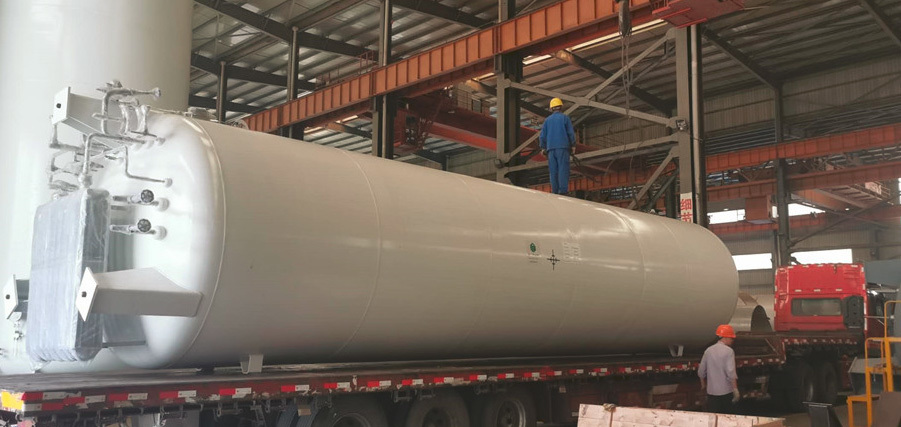
The LNG Tank meets ASME standard. Sinocleansky make a series of stringent tests, including automatic welding process, Xray and ultrasonic tests, vacuum production and testing, hydraulic tests, leak test for inner vessel, etc.
SinoCleansky LNG tank can assure you the sound quality.
The 120m³ LNG Tank is a flexible, medium-capacity stationary storage solution designed for safe, efficient liquefied natural gas (LNG) storage—ideal for mid-sized industrial facilities, regional gas supply stations, and commercial energy complexes. Developed by Beijing SinoCleansky Technologies Corp., a pioneer in CNG/LNG one-stop CNG/LNG solutions, this vertical tank balances capacity and space efficiency, providing a reliable reserve for continuous gas supply while fitting in compact industrial sites.
Built to meet the ASME Boiler and Pressure Vessel Code (Section VIII, Division 1), the tank uses a dual-vessel structure for maximum safety: the inner vessel (SA240M304 stainless steel) resists corrosion and handles cryogenic temperatures (-196℃ design temperature), while the outer vessel (Q245R carbon steel) provides robust structural support. Its vacuum perlite insulation minimizes heat ingress, reducing LNG boil-off loss and lowering operational costs.
Each tank undergoes rigorous quality testing before delivery: automatic welding with X-ray/ultrasonic inspection (to ensure weld integrity), hydrostatic pressure tests (to verify pressure resistance), helium leak detection (to eliminate leakage risks), and vacuum testing (to confirm insulation performance).
Additionally, SinoCleansky offers customized nozzle configurations (e.g., liquid transfer, gas vent, level monitoring) to match client-specific pipeline systems, ensuring seamless integration with existing infrastructure.
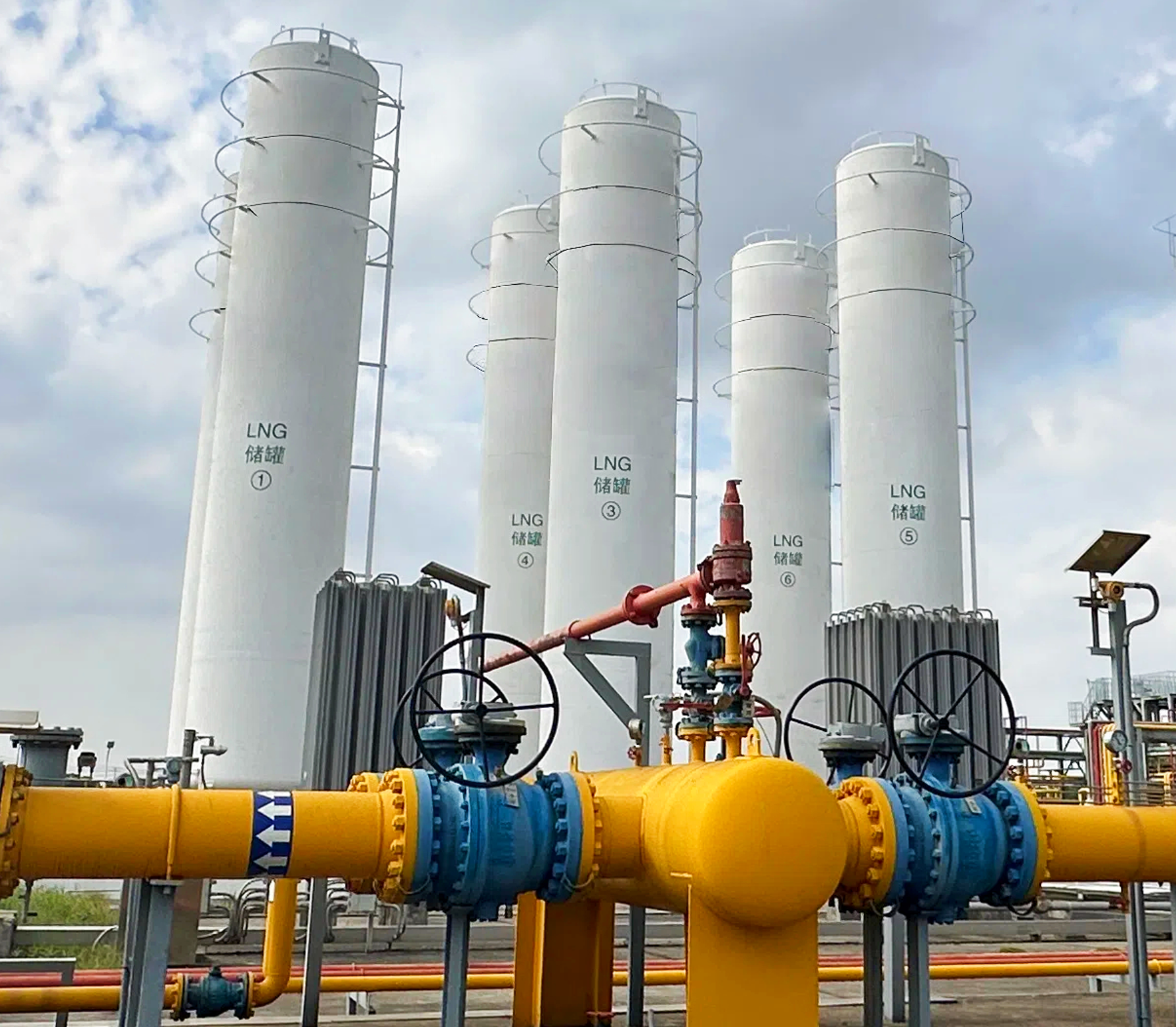
Capacity: 120m³ (available volume for LNG storage, ideal for medium-scale demand)
Manufacture Standard: ASME Boiler and Pressure Vessel Code (Section VIII, Division 1) (global safety and quality benchmark)
Working Pressure: 8bar (0.8MPa, compatible with standard LNG transfer systems)
Temperature Ranges:
Design Temperature: -196℃ (cryogenic-stable for LNG) to 50℃ (resistant to ambient temperature changes)
Operating Temperature: -162℃ (standard LNG boiling point)
Insulation Method: Vacuum perlite (low heat transfer rate, reduces LNG boil-off)
Main Body Material:
Inner Vessel: SA240M304 stainless steel (cryogenic-compatible, corrosion-resistant)
Outer Vessel: Q245R carbon steel (high tensile strength, cost-effective)
Nozzle Configuration: Standard nozzles (DN8 to DN40) for liquid inlet/outlet, gas vent, level gauge, and pressure monitoring (customizable per client requirements)
Type: Vertical (space-saving design, suitable for compact industrial sites)
| Item | Content |
| Manufacture standard | ASME |
Available volume: | 120m3 |
Max working pressure: | 8bar |
Insulation method: | Vacuum perlite |
Design temperature: | -196℃/50℃ |
Medium: | LNG |
Main body material | Inner Vessel: SA240M304 Outer Vessel: Q245R |
Delivery: | by bulk vessel |
Detailed drawing will be provided based on specific demand.
ASME Certification: Complies with ASME Section VIII, Division 1—ensuring adherence to global safety standards for pressure vessels.
Comprehensive Test Reports: Includes:
Weld inspection reports (X-ray and ultrasonic testing for weld integrity).
Hydrostatic pressure test report (verifies the tank’s ability to withstand working pressure).
Helium leak detection report (confirms zero leakage from inner vessel and nozzles).
Vacuum test report (validates insulation performance).
Material certificates (for SA240M304 and Q245R, ensuring material quality).
Traceability: 100% traceable production process—all components are tracked with unique IDs to ensure accountability.
Standard warranty covers manufacturing defects for the tank structure (inner/outer vessels) and insulation system for 12 months (extendable to 24 months with additional service packages).
SinoCleansky provides post-sales support including on-site assembly guidance, maintenance training, and periodic insulation checks to optimize the tank’s performance and lifespan.
Reference certifications and reports:


Packaging Details
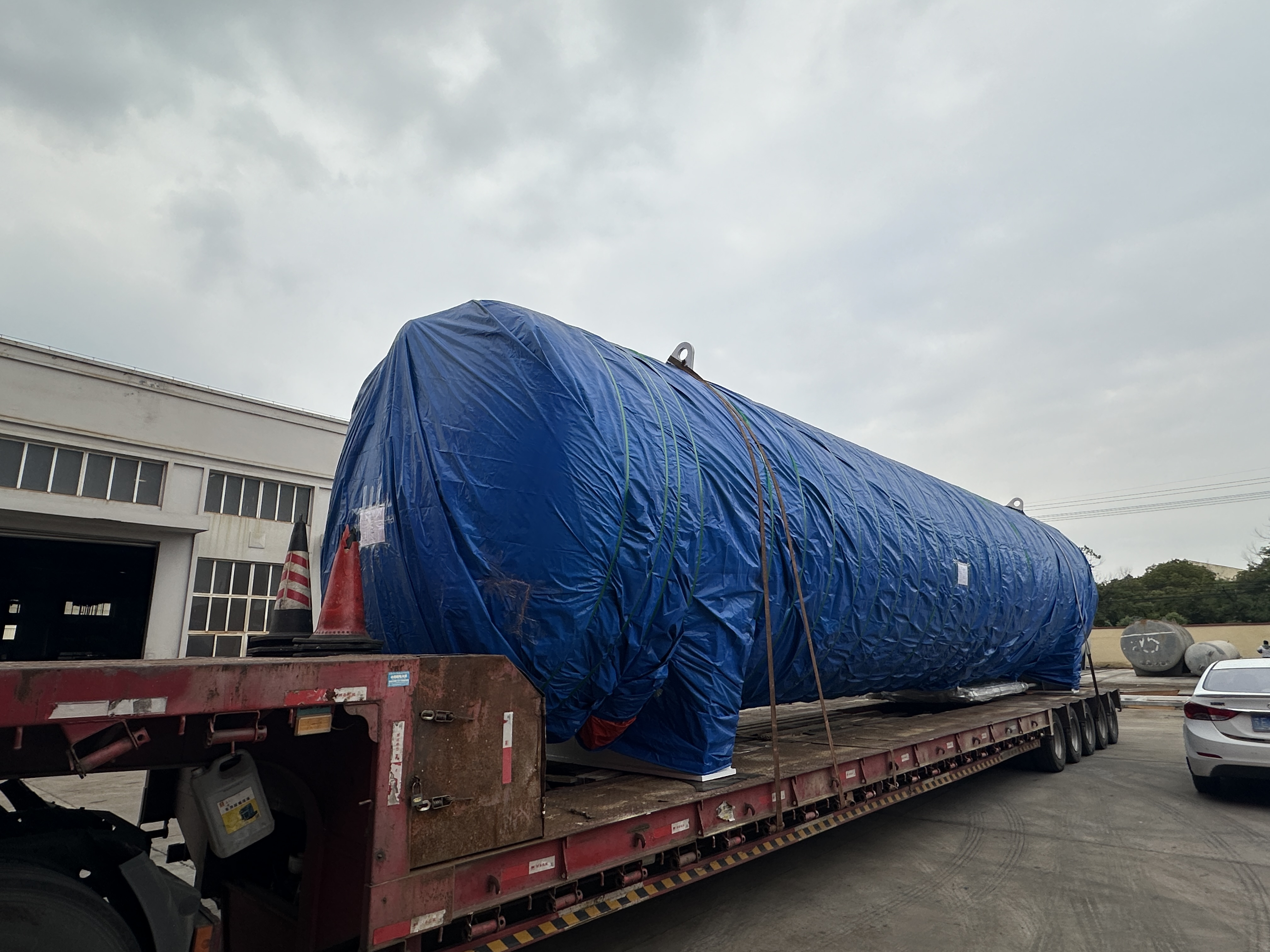
The tank is disassembled into inner vessel, outer vessel, and critical components (nozzles, valves) for shipping. Each part is wrapped in heavy-duty, moisture-proof material to prevent corrosion during transit.
Nozzles and valves are capped with protective covers, and small components (e.g., pressure gauges) are packed in shock-absorbing crates to avoid damage.
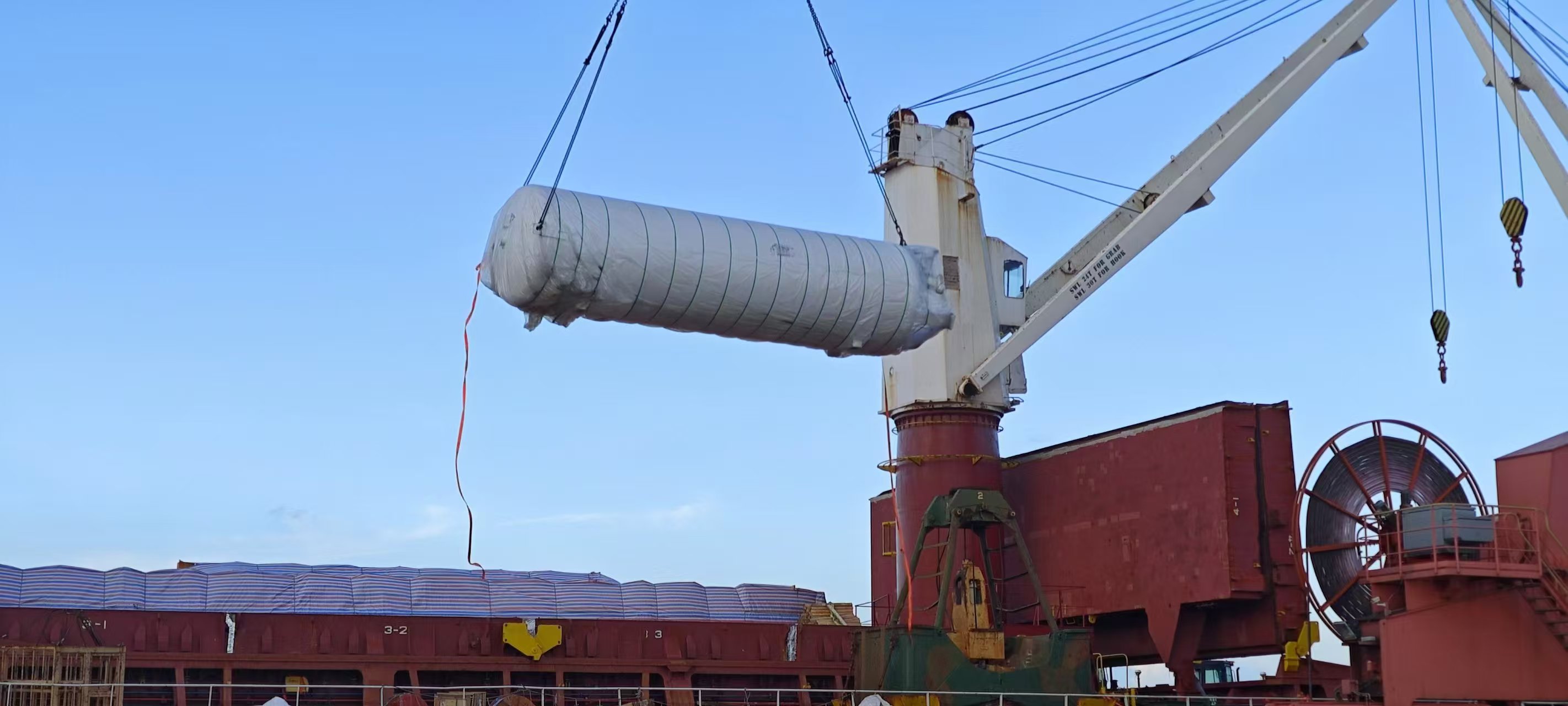
Bulk Vessel: Used for international shipments (specialized bulk carriers with heavy-lift equipment to handle the tank’s weight).
Road/Rail Transport: For domestic or regional deliveries, using flatbed trucks/railcars with custom securing systems to prevent movement.
On-Site Assembly Assistance: SinoCleansky dispatches a technical team to support on-site assembly (vessel joining, insulation installation, nozzle connection) to ensure compliance with design standards.
All shipments include assembly drawings, test reports, and a component checklist to facilitate smooth on-site inspection and commissioning.
The LNG tank will be packed in container & fixed with ropes, or shipped in bulk directly
SinoCleansky participated Hospitalar 2026 in Brasil, Let's explore it together!
FABTECH Mexico 2026 was held from May 12 to 14, 2026, at the Centro Banamex International Convention and Exhibition Center in Mexico City. As the largest and most influential international trade show for metal fabrication, welding, and industrial manufacturing in Latin America.Compared to the 2025 e
SinoCleansky made its first-time appearance at this premier event, showcasing its full range of medical gas supply solutions at Booth H-60, demonstrating to the Latin American market the technological strength and product excellence of China's leading gas container manufacturer.
SinoCleansky will participate Hospitalar 2026 at May 19–22, São Paulo Expo, Brazil. As we celebrated 20 years of excellence, this Hospitalar show marked another milestone in SinoCleansky's expanding global presence. The connections made and partnerships forged here will drive our growth in the Latin American market and beyond. Thank you to everyone who visited our booth. We look forward to building on this momentum together.
SinoCleansky Shines at Mexico Industrial Trade Show SinoCleansky proudly showcased our latest product line at a major industrial exhibition in FABTECH Mexico. The event brought together industry professionals from across the Americas and beyond. Our team delivered warm, professional consultations to visitors — walking them through product specifications, application scenarios, and custom project requirements. From technical deep-dives to new business discussions, every conversation reflected our commitment to customer success. As we celebrated 20 years of excellence, this FABTECH Mexico show marked another milestone in SinoCleansky's expanding global presence. The connections made and partnerships forged here will drive our growth in the Latin American market and beyond. Thank you to everyone who visited our booth. We look forward to building on this momentum together.
An LNG Microbulk Tank offers a practical and efficient energy storage solution for industrial facilities that require more capacity than high-pressure cylinders but less infrastructure than traditional bulk storage. With advanced vacuum insulation, automated telemetry, stable pressure control, and compact installation requirements, microbulk systems improve operational reliability while reducing fuel waste and delivery costs. This guide explores industrial applications, key technical specifications, thermal performance, regulatory compliance, and deployment strategies to help businesses build safe, efficient, and scalable LNG supply systems.
An LNG Microbulk Tank provides an efficient and cost-effective storage solution for industrial users whose gas demand exceeds cylinder systems but does not justify large bulk installations. By offering stable pressure, low evaporation rates, automated telemetry, and compact installation requirements, microbulk systems improve operational efficiency while reducing delivery frequency and gas waste. This guide explains capacity selection, thermal performance, installation requirements, safety regulations, and ROI considerations, helping businesses choose the right LNG storage solution for reliable and continuous gas supply.
An LNG ISO Tank Container provides a flexible and cost-effective solution for transporting liquefied natural gas to locations where traditional pipeline infrastructure is unavailable or impractical. Compared with conventional bulk LNG transportation, ISO tank containers offer greater intermodal flexibility, lower infrastructure investment, and dual-use functionality for transportation and temporary storage. This guide compares both transportation methods, explains key technical specifications and safety requirements, and helps energy companies select the most efficient LNG logistics solution for decentralized and small-scale LNG distribution.
A CNG Jumbo Tube Skid is the foundation of an efficient virtual pipeline system for transporting compressed natural gas where conventional pipelines are unavailable. Selecting the right skid requires evaluating cylinder materials, pressure ratings, payload efficiency, structural design, safety systems, and international compliance standards. This guide explains the key technical specifications, compares different cylinder technologies, outlines operational safety requirements, and provides practical procurement strategies to help energy companies improve transport efficiency, reduce lifecycle costs, and ensure safe, reliable gas distribution.
A CNG Jumbo Tube Skid provides an efficient solution for transporting and storing compressed natural gas where traditional pipeline infrastructure is unavailable. By optimizing cylinder configuration, pressure ratings, manifold design, and gas utilization, these systems improve payload efficiency while reducing transportation costs. This guide explains the key technical specifications, compares cylinder materials and skid configurations, and outlines the critical safety, compliance, and operational factors that help engineering teams select reliable CNG transport solutions for industrial, petrochemical, and energy applications.
What are LNG exports and why are they reshaping global energy markets? Simply put, LNG exports involve turning natural gas into a liquid form so it can travel long distances safely and efficiently. Learn how U.S. LNG exports work, their economic benefits, emerging markets, and innovative technologies driving growth in the global energy sector.
On the occasion of SinoCleansky’s 20th anniversary, the company has officially become a sponsor of Gasworld (Asia-Pacific Industrial Gases Conference) 2025, demonstrating the strength of a professional gas supplier. This sponsorship is an important measure to expand the international market. Relying on a full range of gas equipment and one-stop solutions, SinoCleansky unwaveringly serves global customers and deepens cooperation with Asia-Pacific industry partners to explore new industry opportunities.
What is LNG used for? Liquefied Natural Gas (LNG) is more than just a fuel—it powers homes, businesses, industries, and even transportation. Its high energy density, cleaner combustion, and flexible transport make LNG ideal for residential heating, industrial processes, and off-grid applications. Learn what LNG is used for across sectors from heating and cooking to transport and manufacturing. Discover its role in cleaner energy, cost savings, and reliable global supply.
What is LNG? Simply put, LNG, or liquefied natural gas, is natural gas cooled into a liquid for easier storage and transport. It’s a versatile, low-carbon energy source powering homes, industries, and transportation worldwide. Learn all about LNG—liquefied natural gas—its storage, transport benefits, and role in cleaner energy. Explore innovations, environmental advantages, and global market trends.
How LNG is produced is a fascinating journey from natural gas extraction to advanced liquefaction technologies. Learn how LNG is produced efficiently and safely. Explore liquefaction techniques, modular systems, cold energy recovery, and environmental responsibility in today’s LNG industry.
What is LNG and how is it transported is becoming a key question for industries seeking cleaner, efficient energy. LNG, or liquefied natural gas, allows natural gas to travel long distances in liquid form, using ships, trucks, rail, and containers. Learn everything about LNG, its liquefaction, transportation across oceans and roads, storage solutions, and regasification for homes and industries.
A CNG skid serves as a critical solution for the safe storage and transport of compressed natural gas. This equipment supports industries that need efficient energy sources for vehicles, heating, and manufacturing. The market for these systems continues to expand rapidly:The global CNG Tube Skids ma
Email:
Telephone:
Mobile & WhatsApp:
Address: