Views: 0 Author: Site Editor Publish Time: 2026-02-11 Origin: Site
Aspect | Details |
|---|---|
Economic Advantages | Natural gas prices are generally lower and more stable compared to oil prices, leading to cost savings. |
Vehicle Segmentation | CNG and LNG vehicles are segmented into passenger vehicles (cars, SUVs) and commercial vehicles (trucks, buses). |
Adoption Drivers | Adoption is driven by the need to reduce fuel costs, emissions, and compliance with regulations. |
Public Transportation Focus | Investment in natural gas-powered buses is increasing in metropolitan areas to improve air quality. |
Government Incentives | Many governments offer tax rebates and subsidies for purchasing natural gas vehicles. |
Understanding the difference between cng and lng helps you make sense of these trends and their impact on transportation.
CNG is compressed natural gas stored at high pressure, while LNG is liquefied natural gas stored at very low temperatures.
CNG is ideal for short-distance travel, making it popular for city buses and delivery trucks.
LNG is better for long-haul transport due to its high energy density, allowing for longer trips without refueling.
Both CNG and LNG help reduce harmful emissions compared to traditional fuels like diesel, improving air quality.
CNG stations are more common in urban areas, while LNG stations are expanding along major highways for long-distance travel.
Choosing between CNG and LNG depends on your specific needs, such as route length and vehicle type.
Government incentives often support the adoption of both CNG and LNG, making them cost-effective options.
Safety is crucial when handling both fuels; proper equipment and training are necessary to manage their unique risks.
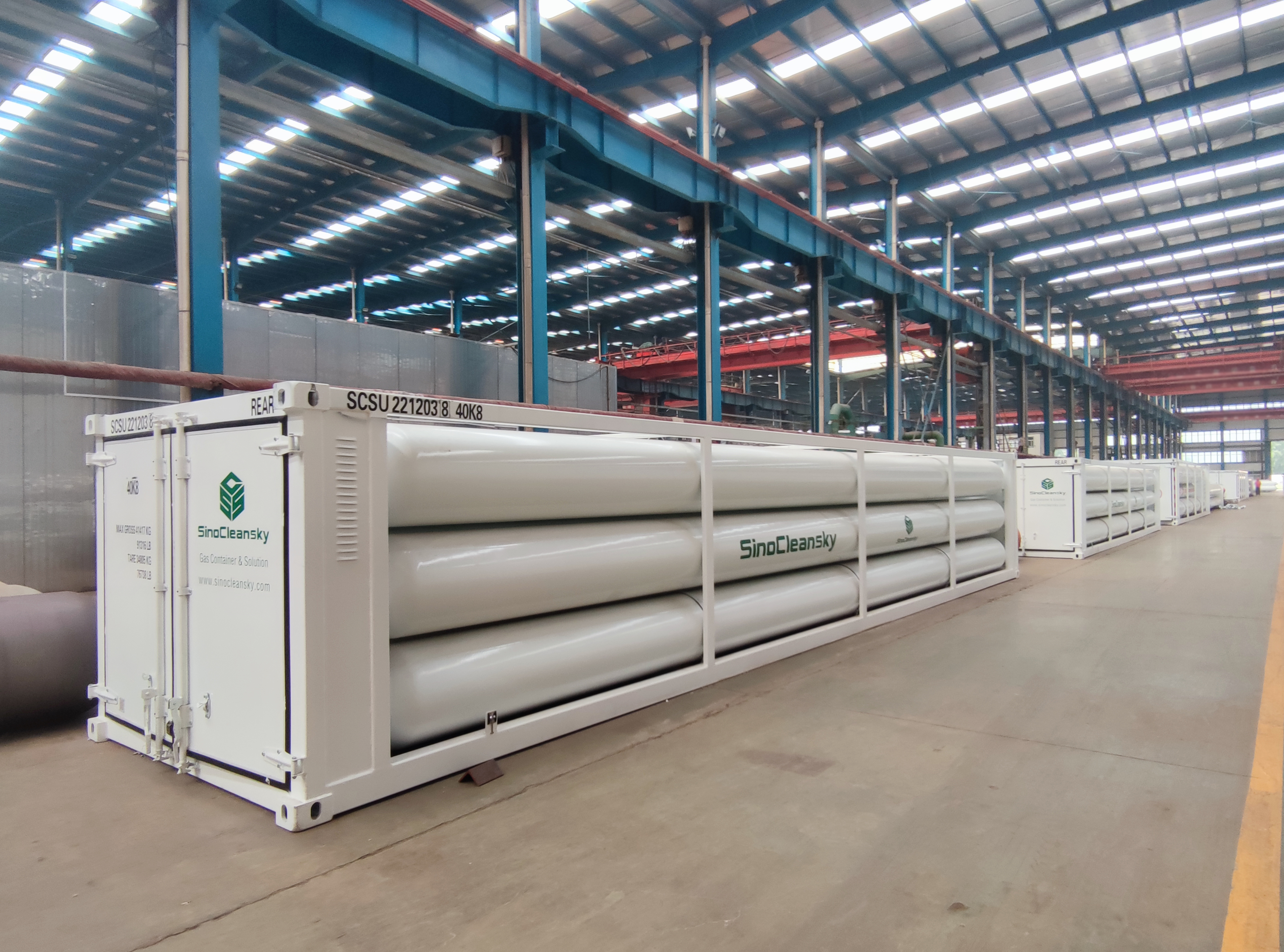
You may have heard about compressed natural gas as a cleaner alternative to gasoline or diesel. Compressed natural gas is a fuel made mostly of methane. It is compressed to less than 1% of its volume at normal atmospheric pressure. This process allows you to store large amounts of energy in a small space. CNG is kept in strong containers at high pressures, usually between 2,900 and 3,600 psi. These containers are often cylindrical or spherical in shape. CNG follows strict safety standards, such as those set by ECE R110, to make sure it is safe and reliable for use in vehicles and industry.
The journey from raw natural gas to CNG involves several important steps. Here is a simple overview:
Step | Description |
|---|---|
1 | Oil & Condensate Removal: Gas is separated from oil using special separators. |
2 | Carbon Dioxide and Sulfur Removal: The gas is cleaned to remove harmful gases like hydrogen sulfide and carbon dioxide. |
3 | Sweetening: More cleaning ensures the gas is safe and high quality. |
4 | Dehydration: Water vapor is removed to prevent problems in pipelines. |
5 | Compression: The purified gas is compressed to create CNG. |
This process ensures that the compressed natural gas you use is clean, safe, and ready for storage or transport.
CNG is a colorless and tasteless gas. It is lighter than air and mostly made up of methane, with small amounts of other gases. When you compress natural gas, it stays in a gaseous state but takes up much less space. CNG is stored at high pressure, not as a liquid, which makes it different from LNG.
You will find that CNG is stored in high-pressure cylinders made from strong materials. These containers are designed to handle the high pressure safely. Refueling with CNG is straightforward. The infrastructure for CNG stations is less complex than for LNG. A typical CNG station includes a network of tubes, valves, and safety systems to transfer gas from storage to your vehicle. The materials used must resist corrosion and handle high pressure. Safety is a top priority, so leak-tight connections and quality components are always used.
CNG is popular in transportation. Many buses, trucks, and even some cars use CNG as fuel. You will also find CNG in industries and homes for heating and cooking. The ease of refueling and the growing number of CNG stations make it a practical choice for regional fleets and city vehicles. CNG helps reduce emissions and supports cleaner air in urban areas.
Tip: If you want a fuel that is easy to refuel and has a growing support network, CNG is a strong option for both vehicles and industry.
When you hear about liquefied natural gas, you are learning about a fuel that has changed how people store and move energy. Liquefied natural gas, or LNG, is natural gas that has been cooled to a liquid state for easier and safer storage or transport. This process reduces its volume to about 1/600th of its original gaseous form. Most of LNG consists of methane, which makes it a clean-burning fuel. You will find that LNG is odorless, colorless, noncorrosive, and nontoxic.
LNG is cooled to around −160°C (−260°F) at atmospheric pressure.
It condenses to a liquid, making it much easier to move large amounts over long distances.
You might wonder how natural gas becomes LNG. The process involves several important steps to ensure purity and safety.
Pretreatment: You start by removing water, condensate, acid gases like CO2 and H2S, and mercury. This step protects the equipment and ensures the gas is clean.
Precooling: The gas, now mostly methane, is precooled to prepare for liquefaction.
Liquefaction: The gas is cooled further to about -162°C. At this temperature, it turns into a clear, colorless liquid. This transformation reduces its volume by about 600 times, making it ideal for storage and transport.
You can also think of the process as a series of separations and cooling stages. Cryogenic heat exchangers absorb heat from the natural gas, turning it into LNG ready for shipment.
LNG is a liquid at extremely low temperatures. It is not flammable in its liquid state and must vaporize before it can burn. The main component is methane (85-95%), with small amounts of ethane, propane, butane, and nitrogen. LNG has a density of about 420-450 kg/m³, which means it is less dense than water and will float if spilled. The energy density of LNG is about 22.2 MJ/L, which is roughly 60% of gasoline.
Here is a table that summarizes some key properties:
Property | Value | Comparison |
|---|---|---|
Temperature | -162°C (-260°F) | Boiling point at 1 atm |
Density | 420-450 kg/m³ | ~45% of water density |
Specific Gravity | 0.42-0.45 | Floats on water |
Energy Density | 22.2 MJ/L | ~60% of gasoline |
Volume Reduction | ~600:1 | vs. gas at STP |
Heat of Vaporization | 510 kJ/kg | High cooling effect |
Flammability (liquid) | Non-flammable | Must vaporize to burn |
You need special equipment to store and handle LNG. Because it stays liquid only at very low temperatures, LNG requires cryogenic tanks that keep it cold and insulated. These tanks prevent the LNG from warming up and turning back into gas. Refueling stations for LNG use advanced systems to manage the cold temperatures and any boil-off gas (BOG) that forms as the liquid warms slightly.
Gasrec designs its LNG refueling systems to be user-friendly. With the right protective gear, you can refuel vehicles quickly and safely. The process is straightforward, even though the technology is advanced.
You will see LNG used in places where high energy density and long-distance transport matter most. LNG powers heavy-duty trucks, ships, and even trains that travel long routes. Industries that need large amounts of energy, such as power generation and manufacturing, also use LNG. Because LNG takes up less space than natural gas in its gaseous form, it is perfect for moving fuel across oceans or to remote locations.
Note: LNG is a top choice for long-haul transport and industries that need reliable, efficient energy.
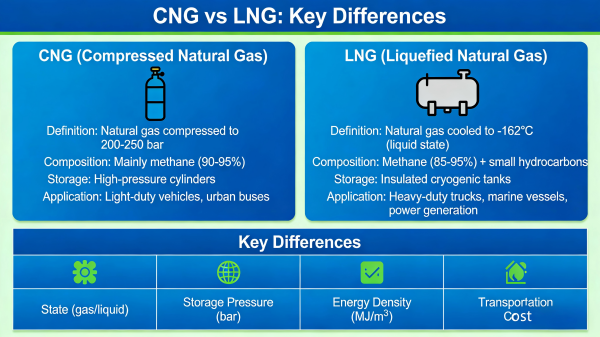
When you look at the difference between cng and lng, the first thing you notice is how each fuel exists and how you store it. Cng stands for compressed natural gas. You keep it in a gaseous state, but you compress it to less than 1% of its original volume. This means you store cng in strong, high-pressure cylinders at room temperature. These cylinders can handle pressures up to 3,600 psi. You often see these tanks on vehicles or at refueling stations.
Lng, on the other hand, is liquefied natural gas. You cool natural gas to -260°F (-162°C) until it becomes a clear, colorless liquid. This process makes lng about 600 times denser than its gaseous form. You store lng in special cryogenic tanks that keep it cold and insulated. These tanks use low pressure, just above atmospheric levels, to keep the liquid stable.
Here is a table that shows the main differences in physical state and storage:
Feature | Compressed Natural Gas (CNG) | Liquefied Natural Gas (LNG) |
|---|---|---|
Physical State | Gaseous (compressed) | Liquid (liquefied) |
Storage Temp | Ambient temperature | -260°F (-162°C) |
Storage Pressure | High (up to 3,600 psi) | Low (just above atmospheric) |
Volume Reduction | 1% of original volume | 600 times denser than gas |
Storage Method | High-pressure cylinders | Cryogenic insulated tanks |
You can see that the difference between cng and lng in storage comes down to pressure versus temperature. Cng uses high pressure, while lng uses very low temperatures.
The way you move cng and lng also highlights the difference between cng and lng. Cng travels best through pipelines or in high-pressure tanks mounted on vehicles. Pipelines work well for short to medium distances and for supplying homes or businesses with natural gas. When you use cng for vehicles, you need to refuel more often because the tanks hold less energy than liquid fuels.
Lng, because of its liquid state, is ideal for long-distance transport. You move lng in special cryogenic tankers by road, rail, or ship. These tankers keep the lng cold and safe during the journey. Lng carriers can cross oceans, making it possible to deliver natural gas to places far from production sites.
Here is a table that summarizes the main transportation methods:
Method | Description |
|---|---|
Pipeline | Moves cng efficiently over land, but building pipelines can be costly and complex. |
CNG Vehicles | Use high-pressure tanks to carry cng for short to medium distances, often in city fleets. |
LNG Carriers | Transport lng in liquid form using cryogenic ships or trucks, perfect for long-haul and export. |
For trips under 300 kilometers, cng is usually more cost-effective. For distances beyond 300 kilometers, lng becomes the better choice because it packs more energy into a smaller space.
You find another key difference between cng and lng in how you use them. Cng is popular in city buses, taxis, and delivery trucks. It works well for short-distance travel and urban fleets. Many cities use cng to power public transportation because it helps reduce air pollution. You also see cng in factories for heating and in homes for cooking and heating water.
Lng shines in heavy-duty and long-haul transport. You see lng fueling trucks that travel between cities, ships that cross oceans, and even trains. Lng is also important in power plants and large factories. It provides a steady supply of energy for making products like steel, glass, and chemicals.
Here is a table that shows common uses for each fuel:
Sector | CNG Applications | LNG Applications |
|---|---|---|
Transportation | City buses, taxis, delivery trucks, short-haul freight | Long-haul trucks, ships, trains, heavy-duty vehicles |
Industrial | Heating furnaces, boilers, small-scale power generation | Power plants, backup fuel, large-scale manufacturing |
Residential | Home heating, cooking (in some regions) | Less common, but possible after regasification |
Lng also helps industries lower emissions. When you use lng instead of diesel, you can cut carbon dioxide emissions by up to 25% and carbon monoxide by 97%. Lng-powered vehicles run quieter than diesel, making them a good fit for urban areas.
Tip: If you manage a fleet or run a business, you can choose between cng and lng based on your routes and energy needs. Gasrec offers both options, so you can pick the best fuel for your operation.
When you work with cng or lng, safety becomes a top priority. Both fuels come from natural gas, but each has unique risks and requires different handling procedures. Cng is stored at very high pressure, so you must use strong cylinders and follow strict safety rules. You need to check for leaks often and make sure all connections are tight. If cng escapes in an enclosed space, it can cause asphyxiation. Direct contact with escaping gas may also cause burns.
Lng presents different challenges. You store lng at extremely low temperatures, so you must use cryogenic tanks. If you touch lng or surfaces cooled by it, you risk frostbite. Lng can also displace oxygen in the air, leading to asphyxiation. Fire and explosion hazards exist if lng vapor mixes with air and finds an ignition source.
Industry standards help keep you safe. Cng stations must comply with CAN/CSA-B108, while lng stations follow CAN/CSA Z276-07 for production, storage, and handling. The U.S. PHMSA enforces safety regulations for onshore lng facilities, including design, construction, and emergency procedures.
You must wear the right protective equipment. For cng, use impermeable gloves, safety glasses, a face shield, and a gas detector. For lng, you need cryogenic-rated gloves, goggles, a face shield, a cryogenic apron, flame-retardant clothing, and sometimes a self-contained breathing apparatus. Training is essential. You should learn about the specific hazards of both fuels and know how to respond in an emergency. Every organization needs an emergency plan that covers spill risks, response steps, and regular drills.
Tip: Always follow safety guidelines and use the correct gear when handling natural gas fuels. Proper training and preparation protect you and your team.
You will notice differences in cost and efficiency when comparing cng and lng. Cng usually has lower upfront costs for production and storage. The equipment for compressing and storing cng is less complex than the systems needed for lng. Lng requires expensive cryogenic tanks and advanced technology to keep the fuel cold.
When you look at profitability, lng often comes out ahead for large-scale operations. The net present value for lng projects is much higher than for cng. Lng also offers a higher internal rate of return and a shorter payback period. This means that, if you supply the same amount of natural gas, lng can be more profitable in the long run.
Efficiency depends on how you use the fuel. Lng works best in high-horsepower engines, such as those in large trucks or ships. It creates a more energy-dense air-fuel mixture, which leads to better performance and fuel economy. For engines larger than 20 liters, lng with direct injection is the top choice. Cng is better for smaller engines and regional vehicles. It is easy to refuel and works well for city fleets.
Here is a table that summarizes key financial metrics:
Metric | CNG | LNG |
|---|---|---|
Net Present Value | $14,000,000 | $3,077,000,000 |
Internal Rate of Return | 15% | 26% |
Payback Period | 7 years 6 months | 5 years 4 months |
Profitability Index | 1.76 | 1.01 |
Note: Choose cng for lower initial costs and simple infrastructure. Pick lng for higher efficiency and profitability in large-scale or long-haul operations.
You may choose natural gas fuels to reduce emissions, but it is important to understand their full environmental impact. Both cng and lng produce fewer greenhouse gases than traditional fuels like diesel. Switching from diesel to cng can lower your greenhouse gas emissions by about 4.8%. If you switch to lng, you can reduce emissions by around 8.1%.
However, the entire lifecycle of lng, from extraction to transportation, can increase its greenhouse gas footprint. Methane emissions during these stages make up about half of lng’s total impact. Over a 20-year period, the carbon footprint of lng is about one-third larger than coal. Even over 100 years, lng’s footprint can match or exceed that of coal. Cng does not have as large a lifecycle impact, so it is often seen as a cleaner choice for city fleets and regional use.
Here is a quick comparison:
Fuel Type | GHG Reduction vs Diesel | Lifecycle GHG Footprint |
|---|---|---|
CNG | 4.8% | Lower than LNG |
LNG | 8.1% | Higher due to methane |
Remember: While both cng and lng help cut emissions at the tailpipe, you should consider the full lifecycle when planning your sustainability strategy.
When you consider compressed natural gas (CNG) for your fleet or business, you find several clear benefits. CNG stands out for its environmental impact. You can reduce air pollutants by up to 95% compared to diesel. This makes CNG a strong choice if you want to lower emissions and improve air quality. CNG also offers safety advantages. It is less flammable than many other fuels, and CNG vehicles follow strict safety standards. You benefit from high performance, as natural gas has an octane rating of 130. This means engines run smoothly and efficiently.
CNG often costs less than diesel. Price stability helps you plan your fuel budget. CNG fueling stations remain reliable, even after severe weather. You also find CNG vehicles clean and widely available, which supports your sustainability goals.
Advantage | Description |
|---|---|
Environmental Benefits | Up to a 95% reduction of air pollutants compared to diesel, making it a low-emission alternative. |
Safety | Less flammable and safer than other fuels. |
High Performance | Natural gas has an octane rating of 130, indicating high performance. |
Cost-Effectiveness | Price stability compared to diesel, leading to potential savings for fleet operators. |
Reduced Emissions | Lower exhaust emissions than gasoline and diesel vehicles. |
Clean | CNG vehicles are clean and readily available, contributing to lower emissions. |
Resilient | CNG fueling stations provide reliable access to fuel, especially after severe weather. |
Affordable | Diesel prices are often more volatile, making CNG a more economical choice for fleets. |
However, you should also weigh some challenges. CNG vehicles may require higher upfront costs, especially if you retrofit existing vehicles. Storage tanks for CNG are large and operate at high pressure, which can reduce cargo space. The driving range is often shorter than gasoline or diesel vehicles because CNG has lower energy density. You may notice reduced engine power in some cases. Methane leaks during extraction or use can impact the environment, so proper handling is important. Handling high-pressure gas also requires careful safety practices.
Higher upfront costs for CNG vehicles or conversions
Storage and conversion costs for tanks and equipment
Limited driving range due to lower energy density
Reduced engine power and performance in some vehicles
Large, high-pressure tanks may reduce cargo space
Methane emissions from leaks can affect the environment
Safety risks with high-pressure handling
Liquefied natural gas (LNG) brings its own set of strengths. You get a fuel with high energy density, which means you can travel longer distances without refueling. LNG works well for fleets with daily hauls over 250 miles. It produces up to 30% less carbon dioxide than coal or diesel, helping you meet environmental regulations. LNG also eliminates almost all particulate matter and black carbon, improving air quality. You find LNG non-toxic and less flammable, which adds a layer of safety in industrial settings. LNG adapts to many uses, from power generation to long-haul transport.
High energy density supports long-distance travel
Produces up to 30% less CO₂ than coal or diesel
Significantly lowers SOₓ and NOₓ emissions
Eliminates particulate matter and black carbon
Non-toxic and less flammable, increasing safety
Versatile for industrial and transportation uses
You should consider that LNG requires specialized cryogenic tanks and infrastructure. The initial investment can be higher. Handling LNG safely means using protective gear and following strict procedures. LNG is best suited for large-scale or long-haul operations, so it may not fit every application.
You can use this table to compare the key features of CNG and LNG:
Metric | Compressed Natural Gas (CNG) | Liquefied Natural Gas (LNG) |
|---|---|---|
Energy Content | High | Higher |
Physical State | Gaseous | Liquid |
Performance | Good engine performance | Liquid injection possible |
Emissions | Lower emissions | Lower emissions |
Safety | High safety standards | High safety standards |
Tip: When choosing between CNG and LNG, think about your daily routes, fuel needs, and available infrastructure. CNG offers flexibility and lower costs for regional fleets. LNG delivers higher energy density for long-haul and heavy-duty operations.
You now understand the main differences between CNG and LNG. Both fuels offer you cleaner alternatives to diesel and gasoline. CNG works well for city fleets and light trucks, while LNG suits long-haul and heavy-duty vehicles. You benefit from lower fuel costs, government incentives, and expanding refueling infrastructure.
CNG and LNG vehicles help reduce greenhouse gas emissions.
The CNG market is growing fast, with strong investments in urban infrastructure.
LNG adoption rises as more refueling stations open across North America and Europe.
Key Takeaway | Description |
|---|---|
Fuel Cost Advantage | CNG and LNG can lower your operating expenses by up to 75% compared to diesel. |
Infrastructure Growth | Rapid expansion of LNG and CNG stations supports easier vehicle adoption. |
Emissions Reduction | Both fuels cut harmful emissions, improving air quality in your community. |
Choosing the right fuel helps you meet environmental goals and save money as the market continues to grow.
CNG stays as a gas under high pressure. LNG becomes a liquid at very low temperatures. You use CNG for short trips and LNG for long distances.
You cannot use both fuels in the same vehicle. Each fuel needs special tanks and systems. You must choose the right type for your engine.
Both fuels follow strict safety rules. CNG uses high-pressure tanks. LNG needs cold, insulated tanks. You must use proper gear and follow safety steps for both.
You should look at your routes and fuel needs. CNG works best for city driving. LNG fits long-haul or heavy-duty trips. Gasrec can help you decide.
Yes, both fuels cut emissions compared to diesel. You help reduce air pollution and greenhouse gases when you switch to CNG or LNG.
CNG stations are common in cities. LNG stations are growing along highways and major routes. You can check online maps for locations.
CNG rises and disperses quickly in air. LNG evaporates and forms gas, which also rises. Both fuels need careful handling. Always follow safety rules and call for help if you suspect a leak.
You can save on fuel costs. Both CNG and LNG often cost less than diesel. You may also get government incentives for using cleaner fuels.
Author: SinoCleansky Technical Team
Expertise: 15+ years in cryogenic equipment design for LNG/CNG storage and transport.
Authority: Global supplier of ISO-certified LNG/CNG solutions for energy and industrial sectors.
Trust: Manufactured to international standards (ISO/ASME/DOT), ensuring safety and long-term reliability.